Race-night collision: Bavaria 40 vs UFO 34 Unicorn
Alexandra
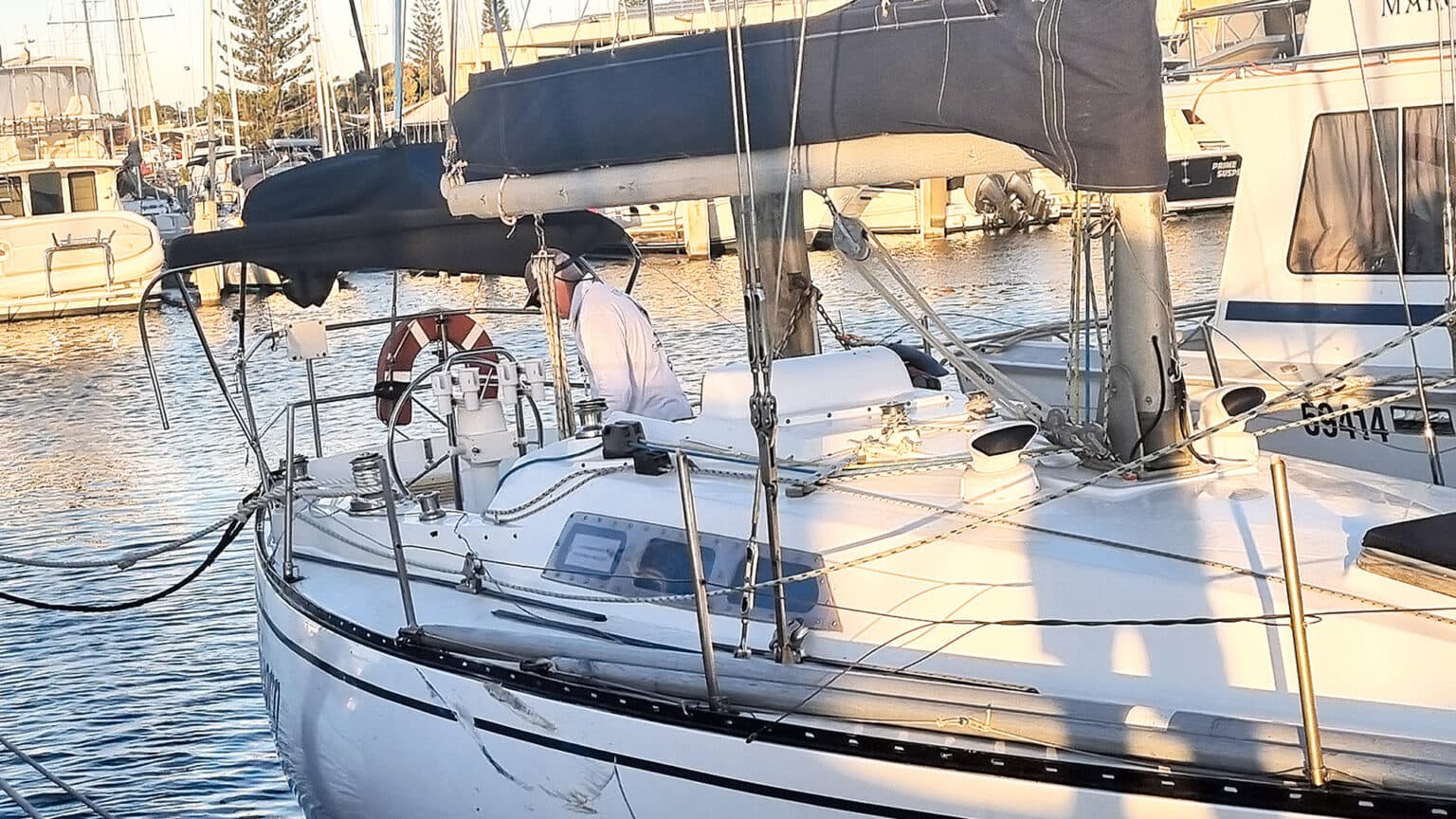
The Bavaria 40’s anchor flukes tore into the starboard hull of the UFO 34 Unicorn during a Fremantle Sailing Club twilight race, ripping out pulpit stanchions and a new bimini and ultimately forcing insurers to declare Unicorn a write-off after seven months of protracted repairs.
What happened on the starting line
The incident unfolded on a summer evening: winds near 12 knots from the south-west, clear visibility and a crowded twilight fleet approaching mark Y. Unicorn was on starboard tack and therefore the stand-on vessel; the Bavaria 40 approached on port tack and should have given way. From roughly 100 m away observers suspected the Bavaria would bear away and duck under Unicorn’s stern, but as distance closed the Bavaria held course, then suddenly altered, ploughing her bow into Unicorn’s starboard side.
The contact sequence was violent and mechanical: the Bavaria’s anchor flukes snagged the Unicorn’s pulpit, then peeled along the hull, tearing gelcoat, uprooting stainless stanchions and finally ripping away the newly fitted bimini. Multiple nearby crews witnessed the Bavaria briefly lifting as metal met fibreglass, and sparks were reported as fittings sheared. Fortunately, no serious injuries occurred, but the potential for life-threatening harm was real given exposed deck fittings and the proximity of crew amidships.
📚 You may also like
Vessel and crew context
Unicorn is a UFO 34 owned by Annie and Ole Otness and skippered that night by Leo Heaney, with partner Mari and club crewmembers on board. Several crew had extensive racing experience, including offshore campaigns, but the owner-skipper pairing were relatively recent boat owners; ownership began in 2022. The Bavaria 40’s cockpit was largely enclosed by a bimini, spray dodger and a canvas link, which significantly reduced visibility from inside the cockpit. A large self-tacking jib further masked forward sightlines.
Why visibility mattered
Modern cockpit enclosures and self-tacking jibs provide comfort and easy sail handling, but they can create blind sectors. In this incident the combination of a canvas-encapsulated cockpit and headsail geometry meant the Bavaria’s helm likely had very limited forward and across-the-deck sightlines. When racing or sailing in traffic, such design choices should prompt tactical adjustments and delegated lookouts.
| Event | Immediate effect | Response time |
|---|---|---|
| Anchor flukes snag pulpit | Pulpit and stanchions damaged | Instant |
| Hull gouged along starboard | Gelcoat and structural damage | Ongoing assessment |
| Bimini torn off | Canvas and stainless collapse | Immediate |
| Owner of Bavaria sails on | No on-scene assistance | After race report |
| Insurance & repairs | Unicorn declared write-off; seven months to repair | Seven months |
Immediate aftermath and insurance
After the impact the Bavaria’s owner did not stop to render assistance, completing the race instead. The behaviour left Unicorn’s crew to document damage and pursue a formal claim. The Bavaria’s insurers acknowledged liability for third-party repair costs but would not arrange repairs; Unicorn’s owners had to commission and oversee restoration work themselves. The process took seven months and required the Fremantle Sailing Club community’s support for advice and local contacts.
Crew and community response
Several nearby boats witnessed the event and provided statements. Club members aided with emergency measures and later with logistical support during the repairs. That community response mitigated some of the practical and psychological toll on Unicorn’s crew, underlining the value of active sailing clubs and local marinas in recovery and incident management.
Lessons learned: practical safety checklist
- Never assume visibility: assume other vessels have not seen you.
- Monitor blind sectors: reposition crew or assign a lookout when enclosures or headsails obscure vision.
- Anticipate rule ignorance: many recreational helmsmen have limited familiarity with COLREGS or racing right-of-way.
- Be ready to manoeuvre: whether stand-on or give-way, prepare to take early evasive action.
- Document and report: gather witness details and photos immediately if the other vessel sails on.
- Insurance vigilance: be prepared to manage repairs if insurers won’t act as an agent on your behalf.
Rules and responsibility (COLREGS)
The incident highlights core obligations under the International Regulations for Preventing Collisions at Sea (COLREGS): keep a proper lookout, maintain safe speed, and take early and substantial action to avoid collision. Enclosure or design limitations do not absolve a vessel from its duty to keep a proper lookout; when in doubt, reduce speed and increase vigilance.
Expert perspective
Experienced race and safety officials emphasize that both racing and cruising crews must be proactive about lookout duties. Enclosures and sail plans that reduce visibility require compensating procedures: dedicated eyes forward, a deckhand on the pulpit, conservative passing distance, and a readiness to alter course. Training, routine drills and pre-start briefings on responsibilities can reduce the likelihood of such collisions.
Maintenance, repairs and cost logistics
Structural repairs after a hull gouge are complex: assess for underlying laminate damage, secure temporary shoring of deck fittings, and replace or re-bed stanchions and pulpits. Owners should obtain multiple quotes and verify yards’ experience with similar repairs, while maintaining thorough documentation for claims and possible legal actions.
GetBoat always keeps an eye on news related to sailing and seaside vacations, as we truly understand what it means to enjoy great leisure and love the ocean. The GetBoat service values freedom, energy, and the ability to choose your own course, placing no limits on a good life and enabling users to find a vessel that suits their preferences, budget, and taste.
The incident remains a strong reminder that encountering a new location, fleet or race format is a multifaceted process: you learn about local culture, coastal conditions, the indescribable palette of local colors and rhythm of life, and the unique aspects of the service and infrastructure that support boating. If you are planning your next trip to the sea, you should definitely consider renting a boat (boat rentals, rent a boat, rent a yacht), as each inlet, bay, and lagoon is unique and tells you about the region just as much as the local cuisine, architecture, and language GetBoat.com
Provide a short forecast on how this news could impact the global tourism and travel map: while a single club-race collision is unlikely to shift global tourism patterns, it does spotlight safety, training and marina services — considerations that influence charter operators, skippers and rental platforms. Start planning your next seaside adventure and make sure to book the best boat and yacht rentals with GetBoat before the opportunity sails away!
In summary, the Unicorn–Bavaria collision underlines the operational risks present in crowded coastal racing: reduced visibility from cockpits and headsails, failure to maintain a proper lookout, and inconsistent responses by involved parties can lead to serious damage and lengthy repair logistics. For charterers, owners and renters—whether looking for a yacht, superyacht charter, or smaller boat rental—this case reinforces the value of competent crews, thorough briefings, and transparent listings of vessel capabilities. Platforms that deliver clear make, model, captain options, ratings and transparent sale or rent details make it easier to match expectations with realities on the water. Yacht, charter, boat, beach, rent, lake, sailing, captain, sale, Destinations, superyacht, activities, yachting, sea, ocean, boating, gulf, water, sunseeker, marinas, clearwater, fishing. Choose your own course.


