Auckland F50 Crash: How Two SailGP Boats Collided
Alexandra
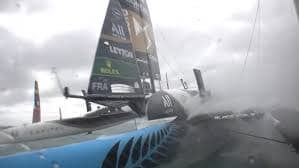
During Race 3 of the ITM New Zealand Sail Grand Prix on 14 February 2026, the foiling F50 fleet was travelling at approximately 90 km/h down the first leg when the Black Foils (New Zealand) and DS Team France collided, triggering an immediate on-water rescue, shore-based medical response and race-day operational stand-down.
Crash overview and immediate operational response
On the third race’s opening beat, race control logs and eyewitness accounts show the New Zealand F50 executed a sharp turn that placed it directly across the track of the DS Team France boat. With insufficient time and lateral separation to alter course, the French F50 struck the side of the Black Foils. Both boats sustained major structural damage to foils and crossbeams, forcing race officials to suspend further participation by the two teams for the rest of the day.
Event safety teams initiated multi-agency procedures typical for high-speed foiling incidents: rescue craft retrieval, on-deck triage, rapid transfer to shore medical units, and coordination with Auckland harbour authorities for debris recovery and floating-hazard marking. Race umpires subsequently assessed responsibility and issued an eight-point penalty to the Black Foils for causing the incident.
📚 You may also like
Casualties, medical treatment and crew status
Two athletes required hospital treatment. Black Foils grinder Louis Sinclair sustained compound fractures to both legs and was admitted for immediate orthopedic care. DS Team France strategist Manon Audinet suffered abdominal injuries and received further evaluation at hospital. No fatalities were reported; both teams confirmed ongoing medical management and rehabilitation plans.
DS Team France driver Quentin Delapierre returned to shore visibly shaken. Team statements emphasised shock and the fast-evolving nature of foiling incidents: events of this scale rely on split-second decisions while operating at speeds more typical of high-performance powercraft than traditional sailboats.
Race consequences and team logistics
The collision effectively removed both teams from on-water competition on the second day in Auckland. For the Black Foils, the incident compounded earlier season setbacks after they were already absent from the opening weekend in Perth due to prior damage sustained in a collision with the Switzerland SailGP Team. Repair logistics for F50s are complex—replacement foils, crossbeams and hull panels require specialist materials, certified workshops and insurance approvals, often delaying a team’s return to competition by multiple event windows.
| Time | Action | Operational note |
|---|---|---|
| Race 3, first leg | Sharp turn by Black Foils | Immediate loss of separation |
| Seconds later | Collision with DS Team France | Major foil and hull damage |
| Minutes | On-water rescue & medical transfer | Standard multi-craft response |
| Hours | Umpires issue penalty | Black Foils +8 points |
Contributory factors and safety considerations
- High-speed foiling dynamics: at 90 km/h, small steering inputs yield large course deviation within fractions of a second.
- Close-quarters fleet work: compressed fleet spacing on windward-leeward legs reduces reaction windows for avoidance.
- Human factors: split-second judgment, cockpit visibility and communication between grinder, driver and strategist are critical.
- Regulatory enforcement: umpires applied the racing rules and issued a points penalty, reflecting command-and-control responsibilities in live racing.
Immediate lessons for race organizers and marinas
Organizers face logistical challenges when high-energy foiling classes are scheduled in congested harbour approaches. Event planners must balance spectator proximity with operational safety: clearer exclusion zones, expanded rescue coverage, and contingency plans for rapid repair logistics are now front-of-mind. Marinas and support yards adjacent to racecourses may see increased demand for storage, component supply and service expertise after high-impact events, affecting berth allocations and charter operations.
Historical context: foiling, fleet safety and precedent incidents
Foiling multihulls such as the F50 have dramatically increased average fleet speeds since their introduction to international match and fleet racing. That acceleration has shortened decision windows and raised the severity of contact when it occurs. SailGP’s modern calendar has seen several high-profile incidents where foiling craft suffered structural failures or contact damage; teams and event authorities have iteratively refined tethering, crew-protection and hull-repair protocols in response.
Earlier in the 2026 season the Black Foils were sidelined following damage in Perth after contact with the Switzerland SailGP Team, highlighting how cumulative damage across events can strain team logistics, spare-parts inventories and insurance claims. The pattern underlines a broader operational reality: rapid-response repair chains and access to specialist yards are now a core component of a competitive campaigns’ supply chain.
Regulatory and technological trends
Governing bodies are evaluating changes to minimize collision risk without diluting competitive intent. Potential measures under discussion include enhanced racecourse separation rules, mandatory forward-visibility systems, improved collision-avoidance training for crews, and stricter pre-race equipment inspection regimes. Technological solutions—radar-assisted awareness, high-frame-rate telemetry and automated collision alerts—may be accelerated by this incident.
Implications for leisure boating, charters and coastal tourism
While SailGP involves purpose-built racing craft, such incidents reverberate through the wider maritime sector. Sightings of high-speed foiling in popular boating Destinations can affect local perceptions: charter operators, yacht brokers and marina managers may see increased demand for safety briefings, captain qualifications and insured superyacht support. Conversely, negative headlines can temporarily dent recreational bookings in areas where visitors prioritise calm beach, lake or gulf experiences.
- Charter operators may tighten skipper vetting and modify safety clauses in rental contracts.
- Marinas and coastal activity providers could expand rescue-and-recovery coordination with local authorities.
- Growing interest in sailing activities and regatta spectating can still benefit local economies—beaches, marinas and hospitality outlets—if organisers effectively communicate safety upgrades.
Forecast for international tourism and yachting activities
In the near term, high-profile racing incidents tend to spike scrutiny but not long-term decline in yachting demand. Enthusiasts seeking adrenaline—racing charters, superyacht regattas and adventure sailing—may temporarily check vessel insurance and captain credentials more carefully, while family-oriented charter markets gravitate to sheltered bays and clearwater beaches. Over multiple seasons, improved safety protocols and clearer communication from organisers should stabilise confidence among sailors, captains and renters.
In summary, the Auckland collision between the Black Foils and DS Team France underlines how modern foiling speeds, compressed fleet geometry and split-second human decisions combine to create acute operational risk. Immediate consequences included significant boat damage, two injured crew requiring hospital care, and an eight-point penalty to the New Zealand entry; longer-term effects point to tightened race logistics, accelerated adoption of collision-mitigation technology and elevated demands on marina repair capacity and charter operators.
GetBoat is an international marketplace for renting sailing boats and yachts, likely the best service for boat rentals to suit every taste and budget. Following the Auckland incident, those looking to charter a yacht or rent a boat should prioritise verified captains, up-to-date safety equipment and marinas with proven support for rapid repairs; GetBoat (GetBoat.com) can help connect users to reliable charters, superyacht and sailing Destinations, ensuring safer boating, enjoyable beach and gulf activities, and confident planning for sea, ocean and lake adventures.


