MOD70 Argo’s Record-Setting Transatlantic Charge
Alexandra
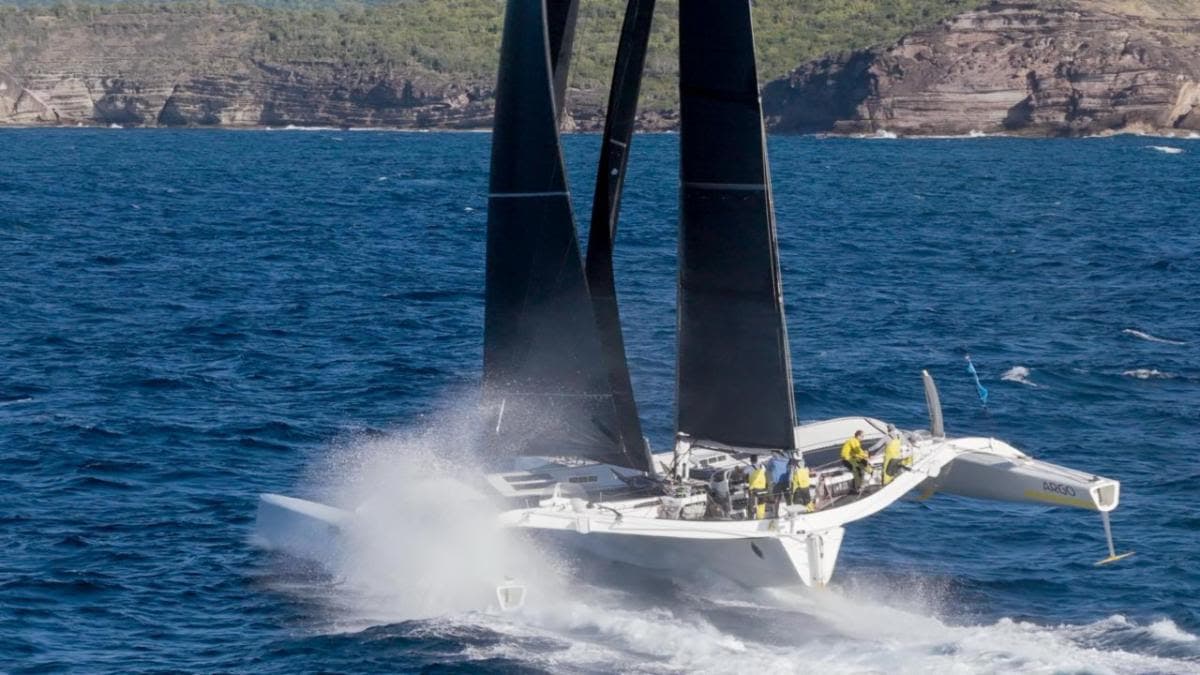
Jason Carroll’s MOD70 Argo crossed the finish off English Harbour, Antigua at 12:31:15 UTC, establishing a new multihull benchmark for the Lanzarote–Antigua course of 4 days, 23 hours, 51 minutes, 15 seconds, and cutting a narrow 2-hour-32-minute margin over Erik Maris’ MOD70 Zoulou.
Race logistics and head-to-head dynamics
From the fleet start off Lanzarote, Argo and Zoulou locked into a duel that dictated fleet logistics and strategy: route choice through the Trades, sail inventory planning for sustained high-speed sailing, and crew rotation schedules tailored to maintain helm performance at sustained speeds above 30 knots. The two MOD70s stayed within visual and tracking range for most of the crossing, forcing both teams to manage fatigue, consumables and on-the-water repairs under race conditions.
Key race data
| Vessel | Skipper | Finish Time (UTC) | Elapsed | Margin |
|---|---|---|---|---|
| Argo (MOD70) | Jason Carroll / Chad Corning (skipper) | 16 Jan, 12:31:15 | 4d 23h 51m 15s | — (Record) |
| Zoulou (MOD70) | Erik Maris | 16 Jan, 15:03:15 | ~4d 26h 23m | 2h 32m |
Preparation and mid-race repairs: a logistics case study
Argo’s campaign demonstrates how preparation ashore translates directly into on-course resilience. The team based the boat in Lanzarote from September and executed a comprehensive refit and NDT inspection program at Marina Lanzarote — removing mechanical systems for servicing, replacing critical components and validating gear readiness. That investment in maintenance paid off when a vibrating port rudder threatened to end the campaign; Alister Richardson’s controlled stern inspection and emergency fix during the fading daylight preserved steering integrity and allowed the team to continue.
📚 You may also like
Pre-race checklist highlights
- Full mechanical teardown: remove, inspect and service steering and foil systems.
- NDT scanning: detect internal stress or delamination before failure at sea.
- Spares inventory: critical rudder and steering spares staged for immediate use.
- Crew drills: night repairs, man-overboard and stern access under real conditions.
Crew management and human factors at speed
Once in the Trades the race became a study in human endurance and control systems: daytime surfs above 30 knots and night passages described by crew as “skiing a black diamond with a blindfold” required shortened helm rotations (45-minute stints), strict watch plans and nutritional strategies tolerant of spray and sleep disruption. Chad Corning noted the psychological after-effect — the crew “buzzing” even after docking — underscoring the toll of extreme offshore performance sailing.
Onboard roles and rotating shifts
- Primary helmsman rotation: 45-minute drives to preserve focus and edge control.
- Systems monitor: continuous checks on hydraulics and steering feedback.
- Repair team readiness: immediate action for stern or foil repairs at dusk.
Boat design, handling and tactical choices
Comparisons between MOD70s and larger Ultim trimarans reveal different performance envelopes and tactical trade-offs. As Sam Goodchild observed, the MOD70 rides and responds more like a high-performance go-kart: small crew, rapid manoeuvres and a willingness to sail closer to the edge. Ultims, by contrast, trade nimbleness for absolute straight-line speed. For race planners and charter operators, these differences inform crew size, safety briefings and the choice of routes when organizing high-speed passages or delivery hops.
Performance characteristics summary
| Characteristic | MOD70 | Ultim |
|---|---|---|
| Crew size | 6–8 | 10–20 |
| Typical speed | 30–45 knots (surfing) | 40–60+ knots (flat flight) |
| Manoeuvre time | ~20 seconds | ~6 minutes |
Historical context and finishing implications
Veteran sailor Brian Thompson framed Argo’s achievement in the sweep of Atlantic maritime history, noting the symbolic resonance of setting the fastest time on a route sailed since the age of exploration. For Antigua and English Harbour, the finish reasserts the island’s position as a logistical and cultural hub for transatlantic campaigns and high-performance multihulls.
What the result means for charter and local infrastructure
- Increased demand for high-performance delivery and refit berths at marinas.
- Higher visibility of Antigua as a stopover for competitive and recreational yachting.
- Local services (riggers, composite yards, provisioning) may see elevated seasonal demand post-race.
GetBoat always keeps an eye on news related to sailing and seaside vacations; we understand what it means to enjoy great leisure and love the ocean, and we watch how high-performance campaigns affect charter availability, marina services and the secondary market for high-tech craft.
Lessons for renters, charter captains and coastal planners
Even if most leisure sailors won’t push a MOD70 to its limits, the operational lessons are directly applicable to charter and rental operations:
- Rigorous pre-season inspections reduce the risk of at-sea failures.
- Clear watch protocols improve safety during overnight passages.
- Spare parts strategy shortens downtime and protects itineraries.
- Training in stern access and night repairs can be life-saving on delivery legs.
The RORC Transatlantic Race now turns attention to the monohull fleet and the Baltic 111 Raven, forecast to arrive as the first maxi monohull and set the monohull benchmark under IRC corrected time—another logistical challenge for marinas expecting high-speed arrivals and service demands.
To forecast how this news could impact the global tourism and travel map: the direct global effect is modest, but regionally it reinforces Antigua and the Canary Islands as strategic yachting Destinations. However, it's still important to us since GetBoat aims to stay updated with all developments and keep pace with the changing world. Start planning your next seaside adventure and make sure to book the best boat and yacht rentals with GetBoat before the opportunity sails away!
The most important and interesting aspects of this topic are the razor-close competition between Argo and Zoulou, the critical role of pre-race maintenance, and the human limits tested by high-speed night sailing; experiencing a new location is always a multifaceted process, where one learns about the culture, nature, the indescribable palette of local colors its rhythm of life and also the unique aspects of the service. If you are planning your next trip to the sea, you should definitely consider renting a boat (boat rentals, rent a boat, rent a yacht), as each inlet, bay, and lagoon is unique and tells you about the region just as much as the local cuisine, architecture, and language GetBoat.com
Summary: Argo’s record showcases the intersection of meticulous logistics, robust maintenance planning, and elite seamanship — factors that matter not only in high-performance racing but also in charter operations, marina services and yacht sale or delivery planning. Whether you’re looking for a yacht charter, a boat for a family beach day, a fishing or boating excursion in a clearwater gulf, or considering a superyacht or Sunseeker for sale, lessons from this race apply: trust your equipment, manage crew and provisions, and plan for rapid repairs. GetBoat.com supports this approach by offering transparent listings that let you compare make, model and ratings before you book, matching budgets and tastes so freedom, energy and the ability to choose your own course remain at the heart of every ocean-going adventure. The service places no limits on a good life.


