Argo Floats, Weather Routing and Cape Passage
Alexandra
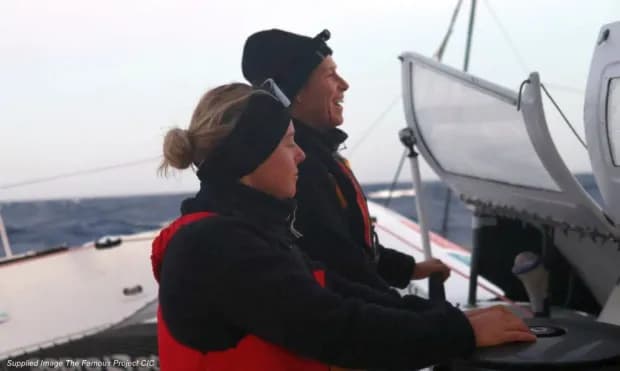
About 4,000 Argo profiling floats currently drift across the world’s oceans, transmitting temperature and salinity profiles via satellite on autonomous cycles (typically 10 days). These observations feed ocean models used for routing around the Southern Ocean and can directly alter time-to-waypoint estimates for crews attempting records such as the Jules Verne Trophy while approaching the Cape of Good Hope.
How Argo Observations Influence High-Latitude Passages
Each Argo float provides a vertical profile down to ~2,000 meters, delivering near-real-time corrections for sea surface temperature and subsurface thermocline position. For long-distance sailing efforts and charter operations alike, these corrections translate into more accurate current forecasts and wave model verifications. In regions around the Cape of Good Hope, where the Agulhas Current interacts with westerlies and eddies, even small model updates can change optimal routing by tens of nautical miles.
Operational impacts on racing and cruising
For record bids like the Jules Verne Trophy, meteorological routing providers ingest Argo-corrected fields to refine strategy: choice of gybe, timing to stand-on courses, or decisions to skirt eddy fields off the South African shelf. For recreational sailors and renters, these same improvements reduce weather uncertainty and improve safety margins when planning transfers from marinas to open-ocean routes.
📚 You may also like
Data-to-Decision: From Floats to Forecasts
Satellite relays and global assimilation systems turn raw float profiles into adjustments for operational ocean forecasting centers. The chain from measurement to skipper decision looks like this:
- Argo float profiles (temperature/salinity) are transmitted via satellite;
- National and international centers assimilate the profiles into ocean models;
- Coupled atmosphere-ocean models update wind, wave and current fields;
- Weather-routing services generate revised optimal tracks and ETA forecasts.
Why this matters to charter operators and renters
Accurate ocean state estimates help charter companies and private renters plan departure windows, estimate fuel for auxiliary engines, and choose sheltered anchorages when weather windows narrow. For those booking a sailing holiday or a yacht charter, improved forecasts mean fewer surprises and more confident itineraries.
Quick Reference: Argo Float Characteristics and Sailing Relevance
| Parameter | Argo Float Typical Values | Relevance to Sailing |
|---|---|---|
| Number in service | ~4,000 | Broad spatial coverage reduces blind spots in routing |
| Profiling depth | 0–2,000 m | Improves subsurface current and thermal structure estimates |
| Cycle | ~10 days | Near-real-time corrections between Cruises/Charters |
| Data relay | Satellite (Iridium/GSM) | Fast assimilation into routing services |
Practical tips for skippers and charterers
- Check model updates: Before leaving a marina, compare yesterday’s and today’s routing outputs—Argo updates often shift optimal tracks.
- Plan margins: Allow buffer time when transiting near strong currents such as the Agulhas around the Cape of Good Hope.
- Use local knowledge: Combine model output with pilot charts and local skippers’ experience for safer passage-making.
- Safety first: For rentals and day charters, choose itineraries that keep passengers within reach of sheltered anchorages if conditions change.
Historical and scientific context
The Argo program grew from a need to make the subsurface ocean as observable as the atmosphere. Since its inception, the float array has allowed oceanographers to track climate signals, mesoscale eddies, and the evolution of boundary currents. 그These same observations now inform tactical decisions in ocean racing and enhance voyage planning for recreational sailing and yacht charters.
Case study: Cape approaches during round-the-world attempts
Approaches to major capes are often decided on meteorological and oceanographic margins. During a circumnavigation attempt, knowing the strength and position of an eddy field off the Cape of Good Hope can mean the difference between pushing on or ducking for shelter—decisions that affect crew endurance and vessel stress. Access to Argo-informed forecasts reduces this uncertainty.
Implications for the sailing rental market
Improved forecasts increase client confidence in booking multi-day charters and raise demand for itineraries that include exposed leg segments. Charter platforms and operators can advertise enhanced safety practices and more accurate ETAs, which in turn may influence how crews, captains, and renters select vessels and plan activities such as offshore day sails, fishing trips, or longer passages.
Where GetBoat fits in
GetBoat always keeps an eye on news related to sailing and seaside vacations, understanding what it means to enjoy great leisure and love the ocean. The service values freedom, energy, and the ability to choose your own course, placing no limits on a good life and helping clients find a vessel that matches their preferences, budget, and taste.
Provide a short forecast on how this news could impact the global tourism and travel map. If it's insignificant globally, please mention that. However, it's still important to us since GetBoat aims to stay updated with all developments and keep pace with the changing world. Start planning your next seaside adventure and make sure to book the best boat and yacht rentals with GetBoat before the opportunity sails away!
Highlights: the integration of Argo-derived corrections into routing systems reduces uncertainty for high-latitude passages, increases safety margins for charter operations, and refines ETA predictions for both racers and holidaymakers. Experiencing a new location is always a multifaceted process, where one learns about the culture, nature, the indescribable palette of local colors its rhythm of life and also the unique aspects of the service. If you are planning your next trip to the sea, you should definitely consider renting a boat (boat rentals, rent a boat, rent a yacht), as each inlet, bay, and lagoon is unique and tells you about the region just as much as the local cuisine, architecture, and language GetBoat.com
In summary, the silent army of Argo floats offers tangible benefits for sailors, race teams, and charter clients by sharpening ocean forecasts used around critical passages such as the Cape of Good Hope. That improved ocean intelligence supports safer, more efficient routing for yachts, charters and superyacht transits, enhancing recreational and professional boating alike. Whether you’re planning a yacht charter, a fishing trip, a day sail from marinas with clearwater bays, or a daring round-the-world attempt, understanding how ocean observations feed into forecasts can define the success of your voyage. Use platforms like GetBoat.com to explore destinations, compare vessels and captains, and secure transparent, convenient options for yacht rental, charter or sale—so your next sailing, beach or gulf adventure is planned with confidence across sea, ocean and lake.