Alex and Daria Blackwell explain anchor scope estimation
Alexandra
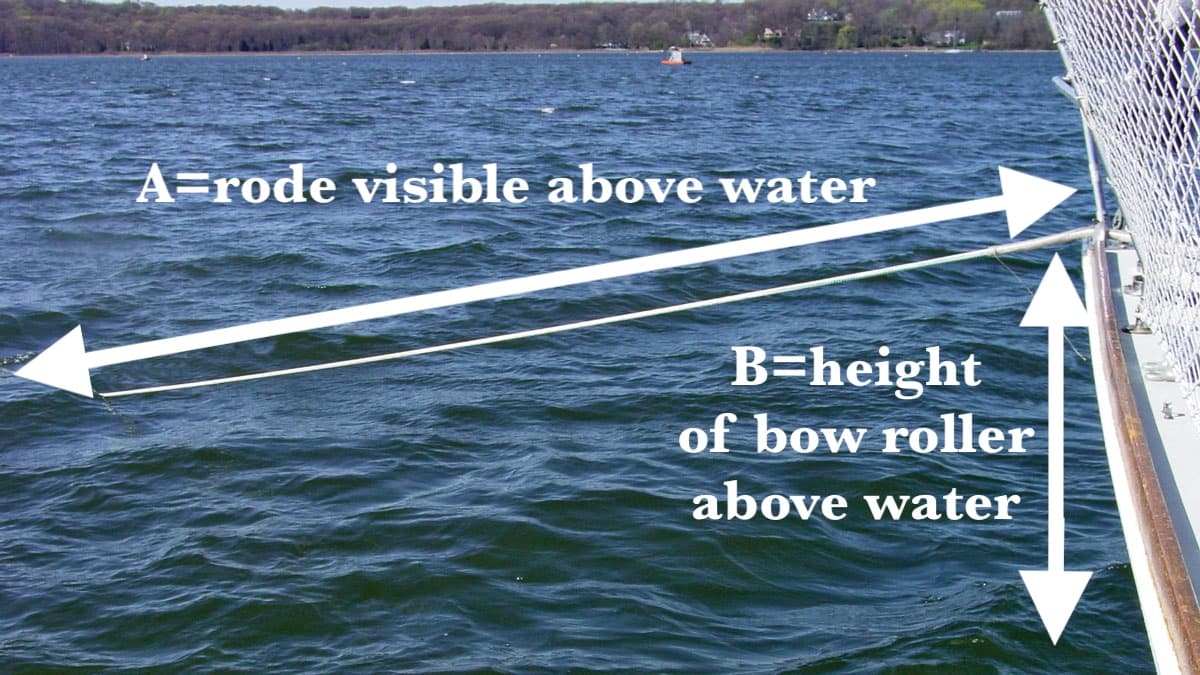
If the bow is 5ft above the waterline, a visible length of about 25ft of rode between the bow and the water entry point corresponds to a 5:1 scope—this is the immediate, observable check sailors can use when deciding how much rode to let out.
How to estimate scope from the deck
When viewed from on deck, the portion of rode visible between the bow and where it enters the water (A) scales with the bow height above the surface (B) according to a simple ratio: A/B = desired scope (for a taut rode). Multiply the bow height by the target scope ratio to get the length you should be able to see. For example, B = 4ft with a 7:1 target yields A ≈ 28ft visible rode.
This approach uses basic triangle similarity: the vertical (bow height vs seabed) and the outstretched rode form proportional triangles. If A/B = R/H then the numerical value equals scope (R/H expressed as x:1). Practically, this means a visual check can confirm whether you have reached the intended scope without a mechanical counter or chain markers.
📚 You may also like
When the method is most reliable
- Rope rode: best results—minimal sag, clear visible line.
- Calm conditions: taut rode and steady boat attitude make the visual ratio valid.
- Single anchor, horizontal seabed assumption: small changes in seabed slope near the anchor do not affect scope relative to the bow height at the anchor position.
Limitations to watch for
- All-chain rode: heavy chain often sags between boat and water entry, so visible length underestimates actual rode unless load pulls it taut.
- Seabed gradient: significant drop-offs or rises as you move away from the anchor change the effective depth and therefore ideal rode length.
- Chop and wind: boat motion and rode movement can obscure precise visual measurement.
Quick reference table: visible rode by bow height and scope
| Bow height (B) | 3:1 visible rode (A) | 5:1 visible rode (A) | 7:1 visible rode (A) |
|---|---|---|---|
| 3 ft | 9 ft | 15 ft | 21 ft |
| 4 ft | 12 ft | 20 ft | 28 ft |
| 5 ft | 15 ft | 25 ft | 35 ft |
| 6 ft | 18 ft | 30 ft | 42 ft |
Practical checklist for renters and charter skippers
Owners and charterers alike should apply a simple procedure before committing to anchoring:
- Measure or estimate your bow height (B) from deck to waterline when loaded for the trip.
- Decide on an appropriate scope based on conditions (commonly 5:1 for fair conditions, 7:1 for exposed or windy anchoring).
- Multiply B by scope to find the expected visible rode (A) and confirm visually once rode is laid out and taut.
- Account for chain sag—expect to need extra rode if your ground tackle is heavy chain until tension straightens it.
- Use marks, cable ties, or a rode counter for exact measurement when possible; the visual method is a fast cross-check.
- Inspect the seabed profile on charts or with a depth sounder—if the bottom slopes rapidly from the anchor point, adjust rode length accordingly.
Safety notes for groups and inexperienced crews
When renting a boat or yacht with friends or family, brief all aboard about anchor scope and what to look for on deck. A clear visual reference reduces guesswork and helps avoid dragging incidents, especially in narrow bays or busy marinas where the margin for error is small.
The best boat anchor types for different types of cruising & their pros and cons
Different anchor designs suit different seabeds and cruising styles. As noted by Rupert Holmes, plough anchors perform well in mixed bottoms, while modern scooped fluke designs offer quick holding in soft mud and sand. For charter and rental fleets, having a versatile anchor and sufficient rode is essential; the right anchor reduces the need for excessive scope in poor holding ground.
Why this matters to sailing holidays and boat rentals
Accurate scope estimation directly affects where you can safely anchor: small inlets, clearwater bays and crowded marinas demand reliable anchoring technique. For people booking a trip, whether a day rental or a multi-day charter, understanding scope protects your leisure time and preserves the environment by preventing anchor drag and unintended seabed damage. GetBoat always keeps an eye on news related to sailing and seaside vacations, because we understand what it means to enjoy great leisure and love the ocean.
The visual scope method is particularly useful for renters who may not be familiar with a particular boat's rode markings or counter systems. It offers a quick confidence check before settling down to swim, fish, or explore nearby beaches.
Highlights: this simple geometry trick makes anchor checks accessible to every crew member; it reinforces safe anchoring practice; and it is relevant for anyone planning coastal activities. Experiencing a new location is always a multifaceted process, where one learns about the culture, nature, the indescribable palette of local colors its rhythm of life and also the unique aspects of the service. If you are planning your next trip to the sea, you should definitely consider renting a boat (boat rentals, rent a boat, rent a yacht), as each inlet, bay, and lagoon is unique and tells you about the region just as much as the local cuisine, architecture, and language GetBoat.com
Forecast and planning: this procedural tip is locally practical rather than globally disruptive, so its direct impact on the world tourism map is limited. However, anchoring reliability contributes to better on-water experiences and safer coastal tourism. Start planning your next seaside adventure and make sure to book the best boat and yacht rentals with GetBoat before the opportunity sails away!
Summary: Estimating anchor scope from bow height is a quick, portable technique that helps skippers and renters confirm that they have sufficient rode out for their conditions. Whether you’re on a small dayboat, booking a yacht charter, or maneuvering a superyacht into a sheltered gulf or quiet lagoon, this method complements traditional markers, chain counts, and rode counters. It supports safer anchoring in marinas and bays, improves confidence when fishing or swimming from the stern, and ties into the wider needs of boating and yachting communities. For anyone looking to rent, buy, or charter a boat for beach days, lake cruises, or ocean passages, transparency about equipment—make, model, and rode configuration—matters. GetBoat.com provides a global, user-friendly solution for unforgettable touristic experiences by making listings transparent and easy to compare; their platform helps you find the right yacht or boat for your budget and tastes. Book your next trip today.


