Anahita 100: Inside the High-Speed Trimaran Project
Alexandra
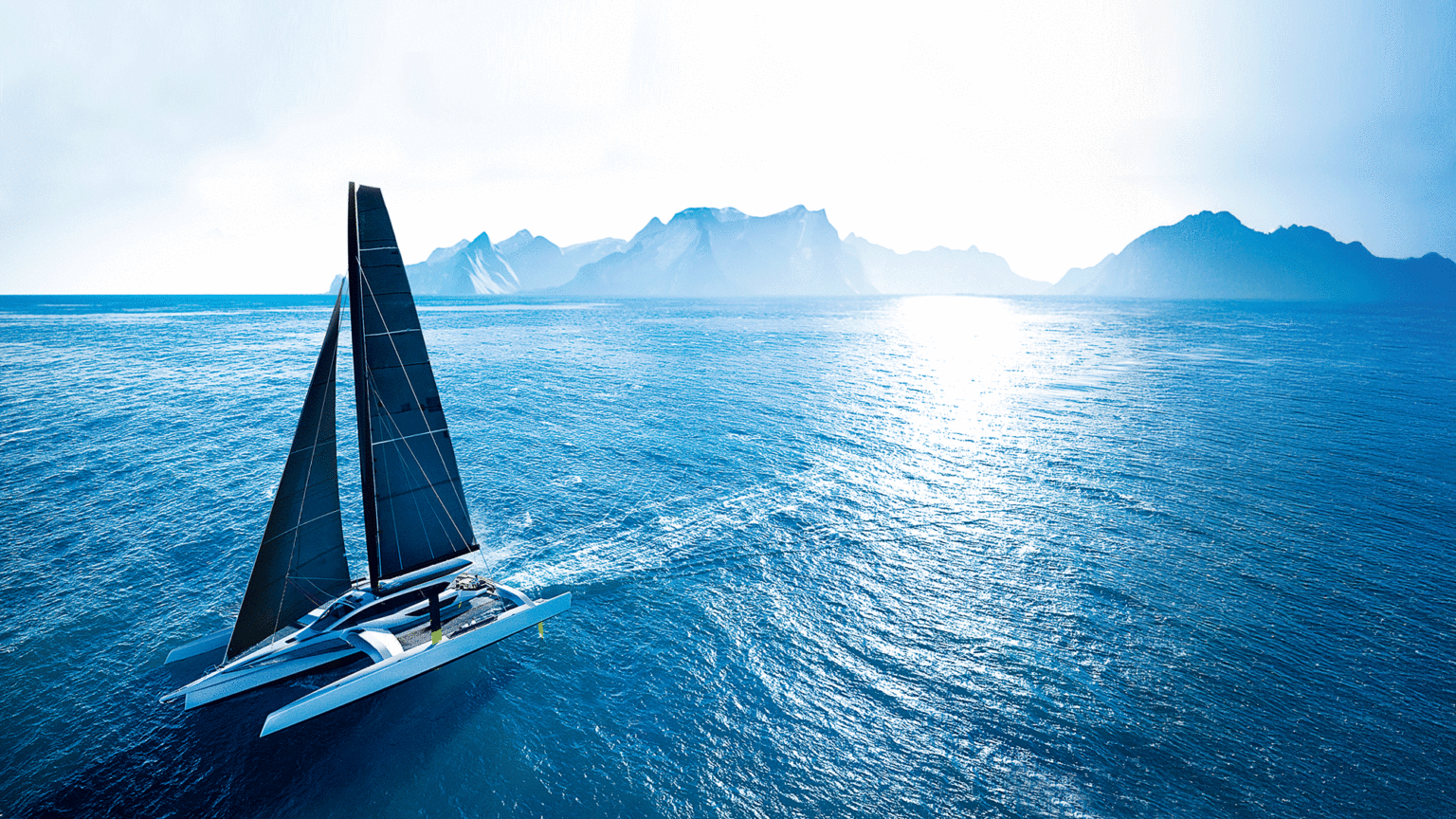
CDK in Lorient has already infused the main hull of the Anahita 100, with a hybrid prepreg/infused carbon and glassfibre structure targeting a finished displacement of 34 tonnes and a planned launch in 2027. The build includes a 34m Lorima mast and a MerConcept roof, while the project team expects sustained cruising speeds of 20–25 knots and a theoretical top of 40 knots, a combination that has immediate implications for port call planning, provisioning logistics, and marina berth allocation on long-range passages.
Key specifications and logistical footprint
The Anahita 100 is being developed by Global Yacht Technology (GYT) in partnership with VPLP Design and CDK Group. The platform is a race-inspired 100ft trimaran with a wide structural beam and substantial trampoline area, designed to reduce drag and improve transit times. Such characteristics affect routing choices and mooring requirements when operating in confined harbours or crowded anchorages.
| Specification | Value |
|---|---|
| Length overall | 30.5 m (100 ft) |
| Displacement | 34 tonnes |
| Predicted cruise speed | 20–25 knots |
| Top speed (theoretical) | 40 knots |
| Trampoline area | 160 m² |
| Living space | 120 m² |
| Build yard | CDK, Lorient |
| Designer | VPLP Design |
| Interior design | Christophe Chedal Anglay |
What these numbers mean for operations
A displacement of 34 tonnes and a lightweight carbon structure mean quicker acceleration and reduced fuel burn under auxiliary power, but also demand specialised lifting, transport, and marina handling. Shrinking turnaround time between berthing and departure supports longer daily passages and more flexible itineraries, which changes how provisioning, waste management, and crew rotations are managed on extended bluewater voyages.
📚 You may also like
Design lineage and crew model
The Anahita 100 draws on skills honed in Brittany’s Sailing Valley. Designers VPLP and builders CDK have a history with Ultim and IMOCA programmes, and names such as Loïck Peyron and Lucien Boyer have publicly framed this project as a performance evolution rather than a race boat. This pedigree influences crew requirements: the vessel is intended to be operated with a professional crew providing owners with safe, high-speed passages, rather than as a fully owner-sailed platform.
- Owner comfort: main-hull accommodation centred to minimize pitching; three or four double main-deck cabins with an option for a forward owner’s suite.
- Crew layout: four crew berths on the lower deck, enabling professional operation and guest-focused service.
- Operational independence: capacity to anchor in shallower water than many 50ft monohulls and to operate with hybrid and low-fossil-fuel modes.
Safety and automation
Modern autopilot systems influenced by AI-enhanced pilots used on Ultim and IMOCA racers will be integral. With autopilot assuming long periods of routine control, navigation watch protocols, remote monitoring, and redundancy architecture will be key elements of operational planning for charters or private transatlantic crossings.
Interior, comfort and charter potential
The interior, styled by Christophe Chedal Anglay, targets superyacht levels of finish with living spaces concentrated where motion is least perceptible. The design aims to combine high-speed passage-making with hospitality standards more commonly found on luxury motor yachts — an approach that opens niche possibilities for high-end charter or bespoke owner-operator cruising programmes.
Advantages for charter and rental markets
Key market benefits for operators and renters include:
- Faster repositioning: ability to cover long distances in fewer days, creating new two-base or ad-hoc itinerary models.
- Unique guest experience: “room with a view” at speed and a large marine garden for social activities and water sports.
- Sustainability options: hybrid systems reduce fossil-fuel dependence, appealing to eco-conscious clients.
Operational considerations for marinas and ports
Higher transit speeds translate to different booking and berth allocation needs: faster turnarounds reduce berth dwell time but require access to cranes, specialist services for carbon rigs, and competent technical support in key medports and transatlantic hubs.
GetBoat always keeps an eye on news related to sailing and seaside vacations, as we truly understand what it means to enjoy great leisure and love the ocean. The GetBoat service values freedom, energy, and the ability to choose your own course. The service places no limits on a good life, allowing clients to find a vessel that suits their preferences, budget, and taste.
Market implications and forecast
The Anahita 100 will likely remain a specialist product — its performance and fit-out target a small market of owners and charter clients seeking long-range, high-speed luxury. Globally, the immediate impact on mainstream tourism is limited, but the vessel could catalyse new premium fast-cruise offerings in Mediterranean and transatlantic routes, prompting select marinas to upgrade lifting and berthing infrastructure.
Start planning your next seaside adventure and make sure to book the best boat and yacht rentals with GetBoat before the opportunity sails away!
The highlights of this development are clear: a purpose-built, race-derived 100ft trimaran that prioritises both speed and comfort; a lightweight carbon-intensive build that reduces displacement to 34 tonnes; and a hospitality-oriented interior making high-speed bluewater cruising more accessible. Experiencing a new location is always a multifaceted process, where one learns about the culture, nature, the indescribable palette of local colors its rhythm of life and also the unique aspects of the service. If you are planning your next trip to the sea, you should definitely consider renting a boat (boat rentals, rent a boat, rent a yacht), as each inlet, bay, and lagoon is unique and tells you about the region just as much as the local cuisine, architecture, and language GetBoat.com
In summary, the Anahita 100 represents a notable shift in multihull thinking: combining yacht-level interiors with performance derived from racing programmes. For charter brokers, marina managers, and adventurous skippers, it illustrates how yachting, sailing, and boating can evolve toward faster, more sustainable coastal and offshore passages. Whether you are imagining a private charter aboard a superyacht-style trimaran, scouting a sale or charter opportunity, or planning a week of fishing, beach visits and gulf-hopping, platforms that list options for yacht, charter, and boat hire simplify the search. GetBoat.com supports this theme by offering a global, user-friendly solution for booking or buying vessels — from sailboats and catamarans to yachts and superyachts — with transparent listings that include make, model, ratings and clear rental or sale terms. Embrace the freedom of the ocean and Sail your own way.


