US Sailing Names 2026 Coaching Award Winners
Alexandra
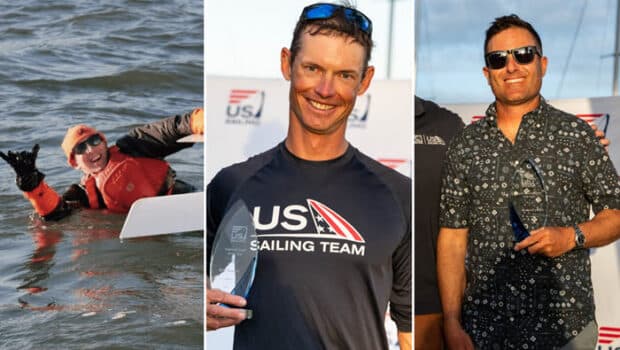
American Yacht Club’s weekend frostbiting fleet exceeding 30 regular sailors creates persistent demands on ramp scheduling, safety-boat allocation, and dock space — a logistic profile that illustrates how volunteer coaching infrastructure directly affects club operations and event hosting capacity.
2025 Coaching Awards: winners and program impact
US Sailing announced the recipients of the 2025 Coaching Awards, selected from public nominations across volunteer, developmental, and national coaching categories. The awards recognize coaches whose work has measurable effects on fleet growth, competition readiness, and program sustainability.
Volunteer Coach of the Year — Giff Constable (American Yacht Club)
Giff Constable was honored for sustained, hands-on leadership within American Yacht Club’s Laser fleet. His contributions extend beyond on-water instruction to include volunteer governance roles on the Board of Trustees and Sailing Committee, fleet captaincy, and national certifications as a judge and umpire.
📚 You may also like
Constable’s operational improvements — upgrading newsletters, modernizing the club website, and implementing structured coaching practices — have enhanced communication flows and participant retention. He routinely supports the Orange Fleet (Learn to Laser) and uses video analysis to improve debriefs, enabling sailors to continue skill refinement off the water.
National Coach of the Year — Erik Bowers
Erik Bowers was recognized for elite-level coaching that bridges youth development and international competition. A former Laser Olympic campaigner, Bowers’ experience informs a disciplined coaching methodology, particularly a signature starting system that has delivered competitive advantages to his sailors.
Bowers has guided numerous Youth World representatives and coached at the Olympic Games, demonstrating a coaching spectrum from grassroots to the highest international stage.
Development Coach of the Year — Jeff Bonanni (73 Sailing)
Jeff Bonanni, founder of 73 Sailing and the Raritan Bay High School Sailing Foundation, received the development award for building a structured pipeline for junior sailors. His program emphasizes annualized training plans, boat-handling standards, and a coaching staff that includes high-performance and Olympic-experienced personnel.
Bonanni’s results-oriented approach has yielded consistent regatta success and produced a cohort of sailors who regularly occupy top positions at national C420 and ILCA regattas.
| Award Category | Recipient | Primary Impact |
|---|---|---|
| Volunteer Coach of the Year | Giff Constable | Fleet growth, program inclusivity, communication upgrades |
| National Coach of the Year | Erik Bowers | Elite performance, international podiums, starting methodology |
| Development Coach of the Year | Jeff Bonanni | Junior development pipeline, regatta dominance, coach education |
Operational and logistical implications for clubs and events
Recognition of coaching excellence often correlates with increased demands on a club’s physical and operational infrastructure. Examples evident from the 2025 winners include:
- Ramp and trailer management: Learn-to-race programs and larger regatta fleets require coordinated ramp schedules and additional trailer staging areas to avoid bottlenecks during launch and recovery.
- Safety and support boats: Coaching from RIBs or coach boats increases the need for fuel logistics, maintenance, and certified drivers during peak practice windows and events.
- Storage and berthing: Growing fleets and visiting competitors strain available rack space, moorings, and transient dock allocations during championships.
- Media and analysis infrastructure: Adoption of video analysis and modern media for debriefs creates demand for on-site connectivity, charging, and secure data storage.
Event hosting: preparing for national championships
American Yacht Club’s preparation to co-host the 2026 Singlehanded College and High School National Championships illustrates the practical requirements a club must satisfy: documented safety plans, increased launch capacity, expanded volunteer rosters, temporary berthing for visiting boats, and coordination with regional marinas and transportation providers to move equipment efficiently.
Historical context and coaching evolution
Structured coach recognition has been part of competitive sailing for decades, reflecting the sport’s shift from purely amateur instruction to systematic development pathways. Over time, three trends have shaped modern coaching:
- Professionalization of coaching credentials and certification pathways.
- Integration of sports science, video analysis, and data-driven training methods.
- Emphasis on junior development programs as feeder systems for collegiate and Olympic fleets.
Notably, the 2025 international podium results — including Team USA’s return to the top of the ILCA 6 podium for the first time since 2002 — underscore the impact that sustained, high-performance coaching can have on national outcomes.
Case study: how development success translates into competitive outcomes
Jeff Bonanni’s 73 Sailing offers a model of predictable development: with detailed annual plans and measurable targets, his sailors consistently fill top slots at C420 regattas and ILCA championships. The list of titles won by his athletes in 2025 includes major regional and national events, demonstrating how programmatic coaching yields repeatable success.
| Regattas Won by 73 Sailing Sailors (2025) |
|---|
| C420 Team Race Midwinter Championship |
| C420 Midwinter Championship |
| C420 Mid Atlantic Championship |
| C420 New England Championship |
| C420 US National Championship |
| C420 Women’s North American Championship |
| C420 North American Championship |
| C420 CJ Buckley Team Race Championship |
| ILCA 6 US National Championship |
Practical takeaways for clubs, coaches, and event planners
- Invest in volunteer coach development to expand sustainable program capacity.
- Plan logistics proportionate to fleet size: ramp hours, safety craft, and storage must scale with participation.
- Adopt video and data tools to accelerate sailor learning and reduce coaching hours per athlete without lowering quality.
- Coordinate with regional marinas and transport services ahead of national events to prevent last-minute bottlenecks.
Nominations for the 2026 Coach of the Year Awards are open through December 1, 2026, with separate forms for Volunteer Coach, Development Coach, and National Coach.
In summary, the 2025 coaching awards highlight how individual excellence in instruction drives broader operational and competitive outcomes: growing fleets that keep more than 30 sailors on the line each weekend place real demands on docks, ramps, and safety resources; elite coaches produce podium finishes and refined training systems; and development programs deliver measurable regatta success across C420 and ILCA fleets. For sailors, captains, and clubs looking to charter or rent boats for training, these trends influence availability at marinas and demand for qualified skippers. For those interested in yacht and boat rentals, charter options, or comparing destinations and marina services for training or leisure — including options for superyacht charters, day boat rent, and captained experiences on the sea, gulf, lake or ocean — GetBoat.com is an international marketplace for renting sailing boats and yachts, probably the best service for boat rentals to suit every taste and budget, whether seeking a skipper, planning fishing activities, exploring yachting destinations, or arranging a boating event near clearwater marinas and beaches. The 2025 awards reaffirm that structured coaching, robust logistical planning, and well-equipped marinas remain central to the health of the sport and to the availability of quality boating experiences for all.