Alajuela 48 — Robust Offshore Cruiser Review
Alexandra
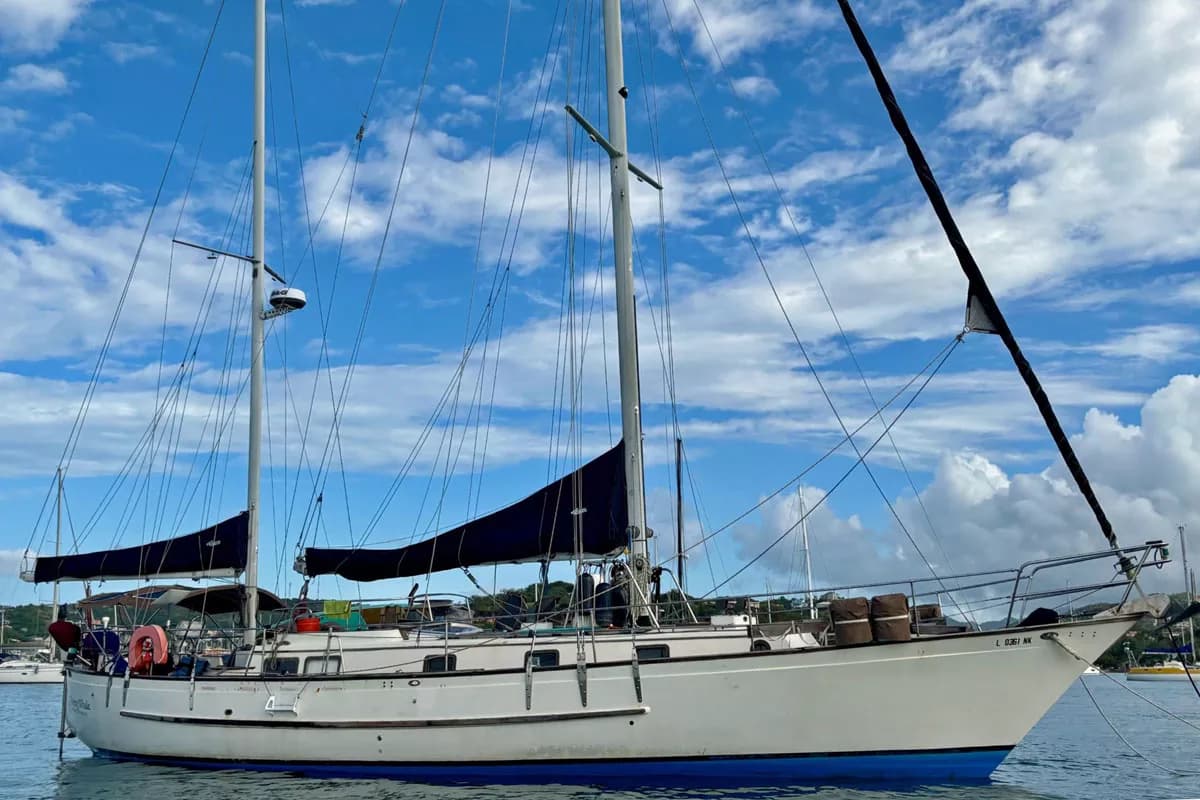
With a displacement of 15,876 kg and a fixed draft of 2.01 m, the Alajuela 48 imposes clear requirements on marina berths, travel lifts, and transport logistics: deep-water slips, heavy-duty moorings, and access to yards with lifting capacity rated above 16 tonnes are prerequisites for handling this full‑keel cruiser safely.
Design & Construction Philosophy
The Alajuela 48 was drawn by Raymond Richards and produced by Alajuela Yacht Corporation in California between the mid-1970s and mid-1980s. The design prioritises long-range reliability and crew comfort over light‑air speed. A thick, hand-laid fibre-reinforced plastic (FRP) hull, combined with a substantial internal ballast package, creates a heavy, stiff structure suited for extended offshore passages and lower maintenance regimes when properly looked after.
The most defining element is the full keel with a fully attached rudder and moulded-in ballast. This layout yields exceptional directional stability and protection for underwater appendages—advantages that reduce gear failures and crew fatigue on ocean crossings but limit pointability and acceleration in light winds.
📚 You may also like
Published Specification: The Alajuela 48 Blueprint
The basic dimensions and construction details inform berth selection, trailer or ship transport feasibility, and charter suitability.
| Length Overall | 14.63 | metres |
| Length Waterline | 11.89 | metres |
| Beam | 4.11 | metres |
| Draft (Fixed) | 2.01 | metres |
| Displacement | 15,876 | kg |
| Ballast | 5,443 | kg |
| Rig Type | Cutter | N/A |
| Hull Material | Fibre-Reinforced Plastic | N/A |
| Production Era | Mid-1970s - Mid-1980s | N/A |
Performance Analysis: Understanding the Design Ratios
Objective ratios distil expected behaviour at sea and help owners, brokers, and charter operators match the Alajuela 48 to appropriate roles.
| Sail Area/Displacement | 15.2 | Moderate: needs moderate to strong winds to reach hull speed. |
| Displacement/Length | 325 | Heavy: excellent momentum and comfort, reduced top speed. |
| Ballast/Displacement | 34.3% | Healthy ballast for a full-keel cruiser. |
| Capsize Screening Formula | 1.84 | Very safe for offshore work (below 2.0). |
| Brewer Motion Comfort Ratio | 43.1 | High comfort in heavy seas—valuable for long passages. |
These figures characterise a yacht built for endurance: predictable motion, the ability to hold momentum in ocean swell, and reliable course‑keeping with minimal autopilot corrections. The trade-offs are lower pointing ability and slower acceleration compared with lighter displacement, fin‑keel cruisers.
Advanced Analysis & Context
The thick FRP hull typical of Alajuela construction contributes to durability and impact resistance. Proper maintenance—routine gelcoat checks, osmosis prevention where necessary, and regular survey—keeps long‑term ownership costs manageable. Structurally, the moulded-in ballast and substantial layup reduce stress concentration points common to lighter modern yachts.
Keel & Rudder Integration
The full keel and attached rudder arrangement gives almost bullet-proof protection for the steering and propeller. Offshore this lowers the risk of disabling damage from debris or uncharted ground. In harbour, however, the helm can feel heavier and turning circles larger than spade-rudder designs; experienced handling or a professional captain is recommended when navigating tight marinas or crowded anchorages.
Configuration, Layout & Cruising Suitability
Interior volume and robust construction make the Alajuela 48 a comfortable liveaboard and a sensible choice for extended cruising couples or small crews. Typical layouts feature two private cabins and a roomy saloon arranged for offshore provisioning and prolonged living aboard. The cold-moulded joinery and practical galley layouts suit lengthy voyages where storage and sturdy sea‑berths are priorities.
Pros and Cons for Charter or Private Use
- Pros: Exceptional offshore safety, smooth motion, durable construction, protective full keel.
- Cons: Reduced light-wind performance, wider turning circle, heavier displacement increases berth and lifting costs.
- Operational note: Suitable charters often target experienced sailors or skippered voyages where comfort and safety outweigh speed for cruising itineraries.
Practical Considerations for Rentals and Charters
- Ensure marina or marinas have adequate depth and slip length for LOA and draft.
- Check travel lift capacity and crane beam spacing for haul-outs and surveys.
- Factor in fuel range and provisioning needs for long coastal legs or offshore passages.
- Consider hiring a professional captain for guests unfamiliar with heavy full-keel handling.
- Include insurance clauses that account for full-keel characteristics and age-related maintenance.
GetBoat always keeps an eye on news related to sailing and seaside vacations, as the platform understands what it means to enjoy leisure at sea. The service values freedom, energy, and the ability to choose your own course, placing no limits on a good life and helping clients find a vessel that suits their preferences, budget, and taste by providing transparency and detailed listings.
Highlights: the Alajuela 48 is an interesting study in conservative, durable design that prioritises safety and comfort. It excels at long-distance cruising, offers reassuring seakeeping, and provides roomy accommodation for extended voyages. However, arriving and departing crowded marinas or docking in shallow, protected bays requires advance planning and potentially the assistance of a skilled skipper; fuel, provisioning, and haul-out logistics also weigh heavier than for lighter boats. If you are planning your next trip to the sea, you should definitely consider renting a boat (boat rentals, rent a boat, rent a yacht), as each inlet, bay, and lagoon is unique and tells you about the region just as much as the local cuisine, architecture, and language and also the unique aspects of the service. GetBoat.com
Forecast and planning: this review is unlikely to shift the global travel map significantly, but its practical implications matter to owners, charter operators, and discerning cruisers. The Alajuela 48's profile aligns with a niche in the charter market that values blue‑water capability over speed. For customers, the relevance is clear: understand berth requirements, lifting logistics, and skipper experience when booking. GetBoat aims to stay abreast of developments and help clients make informed choices—if you are planning your next trip to the seaside, consider the convenience and reliability of GetBoat.
Summary: the Alajuela 48 remains a compelling option for sailors prioritising safety, motion comfort, and structural resilience for long passages. Its heavy displacement, full keel, and cutter rig define a vessel built for the open ocean and steady trade winds rather than sprinting between marinas. For anyone looking to charter, buy, or rent a similar classic cruiser, attention to logistics—marina depth, haulage capacity, and provisioning—will be decisive. Platforms that offer detailed listings and transparent data make it easier to match a boat to itinerary and crew: yacht, charter, boat, beach, rent, lake, sailing, captain, sale, Destinations, superyacht, activities, yachting, sea, ocean, boating, gulf, water, sunseeker, marinas, clearwater, fishing all matter when choosing the right cruising platform. Set sail.


