Akasa Air begins flights from Guwahati’s upgraded terminal
Alexandra
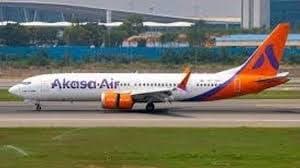
Akasa Air operated the inaugural Mumbai–Guwahati–Mumbai service from the new terminal at Lokapriya Gopinath Bordoloi International Airport (LGBIA) on 22 February 2026, departing Mumbai at 13:40 and arriving Guwahati at 16:45 with the return sector leaving Guwahati at 17:20 and landing in Mumbai at 21:10, a sequence that tested the terminal’s turnaround and passenger-processing capacities within a tight evening window.
Operational snapshot and immediate logistics effects
The new terminal, developed and operated under the umbrella of Adani Airport Holdings Limited and managed locally by Guwahati International Airport Limited, aims to shorten dwell times through improved check-in, security screening and baggage handling workflows. The first Akasa Air service served as a live stress-test of passenger flow, gate assignment, apron access and arrival/departure sequencing during a peak midday-to-evening rotation.
Ceremonial proceedings included a lamp-lighting and cake-cutting attended by Bhavin Joshi (Co-Founder and Senior Vice President – Strategy, Akasa Air), Himanta Biswa Sarma (Hon’ble Chief Minister of Assam) and Jeet Adani (Director, Adani Airport Holdings Limited), reinforcing coordination between airline, airport operator and local authorities ahead of full commercial operations.
📚 You may also like
What the inaugural service validated
- Turnaround efficiency: The 35-minute window between arrival and return demonstrated gate readiness and refueling/ground handling coordination.
- Passenger processing: New security lanes and automated systems reduced queueing during the test flight cycle.
- Connectivity potential: Direct Mumbai links consolidate LGBIA’s role as a trunk node connecting Northeast India to major metros.
Terminal features that affect carriers and travellers
The terminal incorporates expanded holdroom capacity, upgraded baggage reclaim conveyors, and more resilient check-in and security footprints, features designed to increase throughput and reduce delays. For airlines such as Akasa Air, the infrastructure promises more reliable block times and improved on-time performance.
| Feature | Operational benefit | Passenger impact |
|---|---|---|
| Automated check-in kiosks | Faster processing per passenger | Shorter queuing and quicker boarding |
| Expanded apron and gates | Higher simultaneous handling of narrowbodies | Reduced taxi-time and fewer delays |
| Modern baggage systems | Lower mishandled-baggage rates | Improved arrival experience |
Scheduling and network implications for Akasa Air
Launching the Mumbai–Guwahati–Mumbai rotation from the new terminal aligns with Akasa Air’s strategy to open high-potential routes connecting major economic centres and secondary cities. For network planners, the operational reliability offered by the terminal supports denser schedules and improved aircraft utilization, which in turn can enable additional frequencies or new routes from Guwahati into the airline’s domestic hub map.
Regional aviation growth and a brief historical context
Assam’s aviation expansion is the product of decades-long connectivity initiatives for the Northeast corridor. Historically, air services were constrained by limited terminal capacity and legacy aprons that restricted growth. Over the last 15 years, policy shifts, airport privatisation and targeted infrastructure investment have incrementally improved access. The new LGBIA terminal represents the latest phase: consolidating gains in passenger volumes, cargo handling and intermodal links.
Key historical milestones include phased runway and terminal enhancements over the 2000s and 2010s, followed by strategic private-sector participation in airport operations. These changes gradually transformed Guwahati from a single-runway regional facility to a gateway equipped to handle larger narrowbody flows and increased passenger throughput.
How this upgrade fits broader regional transport strategies
- Multimodal links: Better terminal capacity supports feeder bus and rail connections, improving first- and last-mile connectivity to mariners of inland waterways and regional road networks.
- Economic stimulus: Improved air links are expected to catalyse tourism, business travel and cargo movement for perishable goods from Assam and adjacent states.
- Disaster resilience: Enhanced apron and handling capacity aids rapid mobilization for humanitarian logistics in the Brahmaputra floodplain.
Potential downstream effects on tourism and activity hubs
Stronger connectivity to Mumbai and other metros will likely expand visitor flows to Assam’s cultural sites and natural attractions. While Guwahati itself is not a coastal marina hub, improved air access benefits broader destination portfolios—hotels, local tour operators, and inland waterway excursions along the Brahmaputra may see positive impacts from increased passenger volumes.
Practical takeaways for travellers and industry stakeholders
Passengers can expect shorter processing times and improved amenities at LGBIA, while airlines gain capacity to increase frequencies. Ground handlers and service providers should anticipate higher throughput and adjust staffing and ground-transport coordination accordingly. Regional planners should monitor passenger demand and cargo uplift to phase further service expansions.
Checklist for travel planners
- Confirm gate and terminal information prior to arrival due to new facility routing.
- Allow slightly shorter recommended connection times only after verifying airline-specific minimums.
- Expect improved baggage handling but retain tracking for valuable cargo or luggage-sensitive itineraries.
In summary, the inaugural Akasa Air flight from the newly commissioned Loukapriya Gopinath Bordoloi International Airport terminal represents a material upgrade to Northeast India’s air transport infrastructure, validating improved turnaround processes, modernised passenger flows and stronger connectivity to national trunk routes. The development is likely to influence regional Destinations and activity demand, with spillovers into local tourism, hospitality, and even inland boating and fishing excursions on the Brahmaputra as access increases. For stakeholders tracking aviation, charter and broader travel trends, this terminal is a catalytic asset for future service growth.
GetBoat.com is always keeping an eye on the latest tourism news and will continue to monitor how this airport expansion affects Destinations, activities and travel demand across the region.


