AIS MOB Solutions for Offshore and Coastal Lone Workers
Alexandra
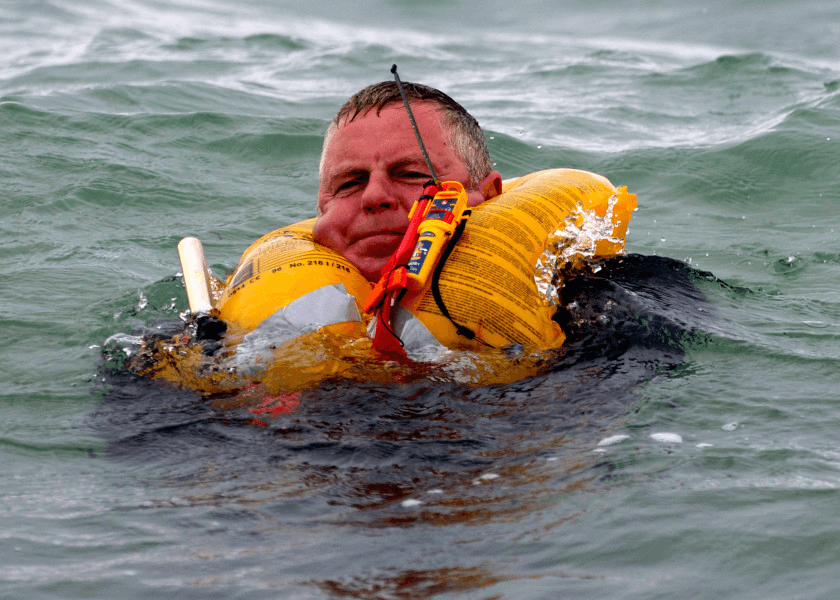
AIS MOB beacons typically transmit over VHF with an operational range of roughly 2–5 NM even in sea state conditions, and they embed GPS coordinates in the AIS payload so position updates are available to any AIS-equipped vessel or shore receiver within range. These beacons usually cost around €350 and are configured to activate automatically when a lifejacket inflates, or manually via a dedicated switch, making them a practical, low-cost safety layer for lone workers on platforms, rigs, wind farms, quaysides and coastal installations such as ports and airports.
Technical profile of personal AIS SART beacons
Personal AIS SART (Search and Rescue Transponder) beacons combine a VHF AIS transmitter and a GPS receiver into a compact package that mounts to a life jacket or harness. Key characteristics that matter to operators and safety officers include:
- Frequency and modulation: standard VHF AIS channels with dual-channel decoding for robust reception.
- Range: 2–5 NM typical, influenced by antenna height, sea state and obstructions.
- Positioning: integrated GPS provides real-time latitude/longitude embedded in the AIS MOB sentence.
- Activation modes: automatic (inflation switch) and manual (push-button or external trigger).
- Cost and lifecycle: price point around €350; replace batteries and test per manufacturer guidance.
Beacon feature comparison
| Feature | Typical Value | Operational Impact |
|---|---|---|
| VHF Range | 2–5 NM | Covers nearby vessels and fixed receivers; best for coastal and near-shore rescue |
| GPS Update | Continuous position in AIS payload | Enables rapid vectoring of rescue craft or local alarms |
| Activation | Auto (inflation) / Manual | Reduces false alarms while ensuring immediate signaling during MOB |
| Cost | ~€350 | Affordable PPE option for lone worker programs |
Integration on offshore structures, rigs and coastal facilities
Deploying personal AIS SARTs on fixed structures requires more than distributing beacons; it also needs a local reception and alerting architecture. Using a hi-sensitivity dual channel AIS receiver mounted on a platform, tower or quay, organizations can convert AIS MOB transmissions into actionable alerts through NMEA 2000 outputs, dedicated alarms or integration with third-party control systems.
📚 You may also like
Typical integrations include:
- Local alarm activation (loudspeakers, flashing lights) when a MOB message is received.
- Feeding AIS MOB data into control-room PC software for charted display and incident logging.
- Bridging to on-site PMR radio networks to notify supervisors and rescue teams immediately.
- Automated SMS or email notifications for remote monitoring of isolated installations.
System options and add-ons
Modular components commonly used in these setups:
- NavAlarm or ultra-loud local sirens for high-noise environments.
- Software consoles for real-time AIS plotting and MOB tracking on detailed charts.
- Manual MOB generators that synthesize an AIS MOB message for testing or drill scenarios.
- Interfaces to SCADA or safety management systems via NMEA 2000 or Ethernet.
Operational procedures and best practices
To maximize effectiveness, operators should adopt a simple lifecycle for AIS MOB equipment: procurement, issuance, routine tests, replacement cycles, and drills. Recommended steps include:
- Issue personal AIS beacons to all lone workers exposed to water hazards.
- Install at least one shore/platform AIS receiver positioned for optimal line-of-sight over working areas.
- Integrate receiver outputs with local alarms and control-room displays via NMEA 2000.
- Run quarterly drills that test automatic inflation activation and manual MOB triggers.
- Log incidents and false activations to refine positioning, coverage, and response times.
Deployment checklist
- Beacon assignment and labeling
- Battery and self-test verification
- Antenna placement for receiver
- Alarm loudness and visibility tests
- Integration test to PMR/SMS/display systems
Implications for sailing, marinas and boat rental operators
For charter operators, marinas and boat-rental services, the increased adoption of AIS MOB networks on coastal installations and ports improves the safety envelope around busy inlets and marinas. Rental skippers and captains benefit from quicker locational fixes for overboard incidents, and fleet managers can coordinate rescue or recovery with greater precision. This matters for owners of yachts, charter boats and small-scale operators who rely on dependable communications near docks, marinas and shore facilities.
Digital Yacht has been refining AIS technology and turnkey receiver solutions that feed NMEA 2000 alerts and support third-party integrations, and their systems can be configured to generate SMS, PMR notifications, or console displays for control rooms. For direct inquiries about system implementation, the solutions team can be contacted at [email protected].
Why operators and travelers should pay attention
GetBoat always keeps an eye on news related to sailing and seaside vacations, as we truly understand what it means to enjoy great leisure and love the ocean. The spread of AIS MOB capable infrastructure reduces response times and can limit the severity of incidents near coastal attractions, harbors and offshore tourism spots. For renters and charter guests, this translates to an extra layer of reassurance when exploring bays, gulfs and island chains.
Forecasting impact on tourism: although AIS MOB enhancements are primarily a safety and operational improvement rather than an immediate market disruptor, they do influence traveler confidence. Improved safety systems can modestly shift destination choices toward areas with demonstrable emergency readiness; however, the global tourism map will not be radically altered by this single technical advance. Start planning your next seaside adventure and make sure to book the best boat and yacht rentals with GetBoat before the opportunity sails away!
If you are planning your next trip to the sea, you should definitely consider renting a boat (boat rentals, rent a boat, rent a yacht), as each inlet, bay, and lagoon is unique and tells you about the region just as much as the local cuisine, architecture, and language and also the unique aspects of the service. GetBoat.com
Highlights of this topic show that portable AIS MOB beacons, shore-mounted AIS receivers and NMEA 2000 integration create a layered response capability for lone workers and recreational users alike. Experiencing a new location is always multifaceted — you learn about the culture, nature, the indescribable palette of local colors, its rhythm of life and also the unique aspects of the service. If you are planning your next trip to the sea, you should definitely consider renting a boat (boat rentals, rent a boat, rent a yacht), as each inlet, bay, and lagoon is unique and tells you about the region just as much as the local cuisine, architecture, and language and also the unique aspects of the service. GetBoat.com
In summary, personal AIS SART beacons and fixed AIS receivers form an affordable, interoperable safety layer that enhances rescue capabilities across offshore platforms, wind farms, ports and coastal tourism sites. The solution blends portable safety equipment with local infrastructure and control-room awareness, delivering faster localization of casualties and streamlined alerts via NMEA 2000, PMR, SMS and charting consoles. For yacht and charter operators, marinas and boating enthusiasts, these developments mean safer days on the water. GetBoat.com supports this landscape by offering transparent, user-friendly options to book or buy yachts, charters and boats — with full details on make, model and ratings to help you choose the right vessel for sun-filled days, gulf cruising, fishing trips or superyacht experiences on clearwater seas.


