Air Canada boosts long-haul fleet with A350-1000
Alexandra
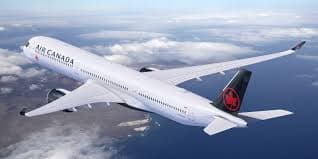
Air Canada has placed firm orders for eight Airbus A350-1000 widebodies with purchase rights for eight more, with deliveries scheduled to begin in the second half of 2030, shifting long‑haul capacity planning, slot allocation and payload logistics across its transoceanic network.
Aircraft specs and operational efficiencies
The A350-1000 is designed for extended-range missions—approximately 9,000 nautical miles—and employs lightweight composite construction paired with Rolls‑Royce XWB97 engines. Airbus estimates up to a 25% reduction in fuel consumption versus prior-generation widebodies, which translates into lower per-seat operating cost, improved range‑payload balance and reduced environmental impact on long-haul sectors.
Cabin design and systems are tuned for passenger comfort: the model features one of the quietest twin‑aisle cabins in class and is pressurised to an effective altitude of 6,000 feet, which reduces fatigue and jet lag on intercontinental legs. The aircraft will be delivered with Air Canada’s upcoming cabin standard, including upgraded in‑flight entertainment and connectivity suites.
📚 You may also like
How the A350-1000 fits into Air Canada’s fleet modernisation
The A350-1000 complements an ongoing renewal: Air Canada is also introducing 14 Boeing 787-10 Dreamliners later this year, taking deliveries of 30 Airbus A321XLR narrowbodies and continuing with Canadian-built Airbus A220 deliveries, while five leased Boeing 737 MAX units are expected in 2026. Together, these types provide a mix of range, seat density and stage-length flexibility.
Mark Galardo, Executive Vice President and Chief Commercial Officer and President of Cargo at Air Canada, highlighted the A350-1000’s role in unlocking new long‑haul possibilities via improved range and payload. John Di Bert, Executive Vice President and Chief Financial Officer, noted expected gains in operating economics and operational reliability thanks to lighter materials and engine efficiency.
Network, cargo and slot implications
From a logistics standpoint, the A350-1000 changes the calculus for route planning: the extended range permits non‑stop links between secondary transatlantic and transpacific city pairs, affects airport slot strategies at congested gateways, and creates more efficient belly‑hold cargo opportunities. Carriers can deploy fewer rotations to sustain capacity, which alters ground handling schedules, warehouse throughput and last‑mile connections to coastal tourism hubs.
| Characteristic | A350-1000 | Previous Gen Widebody |
|---|---|---|
| Estimated fuel burn | Up to 25% lower | Baseline |
| Range | ~9,000 nm | Shorter |
| Cabin pressurisation | 6,000 ft equivalent | Higher |
Operational benefits at a glance
- Fuel and cost savings per seat-mile
- Expanded nonstop reach for long-haul markets
- Improved passenger comfort lowering jet-lag effects
- Higher payload for cargo and belly freight
- Fleet commonality advantages when paired with other Airbus and Boeing types
Ripple effects for coastal tourism and boat rental markets
More efficient long‑haul lifts and better passenger comfort have a direct downstream effect on coastal Destinations and marina economies. Increased capacity and non‑stop options to gateway cities like Vancouver and Toronto or seasonal hubs across the gulf and ocean-facing regions mean higher tourist throughput to beaches, marinas and clearwater anchorages. For the boating community—charter operators, yacht brokers and boat rental businesses—that influx translates into stronger demand spikes during high season.
Put simply: when a carrier can fly more passengers farther and more comfortably, those passengers are likelier to book a yacht charter, rent a boat for a day on the lake or head straight to a sunseeker experience on arrival. I’ve seen it firsthand—more direct flights to coastal gateways often fill up local marinas faster than expected. As the old saying goes, “where the traffic goes, the services follow.”
Practical impacts for marinas and charter operators
Charter companies and marinas should consider several operational adjustments:
- Align staffing and provisioning to match new flight arrival windows.
- Coordinate with local transfer and baggage logistics for seamless passenger-to-boat transitions.
- Forecast inventory for water‑based activities like fishing, guided sailing and day charters.
- Explore joint marketing with airlines and tour operators to capture incoming long‑haul travelers.
For superyacht agents and sale brokers, increased inbound tourism often strengthens resale markets in popular Destinations and can raise demand for crewed charters and captained experiences.
Bottom line
The entry of the Airbus A350-1000 into the Air Canada fleet from 2030 reshapes long‑haul logistics—offering improved fuel efficiency, greater range and better passenger comfort while influencing slot strategies and cargo flows. These shifts also create tangible opportunities for yachting and boating sectors: more visitors to beaches, marinas and clearwater bays mean higher demand for yacht charter, boat rent, fishing trips and other water activities. Whether you run a charter business, manage a marina, or plan a superyacht itinerary, keep an eye on how upgraded long‑haul lift changes travel patterns to coastal Destinations and lakes alike—captain your planning now to match the tide.


