Agentic AI and the Future of Hotel Bookings
Alexandra
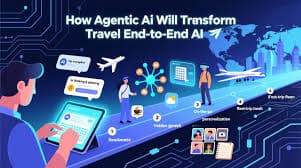
At the Meyer Jabara Hotels (MJH) Executive Conference in Providence, R.I., operational leaders will confront the immediate implications of how digital distribution logistics are shifting as AI-powered agents begin routing guest demand across channels and altering yield management dynamics.
What MJH’s Executive Conference Will Address
Next month, Brad Brewer, Co-Founder and Chief AI Officer of Agentic Hospitality, will brief MJH general managers, directors of sales, and corporate executives on Agentic Hotel Distribution. The briefing will focus on how algorithmic agents evaluate, recommend, and transact on behalf of travelers, thereby changing the discovery-to-booking pipeline.
Brewer frames the current moment as a transition from query-driven search and OTA dominance toward an era in which AI acts as the interface between consumers and commerce. The practical message to hoteliers is twofold: first, AI agents will prioritize properties with accurate, structured digital footprints; second, investments in superficial AI features without a clean booking infrastructure will deliver poor return on investment.
📚 You may also like
Key Themes Brewer Will Cover
- Digital accuracy: ensuring property descriptions, rates, and availability are machine-readable and up to date;
- Structured data: exposing taxonomy, amenities, and geolocation to support AI recommendation confidence;
- Booking readiness: integrating reservation systems so agents can complete a transaction end-to-end;
- Operational efficiency: using AI to save time on payroll, benefits reconciliation, and administrative tasks;
- Enterprise guardrails: secure deployment environments such as Microsoft 365 to protect data and governance.
Why Data Foundations Matter More Than AI Hype
Brewer’s central warning is straightforward: deploying chatbots, marketing automation, or branded AI assistants without first optimizing the booking infrastructure means hotels will not convert AI-driven discovery into revenue. If an AI agent cannot reliably find and verify a property’s data, recommendations will omit it.
Ted Jabara, Senior Vice President of Technical Services at Meyer Jabara Hotels, positions this as a strategic investment: technology should drive measurable performance and ownership returns. MJH’s decision to spotlight Agentic Hotel Distribution at its conference signals a push to educate leaders so properties are “digitally accurate, strategically positioned, and prepared for next-generation demand.”
Practical Short-Term Steps for Hotel Operators
| Priority | Action | Outcome |
|---|---|---|
| Data audit | Scan all public listings, meta-search, and OTAs for discrepancies | Improved AI recognition and fewer booking errors |
| Structured feeds | Implement schema markup and standardized amenity tags | Higher recommendation confidence from AI agents |
| Booking integration | Enable seamless transactions via CRS/PMS connectivity | Conversion of AI-led discovery into confirmed bookings |
| Governance | Set enterprise guardrails and secure environments | Reduced operational risk and data leakage |
Brief Historical Context: From GDS to Agentic Distribution
Hotel distribution has evolved through several distinct waves. The classic era centered on Global Distribution Systems (GDS) and central reservation systems (CRS) which connected travel sellers and travel agents. The internet era brought direct-booking websites and Online Travel Agencies (OTAs), shifting power toward consumer-facing platforms and meta-search engines. In the last decade, rate parity debates, channel cost optimization, and direct-booking campaigns dominated strategy.
Agentic distribution represents the next logical stage: rather than human-initiated search, autonomous agents will proactively find and execute transactions based on traveler preferences, loyalty signals, and contextual data. That means the historical levers—visibility on OTA front pages, meta-search positioning, and direct-channel loyalty incentives—remain relevant but will be mediated by AI trust and structured data quality.
How Past Lessons Inform Present Action
- Visibility still matters, but the metric shifts from impressions to machine-readability.
- Channel cost controls will pivot to negotiations around API access and data freshness.
- Brand differentiation must include clear semantic descriptors for AI comprehension.
Operational and Strategic Forecast
In the short to medium term, organizations that prioritize clean, structured data and booking integration will capture the majority of AI-driven demand. Properties that lag risk invisibility in recommendation flows. Over the next three to five years, enterprise adoption of agentic distribution protocols is likely to accelerate as vendors and channels standardize schema and transactional APIs.
Operational benefits appear early in administrative use cases—task automation, document reconciliation, and staff augmentation—producing measurable time savings that can be redeployed to strategy and guest experience. Strategically, the competitive landscape will favor groups that treat data governance as an ownership-level priority rather than a fringe IT project.
Leadership Implications
Brewer emphasizes that AI use is a leadership skill: prompting, governance, and scenario testing will become part of executive competency. Rebrands, renovations, and legacy content require ongoing digital cleanup because outdated information remains persistent across the web and can mislead AI agents.
Action Checklist for Hotel Groups
- Run a full digital audit across channels and correct inconsistencies.
- Adopt structured data standards and ensure schema markup is applied.
- Connect booking engines to support end-to-end agent transactions.
- Train leadership in effective prompting and AI governance practices.
- Monitor enterprise security and prefer secure, compliant cloud environments.
In summary, the MJH Executive Conference’s focus on Agentic Hotel Distribution crystallizes a wider industry shift: AI will increasingly act as the gatekeeper between travelers and properties, and digital foundations will determine who gets recommended and who remains unseen. Hoteliers that act now to clean data, integrate booking systems, and educate leaders on AI prompting will be better positioned to protect revenue and operational performance.
GetBoat is always keeping an eye on the latest tourism news and industry shifts, tracking developments that affect destinations, activities, and the broader travel ecosystem. The rise of AI-driven discovery touches many touchpoints — from hotel visibility and beachside resorts to marinas and coastal Destinations — and will influence how travelers choose a yacht, charter, or beach break. As the sector adapts, stakeholders across hotel, marina, and tourism networks should monitor how structured data, AI recommendations, and booking infrastructure reshape demand for sea and ocean experiences, boating access, marinas, and related activities. For continuing coverage and updates, visit GetBoat.com.


