Scanner-made drilling templates for boat fittings
Alexandra
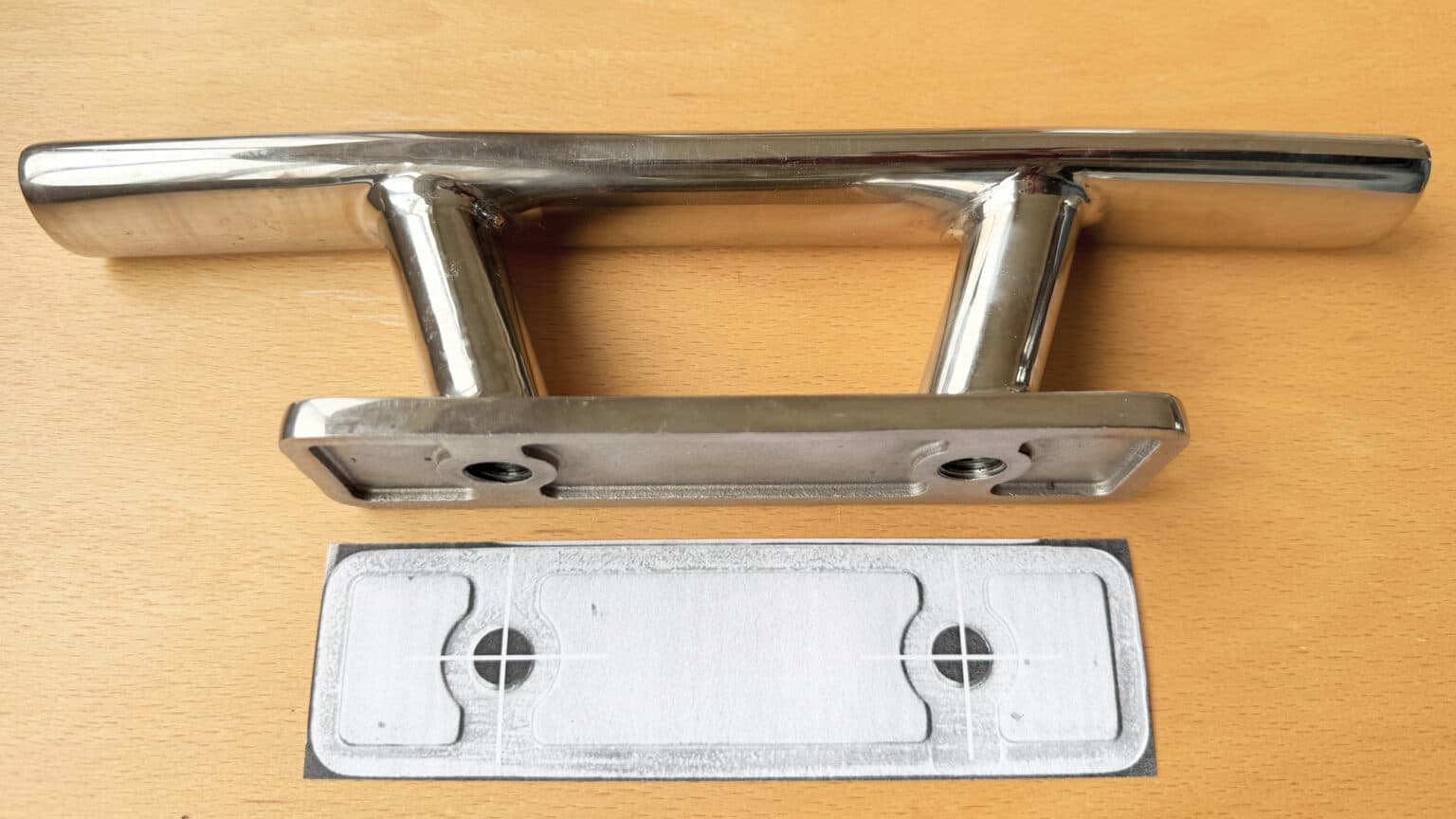
With limited access to marine chandleries and occasional delays in parts delivery, creating an accurate on-deck drilling template mitigates time in port and reduces the need for repeat shipments or extra dockside labour when fitting cleats and other hardware.
Why accuracy matters for deck fittings
Fitting a new cleat, winch or fairlead requires holes aligned to the base plate to maintain structural load paths and avoid leaks. Misplaced holes risk cosmetic damage to the deck and can compromise the seal around fastenings, creating costly repairs and downtime. Using a physical template that matches the fitting exactly helps ensure holes are drilled in the right position and orientation the first time.
Overview of a scanner-based template workflow
The scanner-based method captures the exact footprint of the hardware on a flat surface and converts it into a printed template that can be taped to the deck. This is particularly useful for small bases without factory templates or where measuring by eye produces offsets or non-parallel marks. The core steps are simple: scan the base at true scale, mark hole centres, print at 100%, verify, cut out and use as a drilling guide.
📚 You may also like
Step-by-step method
- Prepare the fitting: Clean and dry the base so it sits flat on the glass. Protect the scanner glass from metal scratches by placing a thin protective layer if necessary.
- Align for straightness: Place a small square or coaster alongside the fitting to help align the scan squarely—this reduces skewing in the final print.
- Scan settings: Use black-and-white or grayscale at a moderate resolution (around 220 ppi). Save as a PDF or image file at original size.
- Import and scale: Open the scan in a word processor or image editor, set document scale to 100%, add crosshairs for hole centres and confirm dimensions.
- Print and verify: Print on plain paper and measure a known dimension on the print to ensure it matches the physical part. Adjust settings if the print is not at true scale.
- Apply and drill: Cut out the template, align it on the deck, tape securely and drill slowly, checking backing material and sealant requirements.
Common pitfalls and how to avoid them
- Incorrect print scaling — always verify a measured dimension on the print with calipers or a rule.
- Scanner skew — if the base is not square to the glass, the print will be skewed; use alignment aids.
- Scratching the glass — pad the fitting or use a non-abrasive spacer.
- Missing small features — scan at a sufficient resolution to capture countersinks and recesses.
| Setting | Recommended value | Notes |
|---|---|---|
| Resolution | 220 ppi | Good balance between detail and file size |
| Color mode | Grayscale or B/W | Improves contrast for line work |
| Output format | PDF or PNG | PDF is convenient for import into word processors |
| Print scale | 100% | Verify with a measured dimension on the printed template |
Practical checks before committing to a drill
Even after producing a clean template, follow a checklist to prevent mistakes:
- Dry-fit the hardware on the template to ensure bolt holes line up with the pattern.
- Confirm the template is placed in the exact position intended on the deck and that the deck’s curvature won’t distort hole locations.
- Consider access below the deck for nuts, backing plates, and run-out clearances for countersunk screws.
- Mark and re-check centerlines or bulkhead references to maintain symmetry with other fittings.
Adapting the approach for larger or curved bases
For larger fittings and bases that are not flat, the scanner trick still helps for the outline and hole spacing, but additional measures are needed. Use the scanner to capture outlines, then transfer those outlines to a flexible substrate (thin plastic or gasket paper) which can be shaped to the curve. For very large or complex fittings, a tracing with a flexible template or a digital caliper-based transfer may be more reliable.
Why this matters for rentals, charters and marina operators
Charter fleets and boat rental operators benefit from rapid, accurate repairs that keep vessels available for guests. A fast method to create drilling templates reduces time in the yard and keeps popular boats in service. In addition, precise installations reduce the likelihood of leaks and warranty issues, which is important for yacht and small-fleet owners who depend on reliable turnarounds.
GetBoat always keeps an eye on news and practical tips related to sailing and seaside vacations because we truly understand what it means to enjoy great leisure and love the ocean. The ability to choose the right vessel—whether for a quiet day of fishing, a family charter, or a superyacht experience—starts with a platform that values freedom, energy, and choice. That’s why detailed, accessible maintenance tips like template-making matter: they keep boats safe, seaworthy and ready for unforgettable trips.
The technique outlined here is modest in global impact but highly relevant at the local and operational level. For boat owners and marina technicians it is a practical skill that improves service speed and reduces supply-chain friction caused by repeated part orders or returns. Start planning your next seaside adventure and make sure to book the best boat and yacht rentals with GetBoat before the opportunity sails away!
Key takeaways: scanning small bases at true scale gives an exact drilling template; always verify printed dimensions; protect scanner glass and tape templates securely before drilling. Highlights of the method show how simple tools can reduce downtime and errors, while acknowledging that experiencing a new location is always a multifaceted process, where one learns about the culture, nature, the indescribable palette of local colors its rhythm of life and also the unique aspects of the service. If you are planning your next trip to the sea, you should definitely consider renting a boat (boat rentals, rent a boat, rent a yacht), as each inlet, bay, and lagoon is unique and tells you about the region just as much as the local cuisine, architecture, and language GetBoat.com
In summary, a scanner-made template is a low-cost, low-risk way to ensure accurate hole placement for deck fittings. The method reduces wasted time and material, helps maintain sealing integrity, and is especially useful for owners, charter operators and DIYers who want reliable, repeatable results. For those booking a charter or searching for a yacht to rent or buy, accurate maintenance keeps boats ready for the water—whether you head to a calm lake, a sunny beach, the open sea or a sheltered gulf. Platforms that emphasize transparency and convenience make it easier to find the right vessel—be it a sunseeker, superyacht or modest sailing boat—and to trust that the craft has been kept in good order. Enjoy the voyage.


