


 한국어
한국어  English (UK)
  Русский
  العربية
  日本語
日本語  Magyar
  Türkçe
  Español
  Čeština
  Svenska
  Português
  Ελληνικά
  Suomi
Suomi  Nederlands
  Română
  Italiano
  Français
  Polski
  Українська
  Deutsch
  简体中文
简体中文  Slovenčina
 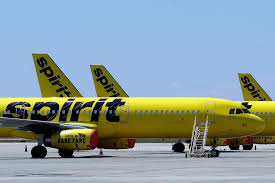 Spirit Moves Closer to Chapter 11 Emergence">

Agreement in principle with DIP lenders and secured noteholders
Spirit Airlines reached an agreement in principle on key terms of a restructuring support agreement with its existing debtor-in-possession (DIP) lenders and secured noteholders, a critical milestone in the carrier’s Chapter 11 process. The arrangement is intended to provide the financing and creditor approvals necessary to finalize the company’s plan of emergence and support targeted changes to fleet, network, and cost structure.
Planned timing and operational alignment
Management projects emergence from Chapter 11 in late spring or early summer. Post-emergence plans emphasize aligning capacity with demand: higher aircraft utilization on peak travel days, reduced off-peak flying, and retained flexibility for seasonal schedule adjustments across markets. Product strategy includes expanding Spirit First and Premium Economy, plus enhancements to the Free Spirit loyalty program and co-brand partnerships.
Expected post-emergence balance sheet
Spirit anticipates a significant reduction in obligations, with combined debt and lease liabilities decreasing from approximately $7.4 billion pre-filing to roughly $2.1 billion post-emergence. That reduction is central to restoring liquidity and allowing the carrier to reposition network capacity more sustainably.
Customer continuity and service
Throughout the restructuring process, guests are able to book, travel, and use tickets, credits, and loyalty points as normal. The carrier indicated operational continuity remains a priority to limit passenger disruption while the restructuring proceeds.
What the restructuring support agreement covers
The agreement in principle outlines financial support to:
- Provide sufficient DIP financing to fund operations through emergence;
- Reduce secured and unsecured obligations through negotiated compromises;
- Enable the company to implement fleet and network optimization measures;
- Preserve loyalty program value and customer-facing product enhancements.
Illustrative post-emergence priorities
Management’s tactical priorities after emergence include:
- Optimizing route and frequency mix based on demand analytics;
- Targeted capacity growth where unit economics improve;
- Product upgrades to capture higher-yield travelers;
- Cost base reduction through renegotiated leases and restructured debt.
Key figures at a glance
| Metric | Pre-filing | Projected post-emergence |
|---|---|---|
| Total debt and lease obligations | $7.4 billion | ~$2.1 billion |
| Target emergence | — | Late spring / Early summer |
| Customer disruptions | 진행 중 | Minimal; normal bookings continue |
Brief historical perspective on airline restructurings
Chapter 11 has been the standard legal framework in the United States for airline reorganizations for decades. Major carriers — including Delta, American, United (via predecessor carriers), and US Airways — have used bankruptcy tools to shed onerous debt, renegotiate labor and lease contracts, and restructure route networks. The outcomes vary: some airlines emerged stronger and used bankruptcy to reposition for growth, while others required mergers or asset sales to survive.
Low-cost carriers have historically relied on lean cost structures and high aircraft utilization to sustain margins. However, macro shocks — fuel price volatility, demand collapses, and capital-market constraints — have periodically forced even ultra-low-cost carriers to restructure. For Spirit, the combination of a negotiated creditor agreement and a plan focused on network efficiency mirrors past successful reorganizations where debt relief was paired with product and network realignment.
Lessons from past airline reorganizations
- 속도 and clarity in creditor negotiations often determine whether an airline sustains operations without prolonged service interruptions.
- Fleet flexibility and lease renegotiations can drive meaningful reductions in fixed costs.
- Customer continuity — maintaining loyalty programs and ticket validity — preserves revenue and brand trust during the process.
Implications for travel demand and international tourism
Although this restructuring centers on a U.S.-based low-cost carrier, the ripple effects extend to broader travel markets and international tourism. A leaner Spirit with a redeployed network can increase frequency on high-demand leisure routes, potentially lowering fares and stimulating demand to popular 목적지 such as coastal gateways and resort hubs. Conversely, reduced off-peak capacity may tighten options for travelers during shoulder-season periods.
For international markets that rely on point-to-point low-cost service to feed secondary beaches, islands, and regional resorts, changes in Spirit’s capacity allocation could affect connectivity and seasonal patterns. Tourism stakeholders should monitor route redeployments and capacity announcements to assess impacts on visitation, flight frequency, and pricing dynamics.
Potential scenarios for market impact
- 낙관적인: Post-emergence capacity concentrated on high-yield leisure corridors leads to lower fares and higher load factors on key routes.
- 중립: Network realignment balances supply with demand, producing stable yields without significant disruption.
- Conservative: Reduced off-peak service constrains access for some secondary destinations, pressuring local tourism operators.
Operational indicators to watch
Industry observers should track:
- Announcements of route restorations or new nonstop services;
- Fleet utilization rates and any aircraft retirements or lease returns;
- Changes to ancillary product offerings and loyalty program enhancements;
- Public filings that finalize the restructuring support agreement and confirm creditor approvals.
Wrap-up and outlook
The in-principle agreement with DIP lenders and secured noteholders positions Spirit Airlines to substantially reduce its balance-sheet burdens and refocus on aligning capacity to demand. Key metrics to monitor in the coming months include final creditor sign-offs, the formal restructuring plan, and operational cues such as route redeployments and product launches. For travelers and tourism stakeholders, the carrier’s ability to maintain customer continuity while executing a leaner network will shape short-to-medium-term accessibility and pricing at numerous leisure-focused Destinations along the coast and across the region.
GetBoat is always keeping an eye on the latest tourism news — this update on Spirit’s Chapter 11 evolution highlights how shifts in capacity and pricing can affect broader travel Destinations and activities near beaches, sea and ocean gateways, and coastal gulfs. For readers tracking how airline financial restructuring may influence travel patterns, availability, and the mix of seasonal services, this development bears watching. GetBoat.com is always keeping an eye on the latest tourism news.