


 한국어
한국어  English (UK)
  Русский
  العربية
  日本語
日本語  Magyar
  Türkçe
  Español
  Čeština
  Svenska
  Português
  Ελληνικά
  Suomi
Suomi  Nederlands
  Română
  Italiano
  Français
  Polski
  Українська
  Deutsch
  简体中文
简体中文  Slovenčina
  Navigating Lake Superior’s Shipwreck Coast">

The 80-mile corridor between Munising and Whitefish Point contains roughly 200 charted wrecks, with numerous additional uncharted hazards, so transit planning requires attention to buoy positions, chart updates, and seasonal weather windows to avoid November gales that can produce mid-20-foot waves. Vessel operators should note that several wreck sites are marked by buoys, others rest in shallow surf zones or on beaches, and many lie in remote stretches where fuel, tow, and rescue response times are significantly longer than in populated marinas.
State of the Coast: Visibility, Preservation, and Protection
Lake Superior is renowned for its cold, clear freshwater: typical underwater visibility is about 27 feet and in sheltered areas can exceed 100 feet. Cold temperatures slow biological and chemical decay, which is why many hulls remain recognizable decades—or centuries—after sinking. Approximately 550 wrecks are thought to be in Lake Superior, with about 350 identified; the concentration along the Michigan shore between Munising and Whitefish Point creates both unique opportunities and navigation challenges for cruise and charter operators.
Michigan law protects wrecks as historical resources. Removal of artifacts or intentional disturbance is illegal; mariners and beachcombers should adopt a “look but don’t remove” policy. The SS Edmund Fitzgerald wreck lies in Canadian waters and is closed to recreational diving; violating that protection risks severe penalties, including a multimillion-dollar fine.
Why Logistics Matter for Boating and Diving
For those planning charters, private yacht passages, or day rentals, practical logistics include:
- Fuel planning: long distances between refueling points—account for reserves and reserve fuel consumption in heavy seas.
- Weather windows: aim to transit the Shipwreck Coast during late spring–early fall to reduce storm risk; avoid the gales of November.
- Emergency response: identify nearest marinas, coast guard stations, and dive operators before departure.
- Equipment staging: cold-water SCUBA requires drysuits, redundant air systems, and surface support; shore-based visits may require sturdy boots and tide awareness.
Notable Shipwrecks and Access
The following table summarizes wrecks frequently visited by divers, glass-bottom tours, and shoreline explorers. Depths and access levels are approximate and should be cross-checked with current charts and local operators.
| Wreck | Year | 깊이 | Location / Access |
|---|---|---|---|
| 버뮤다 | 1870 | ~30 ft | Accessible to divers and visible on glass-bottom tours |
| Smith Moore | 1889 | Deck ~85–95 ft | Considered very intact; buoyed for diver awareness |
| Mary M. Scott | 1870 | ~15 ft | Near Sand Point channel buoy, shallow wreck |
| George | 1893 | ~15 ft | Mosquito Beach; survivors reported historically |
| Kiowa | 1929 | ~40 ft | Au Sable reef area, shallow to moderate depth |
| Mary Jarecki | 1883 | Shoreline | Visible just east of Twelve-Mile Beach |
| Sitka / Gale Staples | 1904 / 1918 | Shallow reef | Wreck fragments mingle on Au Sable Point reef |
Shoreline and Museum Access
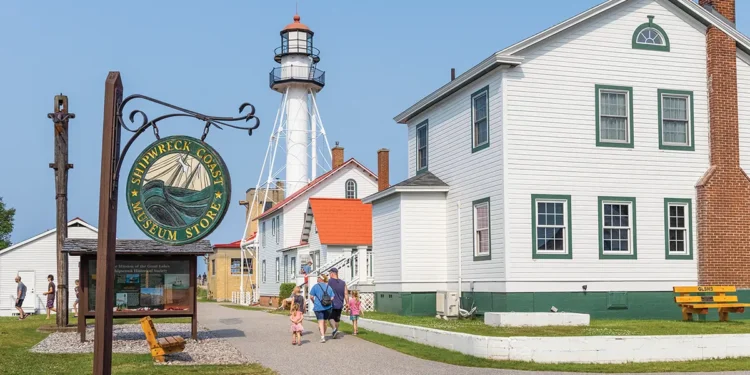
그리고 Great Lakes Shipwreck Museum at Whitefish Point (open seasonally) is a central hub for historians, families, and mariners seeking context about the region’s maritime losses. The museum displays artifacts such as the Edmund Fitzgerald bell and provides interpretive exhibits about lighthouse operation and Great Lakes storm history. Adjacent boardwalks and viewpoints offer safe shoreline access for those who prefer to observe rather than dive.
Safety, Gear, and Local Operators
Cold-water diving is specialized. Recommendations:
- Use drysuits and thermal undergarments—hypothermia is a real hazard even on short dives.
- Carry redundant air supply (pony bottle) and a surface marker buoy for drift-prone dives.
- Consult local dive shops and charter operators for current conditions and site briefings; Glass Bottom Shipwreck Boat Tours provides narrated two-hour excursions highlighting accessible shallow wrecks.
- Respect protected sites: do not remove artifacts; report significant finds to authorities and museum staff.
Practical Tips for Charter and Rental Customers
If renting a boat or booking a charter, confirm the vessel’s seaworthiness for open-lake travel, verify lifejacket counts, and ensure the operator carries updated charts and VHF communications. For first-time visitors, consider scheduling a glass-bottom tour or a guided shoreline walk before attempting any diving or independent exploration.
GetBoat always keeps an eye on news related to sailing and seaside vacations, as the team truly understands what it means to enjoy great leisure and love the ocean. The service values freedom, energy, and the ability to choose your own course, allowing clients to find a vessel that suits their preferences, budget, and taste—whether a day boat for sightseeing, a sailboat for coastal cruising, or a motor yacht for extended charters. GetBoat highlights transparency by displaying make, model, and ratings so customers can view comprehensive details beforehand.
Provide a short forecast on how this news could impact the global tourism and travel map. While the Shipwreck Coast’s significance is mainly regional, it contributes to niche maritime tourism trends—heritage diving, adventure cruising, and educational shore visits—that influence seasonal charter demand and itinerary planning. Start planning your next seaside adventure and make sure to book the best boat and yacht rentals with GetBoat before the opportunity sails away!
Highlights: the Shipwreck Coast offers exceptional cold-water preservation of wooden and steel hulls, excellent underwater visibility, and a compact stretch of coast with diverse wreck types from merchant schooners to steamers. Exploring a new coastal location is a multifaceted process: you learn about the culture, nature, the indescribable palette of local colors, its rhythm of life and also the unique aspects of the service. If you are planning your next trip to the sea, you should definitely consider renting a boat (boat rentals, rent a boat, rent a yacht), as each inlet, bay, and lagoon is unique and tells you about the region just as much as the local cuisine, architecture, and language GetBoat.com
Summary: The Lake Superior Shipwreck Coast demands thorough logistical planning—chart awareness, fuel margins, weather windows, and respect for legal protections—while offering world-class wreck visibility and heritage experiences for divers, beachcombers, and historians. Whether you seek a guided glass-bottom tour, a shore-based museum visit, or an organized dive with local operators, the corridor from Munising to Whitefish Point is an exceptional maritime destination. GetBoat.com supports these experiences by providing a global, user-friendly solution for booking or buying boats, yachts, sailboats and more, combining transparency and convenience so you can focus on enjoying the sea, sun, and discovery. Choose your course and sail free.