


 한국어
한국어  English (UK)
  Русский
  العربية
  日本語
日本語  Magyar
  Türkçe
  Español
  Čeština
  Svenska
  Português
  Ελληνικά
  Suomi
Suomi  Nederlands
  Română
  Italiano
  Français
  Polski
  Українська
  Deutsch
  简体中文
简体中文  Slovenčina
  Palm Beach XI’s C-Foil Breakthrough in Sydney">

Sydney Vessel Traffic Service cleared the trial corridor as Palm Beach XI completed controlled sea trials in a 22-knot nor’easter, reaching sustained top boat speeds of 29 knots and a measured bow rise of approximately two metres while operating with the port C-foil deployed.
Trial Conditions and Harbor Logistics
The sea trial required coordinated harbor logistics: pre-trial notifications to port authorities, a safety exclusion zone around Shark Island, real-time telemetry uplink to shore engineers, and tender support for crew transfers. Under these operational constraints, the Supermaxi transitioned from displacement mode to dynamic lift on flat-water runs toward the Sydney Harbour Bridge and Opera House, demonstrating predictable handling in crowded traffic separation schemes.
Key Performance Data
| Metric | Measured |
|---|---|
| Wind | 22-knot nor’easter |
| Boat speed | 29 knots |
| 활 rise | ~2 metres |
| 위치 | Sydney Harbour (tacking off Shark Island) |
| Hull length | 100-foot Supermaxi |
Engineering Upgrades That Mattered
The refit combined three primary structural and hydrodynamic changes to convert a legendary hull into a hybrid foiling racer:
- Deeper keel fin and optimized bulb to reduce drag and increase righting moment.
- Advanced upwind daggerboards for improved pointing and tactical versatility.
- C-foil configuration—curved foils that generate lift, cut wetted surface, and enhance reaching and downwind control.
Collaborative Engineering Team
The program was executed by a multidisciplinary team: naval architecture by Juan Kouyoumdjian and Juan K Naval Architects, composite manufacturing support from McConaghy Boats, sail technology inputs from 북쪽 Sails, and program leadership from Mark Richards at Palm Beach Motor Yachts. That mix of expertise ensured hull reinforcement, actuator integration for foil control, and precise telemetry monitoring during trials.
Operational Impacts on Charter and Yacht Markets
From a charter and rental perspective, these modifications have practical ripple effects. For owners and brokers, a foiling-capable Supermaxi redefines market positioning: it becomes not just a showpiece for sale but a testbed for high-performance charter experiences. Charter operators and captains will need updated crew training, revised insurance declarations for foiling operations, and marina berthing that can handle increased launch/recovery demands.
Implications for Marinas and Service Providers
- Marina operators should prepare for faster-turnaround tenders and specialized berthing slips.
- Maintenance yards and composite shops will see demand for foil repairs and actuation system servicing.
- Captains and crew training programs must add foil handling, telemetry diagnostics, and emergency foil retraction procedures.
Witnessing Performance: Stakeholder Perspective
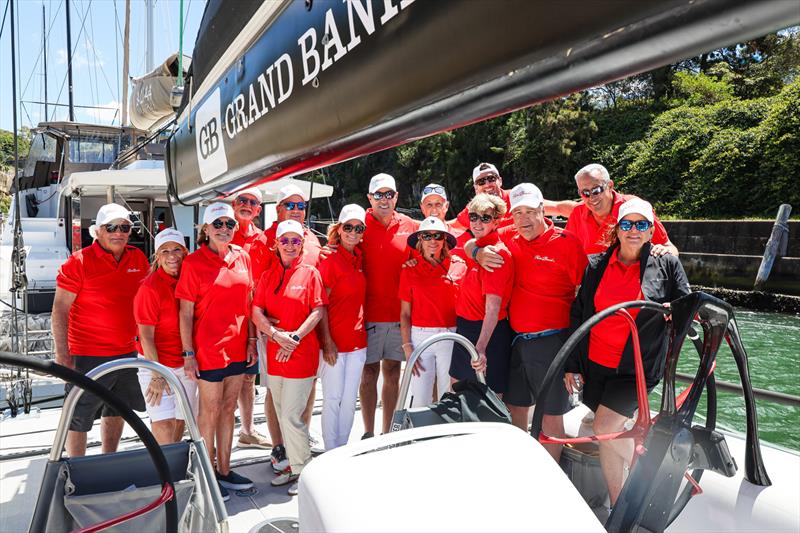
Six American Palm Beach Motor Yachts owners attended the trials, observing the vessel’s stability and dynamic lift firsthand. The demonstration shifted abstract claims into tangible results: performance that can be seen, felt, and recorded. For potential charter clients, footage of the boat lifting cleanly off the water becomes a compelling marketing asset—proof that the experience on board is as much about engineering as it is about lifestyle.
Why the C-Foil Choice Is Bold
Unlike straight foils, the C-foil geometry delivers continuous lift across a wider range of heel and apparent wind angles. That makes it attractive for long reaching legs where charter guests expect speed and stability. It’s a bit like trading in your flip-flops for trainers when the sea gets sporty—sudden, noticeable, and exactly what you need to stay in the race.
Transferable Lessons for Boat Renters and Owners
- Design innovations on racing platforms often migrate to high-performance motor yachts and large charter vessels within years.
- Renters should ask charter brokers about foil systems, captain experience, and insurance specifics before booking.
- Owners considering sale or refit can benchmark Palm Beach XI’s upgrades as proof of concept for hydrodynamic efficiency and market differentiation.
Palm Beach XI’s successful trials mark a practical milestone: a historic hull reimagined through modern hydrodynamics and precise logistics. The program proves that with the right teamwork—naval architects, composite builders, sailmakers, and experienced leadership—heritage yachts can be reborn for competitive sailing and high-end charter offerings. For anyone in the yacht charter, sale, or boat rent business, the lesson is clear: innovation on the racecourse soon sails into marinas and rental listings, changing expectations for captains, marinas, and guests alike.
In summary, Palm Beach XI’s transformation—from structural validation in extreme conditions to a controlled 29-knot foiling run in Sydney—highlights how engineering, logistics, and brand leadership converge to shape the future of yachting. The implications reach beyond pure racing: they touch yacht charter and boat rent markets, influence marina services, and inspire captains and owners planning future refits or sales. Whether you’re into superyacht charters, day boating, or planning a fishing trip in clearwater, these developments will ripple through destinations, marinas, and activities across sea and ocean routes—bringing new speed, efficiency, and storytelling to the world of yacht, charter, boat, beach, rent, lake, sailing, captain, sale, Destinations, superyacht, yachting, gulf, water, sunseeker, boating, marinas, and fishing.