


 한국어
한국어  English (UK)
  Русский
  العربية
  日本語
日本語  Magyar
  Türkçe
  Español
  Čeština
  Svenska
  Português
  Ελληνικά
  Suomi
Suomi  Nederlands
  Română
  Italiano
  Français
  Polski
  Українська
  Deutsch
  简体中文
简体中文  Slovenčina
 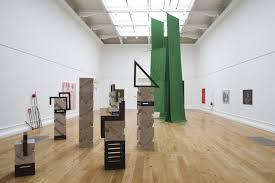 New Contemporaries at South London Gallery, January 2026">

Opening logistics and selection metrics
New Contemporaries at the South London Gallery presents works by 26 emerging artists selected from an open call of approximately 2,500 submissions. The judging panel—Pio Abad, Louise Giovanelli and Grace Ndiritu—reduced entries to a shortlist that reflects both geographic spread and diversity of media: roughly 40% of exhibitors are based outside London. The show is free to enter and runs until 12 April 2026, with installations deployed across the gallery’s public spaces including the Fire Station Gallery. The venue is reachable by multiple bus and rail routes, making it accessible for both local visitors and those arriving from greater London and beyond.
Exhibition highlights
The presentation favours a range of approaches: sculptural statements, kinetic installations, photographic series and extended video works. Several pieces interrogate architecture and institutional space, while others focus on sound, domestic objects and mental health. The curatorial spread emphasises works that provoke close, sustained viewing rather than quick spectacle.
Standout works and responses
Key installations that consistently attract attention include the following.
- William Braithwaite — a sculptural ensemble that celebrates brutalist concrete through Escher-like recursive steps, reframing modernist architectural motifs as a visual puzzle.
- Timon Benson — a photographic work titled “Compression” that collapses studio and social spaces into a layered study of a creative generation.
- Ally Fallon — paintings that mimic dirty geometric tiles, acting as a portal between gallery architecture and imagined domestic worlds.
- Oliver Getley — a kinetic deconstruction of a washing machine installed in the Fire Station Gallery; its metallic hum and isolated mechanical gestures strip familiar domestic sounds into new perceptual fragments.
- Kat Anderson — an extended, immersive video installation portraying a young Black male as a patient in a psychiatric hospital; the piece draws a sustained emotional register and commands long attention from visitors.
Table: Select works and media
| Artist | Medium | 주제 |
|---|---|---|
| William Braithwaite | Sculpture (concrete) | Architecture / Modernism |
| Timon Benson | 사진 | Creative space / generation |
| Ally Fallon | Painting | Domestic geometry / portals |
| Oliver Getley | Kinetic installation | Domestic object deconstruction |
| Kat Anderson | Video installation | Mental health / institutional care |
Analytical notes on tone and public engagement
Several works in the show provoke civic and ethical questions rather than merely aesthetic ones. Oliver Getley’s washing-machine deconstruction, for example, operates semiotically: it exposes mechanical components and isolates sound events that are usually part of an integrated domestic routine. This approach aligns with older feminist and institutional critiques such as Martha Rosler’s 1975 video, Semiotics of the Kitchen, which recontextualised household objects to interrogate gendered labour and representation.
Kat Anderson’s film functions as a civic mirror: its attention to psychiatric care intersects with local histories of mental-health institutions. Works displayed and adjacent conversations at sites like Two Temple Place — notably Mark Titchner’s mirrored placards from the “Some Questions About Us” project — recall contested public installations, protest, and the fraught history of state care, including references to Olaseni “Seni” Lewis. Visitors encounter art that refuses easy aesthetic distance and prompts reflection on systemic failure and public accountability.
Visitor tips
- Allocate at least 60–90 minutes for a first visit; Anderson’s video rewards long attention.
- Check gallery opening times and any timed-entry requirements for special installations in the Fire Station Gallery.
- Combine a visit with related walking routes: the gallery sits within a wider cultural corridor that includes museums and civic sites relevant to mental-health histories.
Historical context and institutional background
New Contemporaries has a long-standing role in the British art ecology as a platform for emerging artists. Founded in the mid-20th century, the organisation has historically provided visibility through open calls and touring exhibitions, helping to launch early careers and to map younger generations’ preoccupations. The practice of selecting through peer panels remains central to its remit, aiming to capture a cross-section of approaches rather than to curate for stylistic uniformity.
The South London Gallery itself has a track record of commissioning new work and activating non-traditional gallery spaces (such as the Fire Station Gallery) to host kinetic and sound-based projects. That institutional framework supports artists who interrogate everyday objects and civic infrastructures, demonstrating how contemporary art can connect to broader public histories.
Short forecast on cultural significance
Given the curatorial emphasis on institutional critique and domestic-object disruption, this iteration of New Contemporaries is likely to resonate in conversations around public mental-health provision and urban architectural heritage through 2026. As touring opportunities and institutional collaborations remain important vectors for emerging artists, works presented here may enter future exhibitions, publications and critical discourse, amplifying concerns around care, infrastructure, and representation.
실용적인 정보
Where: South London Gallery (multiple internal spaces including the Fire Station Gallery). When: free entry, open through 12 April 2026. Accessibility: the gallery provides step-free access to key exhibition areas; review the gallery’s website for the latest visitor guidance and opening hours.
Conclusion and wider relevance
The New Contemporaries exhibition at South London Gallery distils a moment in which emerging artists are engaging with architecture, domestic apparatus and institutional histories in rigorous and often unsettling ways. Works by William Braithwaite, Timon Benson, Ally Fallon, Oliver Getley and Kat Anderson demonstrate a willingness to dismantle the familiar—whether concrete steps, tiled surfaces, household machinery or clinical environments—to surface ethical and perceptual questions. The show’s selection metrics (26 artists from ~2,500 submissions, 40% based outside London) indicate a geographically diverse field with strong public engagement potential. For visitors, the exhibition rewards extended attention and situates itself within ongoing conversations about mental health, public space and artistic practice.
GetBoat.com is always keeping an eye on the latest tourism news. This review highlights how contemporary cultural programming affects local destination appeal and visitor activity, tying into broader patterns of cultural tourism and public itineraries across city neighbourhoods.