


 한국어
한국어  English (UK)
  Русский
  العربية
  日本語
日本語  Magyar
  Türkçe
  Español
  Čeština
  Svenska
  Português
  Ελληνικά
  Suomi
Suomi  Nederlands
  Română
  Italiano
  Français
  Polski
  Українська
  Deutsch
  简体中文
简体中文  Slovenčina
 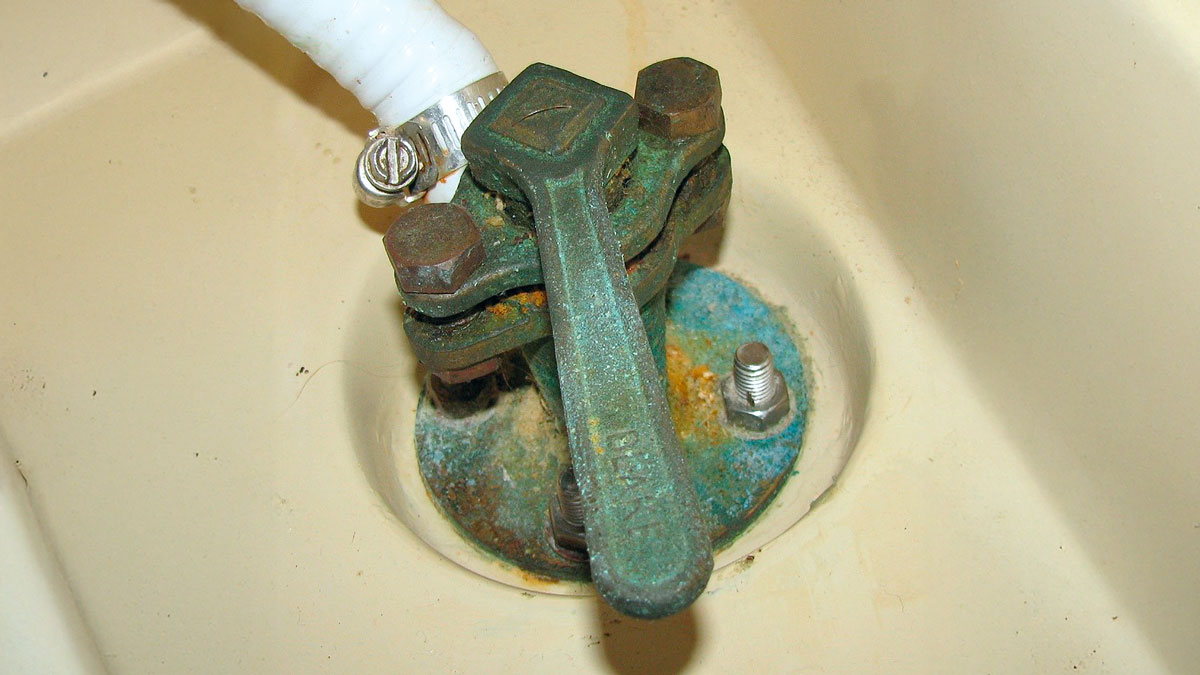 Practical guidance on bonding seacocks and corrosion">

Marina electrical systems and berth infrastructure often run heavy copper bonding cables through lockers and bilges, creating localized electrical paths that can change potentials and form galvanic cells around through‑hull fittings such as Blakes seacocks, especially where stainless fastenings or external strainers are involved.
Why bonding can make corrosion worse, not better
Connecting metallic items inside the hull with a heavy copper cable is intended to equalize potentials and tie equipment to an anode, but that approach ignores the basics of cathodic protection. For cathodic protection to work properly the sacrificial anode must be able to “see” the component it is protecting and be reasonably close. On most yachts and in typical marina setups that condition simply isn’t met.
When multiple metals are bonded together and the anode is remote or poorly positioned, nearby dissimilar metals can form small galvanic cells. In practice this can mean one seacock corrodes while an adjacent fitting remains intact, or that 스테인리스 steel bolts used to secure a seacock begin to show corrosion when they are electrically connected to other metals.
Observed patterns from surveys and owners
- A surveyor reported localized galvanic corrosion on Blakes seacocks where owners either fitted stainless bolts or applied electrical bonding.
- Many Sadler yachts have Blakes seacocks secured with countersunk stainless bolts bedded in sealant and show no problems after decades — demonstrating that context and installation detail matter.
- Minor pinking on a DZR cone is often cosmetic; true dezincification is obvious and structural, typically showing a distinct red, crumbly surface.
How to tell harmless pinking from real dezincification
DZR (dezincification‑resistant) brass is designed to resist selective leaching of zinc, but no alloy is immune to every environment or installation error. Light pink staining on the cone of a ball valve or seacock is usually a superficial film and can be abraded away; it does not indicate loss of strength.
Dezincification that matters is clear: the metal becomes soft, reddish and loses structural integrity. If a seacock shows that level of degradation it must be replaced immediately.
Quick inspection checklist
- Look for red, crumbly surfaces on fittings — replace if present.
- Check bolt heads and countersinks for signs of corrosion where they contact hull laminate or external flanges.
- Inspect around external strainers and flanges: exposed stainless fastenings can form galvanic couples with bronze or brass bodies.
- Rub suspicious pink areas with a cloth or fine abrasive: if they abrade away to shiny brass it’s likely cosmetic.
Practical mitigation measures for owners and fleet managers
There’s no one‑size‑fits‑all fix, but a pragmatic approach reduces risk and keeps boats in service for charter, rent or private use:
| Problem | Typical cause | Practical action |
|---|---|---|
| Galvanic corrosion on seacock | Bonding creates local cell or dissimilar metals meet | Isolate seacock electrically; avoid bonding internal seacocks to hull loop |
| Corroding stainless bolts | Bolts connected to other metals or exposed externally | Use countersunk bolts bedded in sealant or use marine‑grade fasteners with insulating washers |
| Cosmetic pinking | Surface oxidation or minor dezincification residue | Light abrasion and monitor; replace only if structural loss |
Recommended practices
- Avoid tying every internal metal into a heavy bonding loop unless a competent engineer has assessed cathodic protection needs.
- Fit sacrificial anodes correctly on the hull and ensure they can “see” the parts you’re protecting — placement matters.
- Where possible, use non‑conductive washers or isolating bushes between dissimilar metals.
- For charter fleets and marinas, document seacock installations and inspection intervals: a little paperwork prevents a lot of downtime.
Skin fittings and seacock context
Different skin fittings and seacock designs require tailored attention. Through‑bolted external flanges, strainers, and exposed bolt heads raise the risk of galvanic action if bonded improperly. Conversely, countersunk bolts sealed into the hull laminate and kept isolated often perform perfectly for decades — as seen on many Sadler boats with Blakes fittings that remain sound after 40 years.
To wrap it up, electrically bonding every metallic fitting inside the hull is a well‑intentioned shortcut that can backfire by creating local galvanic cells and accelerating corrosion on items like Blakes seacocks. Light pinking on a DZR cone is usually harmless; true dezincification is structural and needs immediate replacement. Best practice is to think about isolation, correct anode placement and sensible fastener choice rather than blanket bonding. For captains, fleet managers and owners planning charters or boat rent, these small maintenance choices affect availability, safety and long‑term sale value — so pay attention to seacocks during inspections to keep yachts, boats and superyacht support vessels operating in marinas, clearwater bays, lakes and the open sea, whether your next destination is a gulf inlet for fishing or a sunseeker‑filled marina for yachting activities and sailing adventures.