


 한국어
한국어  English (UK)
  Русский
  العربية
  日本語
日本語  Magyar
  Türkçe
  Español
  Čeština
  Svenska
  Português
  Ελληνικά
  Suomi
Suomi  Nederlands
  Română
  Italiano
  Français
  Polski
  Українська
  Deutsch
  简体中文
简体中文  Slovenčina
  킨드레드 — 고통의 고독과 공동체">

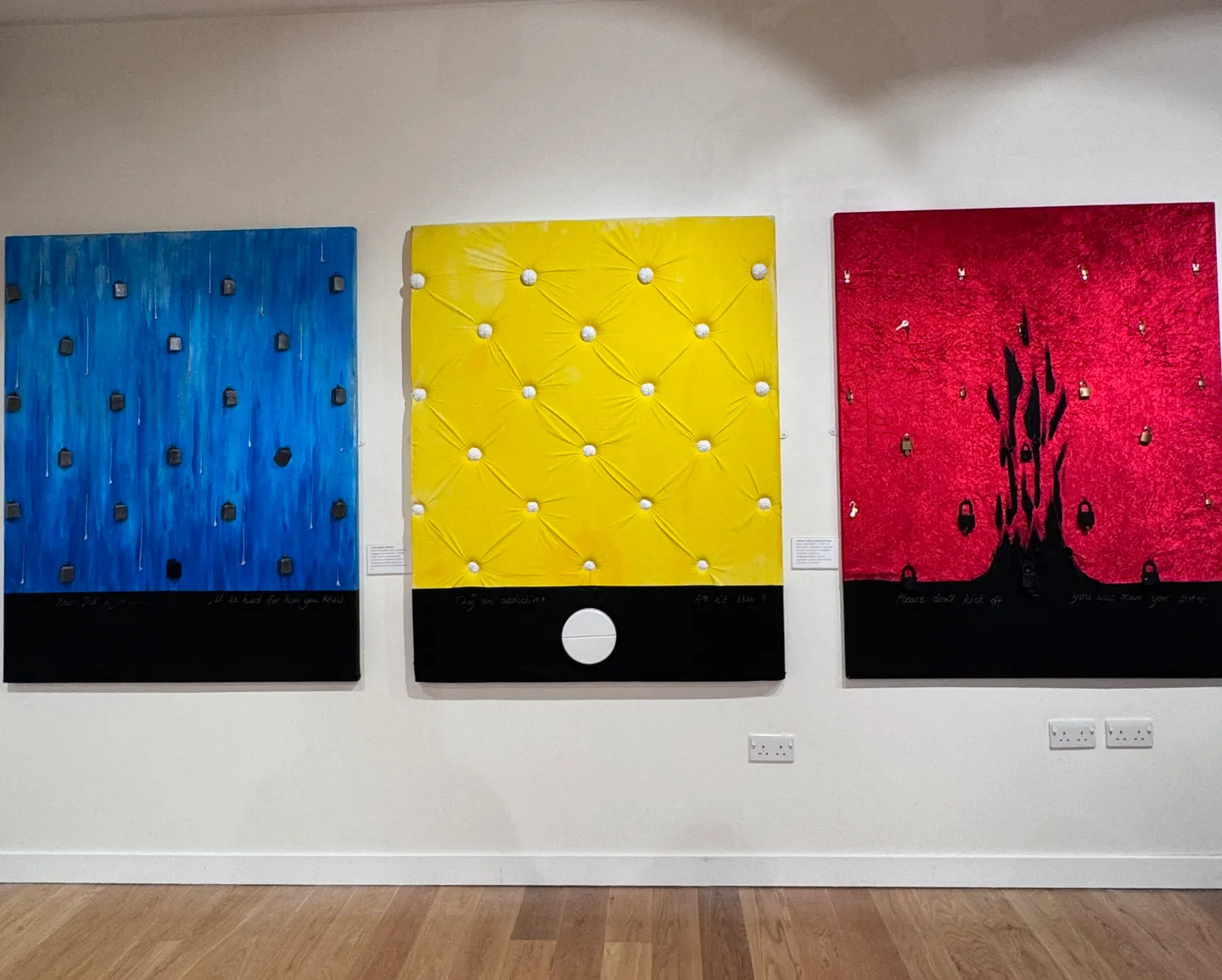
This piece examines Kindred: The Loneliness of Suffering and the Community of Lived Experience at the Bethlem Museum of the Mind, exploring how artists represent group therapy, care networks, and the rituals that both isolate and connect people living with mental ill health.
Exhibition overview: themes and first impressions
Kindred presents a concise, affecting sequence of artworks and photographs that filter the experience of group therapy through lived experience. The show opens with Tracie Hodge’s provocative textile work Don’t Just Medicate Me, an unflinching reminder of medication narratives in mental healthcare. Rather than mount a polemic against pharmaceuticals, Hodge’s piece is framed as a demand to be heard — a theme echoed across the exhibition.
Other works, such as Rozanne Hawksley’s Springfield Summer, use domestic materials to evoke care and touch: clean sheets, familiar fabrics, and the imprint of bodies. Photography by Gareth McConnell captures empty meeting rooms and the quiet architecture of therapy, while community-sourced images from Copleston Community Centre centre small rituals — hands round a cup of tea, the partially concealed faces of participants — that make group therapy tangible and intimate.
Highlights of the exhibition
- Tracie Hodge — Don’t Just Medicate Me: textile work addressing medication and voice.
- Rozanne Hawksley — Springfield Summer: textiles that suggest comfort, touch, and domestic care.
- Gareth McConnell — photography series: empty meeting rooms and the materiality of group sessions.
- 진흙 — reflective pieces on the difficulty of articulation and the breakthrough of being heard.
- Annabel Merrett — Something to Say: a powerful testimony to the ripple effects of mental health challenges through family networks.
How the works map the experience of group therapy
Kindred refuses easy narratives. Several works foreground ritual and structure: the arrangement of chairs, the ceremonial pour of tea, the choreography of waiting. These rituals are not merely background; they are key tools that allow disclosure and trust to emerge.
The exhibition repeatedly returns to the idea of a community of care — not a cure, but an interlocking set of relationships that absorb and respond to suffering. Annabel Merrett’s text-driven piece captures the echo effect: when one person speaks, the impact moves outward to family, friends, and carers. For visitors with personal histories of supporting someone with dementia or long-term mental illness, these works often trigger vivid memories and complex emotions.
Table: Selected works and focal themes
| Artist | Work | Medium | Core theme |
|---|---|---|---|
| Tracie Hodge | Don’t Just Medicate Me | Textile installation | Listening, medication, voice |
| Rozanne Hawksley | Springfield Summer | Textiles | Care, touch, domestic comfort |
| Gareth McConnell | Meeting Room Series | 사진 | Ritual, absence, architecture of therapy |
| Annabel Merrett | Something to Say | Text-based installation | Family networks, ripple effects |
Historic context: Bethlem Museum and the visual culture of mental health
Located on the grounds of an historic mental health hospital, the Bethlem Museum of the Mind has long positioned itself at the intersection of history, psychiatry, and the arts. Over recent decades the museum has transformed from a modest display into a focused cultural institution that interrogates the history of care and amplifies the voices of those with lived experience.
Historically, art related to mental health has swung between voyeuristic fascination and therapeutic practice. Victorian-era representations—such as the works of Richard Dadd, a historical figure with ties to Bethlem’s collections—were often framed through the lens of pathology. Contemporary exhibitions, by contrast, foreground agency, collaboration, and the social dimensions of illness. Kindred sits within this shift: it centers community, not just pathology, and situates artworks as tools for reflection and connection.
Why this matters for visitors and communities
For those working in care or community arts, Kindred offers models of collaboration and representation. For families and carers, the exhibition validates common experiences of frustration, hope, and the slow work of mutual support. For general audiences, the show opens a window onto the rituals and structures that make therapeutic work possible.
Visitor information and practicalities
Kindred runs at the Bethlem Museum of the Mind from 16 January to 27 June 2026 and is free to enter. The museum is typically open Wednesday to Saturday, 9:30–17:00. Visitors should expect a compact exhibition that rewards slow looking and quiet reflection rather than large-scale spectacle.
Tips for visiting
- Allow time after viewing to sit quietly and process; small exhibitions can be emotionally intense.
- Check the museum’s access information if mobility or sensory needs are a concern.
- Pair a visit with related displays or nearby cultural sites — Bethlem often lends works to larger London exhibitions, further enriching context.
Broader implications and a cautious forecast
Exhibitions like Kindred contribute to a growing international trend: museums serving as platforms for public mental health conversations. As cultural institutions embrace lived-experience curation, exhibitions will likely play increasing roles in tourism programming and community outreach. For international visitors, mental health-focused exhibitions provide unique, empathetic perspectives on local histories of care that complement more traditional heritage itineraries.
Looking ahead, the role of museums in shaping public conversations around wellbeing may influence how communities promote cultural tourism. Destinations that integrate sensitive, community-led displays into their offer can broaden appeal beyond conventional attractions, attracting visitors interested in thoughtful, human-centered experiences.
In summary, Kindred offers a restrained but potent survey of group therapy and networks of care. Its combination of textiles, photography, and text-based work foregrounds ritual, listening, and the ripple effects of mental health struggles, while Bethlem Museum’s evolving practice continues to connect history, art, and wellbeing in meaningful ways.
GetBoat is always keeping an eye on the latest tourism news — and on how cultural offers from museums to coastal Destinations shape visitor interests. From quiet urban galleries to sunlit marinas and beach-front activities, trends in exhibitions, wellbeing and community engagement influence broader travel choices, including choices around yacht, charter, boat, beach and lake Destinations, superyacht scenes, yachting activities, the sea and ocean, boating communities, gulf and water regions, marinas and clearwater bays, and even fishing and sailing prospects. For now, Kindred stands as a reminder that thoughtful cultural programming can be as important to a trip’s emotional landscape as any sightseeing on land or sea; for more curated news and travel angles visit GetBoat.com.