


 한국어
한국어  English (UK)
  Русский
  العربية
  日本語
日本語  Magyar
  Türkçe
  Español
  Čeština
  Svenska
  Português
  Ελληνικά
  Suomi
Suomi  Nederlands
  Română
  Italiano
  Français
  Polski
  Українська
  Deutsch
  简体中文
简体中文  Slovenčina
  Discovering the Blend of Art, Science, and Nature on a Museum Trail">

Unveiling the Connection Between Art, Science, and Nature
Exploring the intricate relationship between art, science및 nature invites an enriching journey through creativity and discovery. A self-guided trail through a renowned Science Museum reveals how these disciplines intertwine, presenting artworks and stories that highlight their deep connections.
Stop 1: Mathematical Order in Nature’s Design
The trail begins at a gallery dedicated to mathematics, where a captivating piece titled “Print of Herrenhausen Gardens” invites visitors to reflect on the harmony between geometry and the natural environment. These 17th and 18th-century gardens in Hannover, Germany, were designed with precise lines of symmetry and geometric shapes, symbolizing both scientific mastery and the human desire to shape nature.
As an example of early Baroque gardens, the layout incorporates circular fountains as focal points and strict sight lines, demonstrating how mathematical concepts such as symmetry inform natural beauty and design.
Stop 2: Medicine and Community in a Pandemic
Moving on to the Medicine galleries, visitors encounter a ceramic vase named “Alan Measles – God in the Time of Covid-19” by artist Grayson Perry. This artwork channels the emotional and social impact of the Covid-19 pandemic in 2020, featuring symbolic figures such as healthcare workers in PPE and protesters, alongside imagery of urban and rural contrasts.
The depiction underscores the crucial role of green spaces in mental health during lockdown periods, showing how access to nature supports psychological resilience against stress and anxiety. It also highlights global efforts toward urban greening to extend the benefits of natural environments to more communities.
Industrial Revolution Captured Through Art
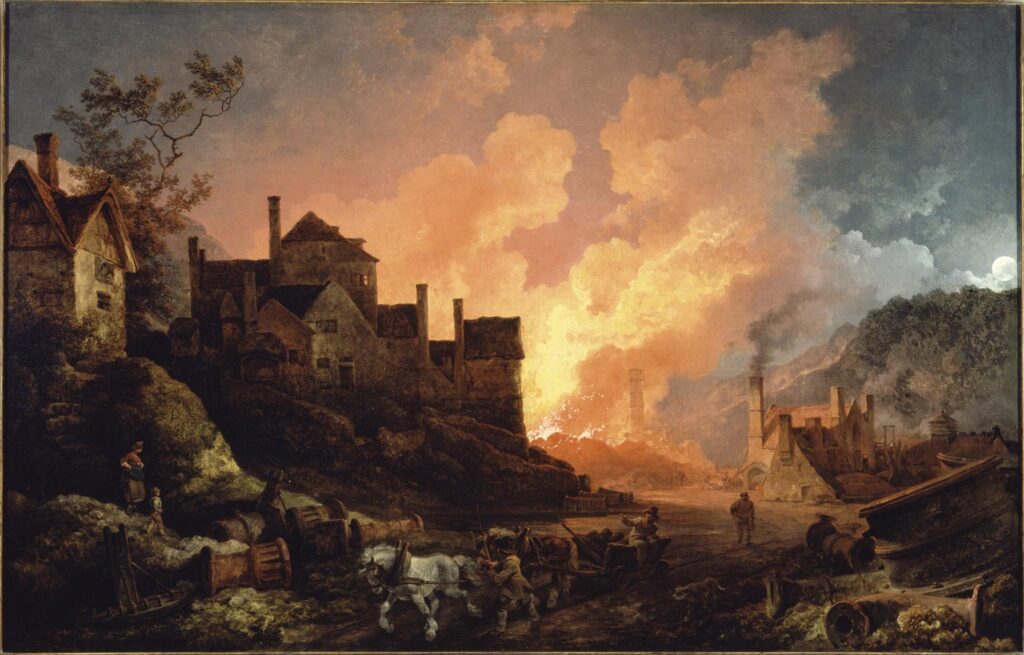
On the ground floor, a powerful painting titled “Coalbrookdale by Night” portrays the industrial furnaces that transformed raw materials into vital products during the 19th century. The flames and smoke symbolize the intense relationship between nature and industrial progress, reflecting early concerns about environmental impact.
This piece serves as a historical pivot, reminding us that sustainable energy solutions to protect natural biodiversity remain a critical scientific focus today.
Observing Clouds and the Birth of Meteorology
Next, two watercolours of cloud formations by Luke Howard and Edward Kennion illustrate the foundational role that detailed observation of nature has played in advancing science. Howard’s cloud studies laid the groundwork for modern meteorology, providing categories like “Nimbus” and “Cumulostratus” that are still used in weather science.
These paintings demonstrate how artistic skill complements scientific inquiry, and how citizen science projects continue to involve public participation in climate research through cloud observation.
Table 1: Key Educational Stops on the Trail
| Stop | 주제 | Highlight | Significance |
|---|---|---|---|
| 1 | Mathematics | Print of Herrenhausen Gardens | Geometric order in nature and garden design |
| 2 | Medicine | Alan Measles Vase by Grayson Perry | Emotional response to Covid-19, urban green spaces |
| 3 | Industrial Art | Coalbrookdale by Night Painting | Industrial Revolution’s effect on nature |
| 4 | Meteorology | Cloud Studies by Howard and Kennion | Early scientific cloud classification |
Future of Food: Artistic Science Meets Agriculture
The trail concludes in a special exhibition called The Future of Food, requiring a ticket. Here, art and science converge in a sculpture based on the microscopic structure of wheat leaves. Created by Jodie Armand, this hand-knitted stainless-steel wire artwork magnifies the tiny pores called stomata that regulate water and gas exchange in plants.
This representation reveals how advanced scientific methods, including 3D imaging, aid research aimed at developing crops more resilient to drought and climate change, essential for sustainable agriculture worldwide.
Historical Perspective: Museums as Bridges Between Art, Science, and Nature
Museums have long served as vital institutions preserving the history of humanity’s relationship with the natural world and scientific progress. Originating from collections of curiosities during the Renaissance and Enlightenment, today’s museums blend educational, artistic, and scientific narratives under one roof.
과학 박물관은 특히 단순한 컬렉션에서 벗어나 모형, 예술 작품, 실험 등을 통해 방문객을 참여시키는 상호작용 공간으로 진화하여 복잡한 주제에 대한 대중의 이해를 높이는 데 기여하고 있습니다.
이 진화는 더 넓은 문화적 감상을 반영합니다. 학문 간의 상호 연결성, 환경에 미치는 영향과 이를 보존할 수 있는 방법에 대한 인식을 높이는 데 도움이 되는 접근 방식입니다.
글로벌 관광에서 과학과 예술 전시물의 역할 예측
국제 여행객들이 교육, 문화, 그리고 레크리에이션을 결합한 경험을 점점 더 추구함에 따라, 예술, 과학, 그리고 자연의 융합으로 이어지는 상호 작용적이고 시각적으로 매력적인 여정을 제공하는 박물관은 다양한 관객을 끌어들일 수 있는 유리한 위치에 있습니다.
이러한 주제들을 관광에 통합하면 지역 사회 프로젝트에 영감을 주어 환경 관리 및 지속 가능한 개발을 강조하고, 해변, 호수, 연안 지역과 같은 자연 환경과 관련된 여행 destinations를 더욱 강화할 수 있습니다.
관광에서 예술, 과학, 자연 테마 결합의 이점
- 환경 의식이 있는 여행 행동을 장려합니다.
- 몰입형 학습을 통해 방문자 참여도를 향상시킵니다.
- 교육 관광을 통해 지역 경제를 지원합니다.
- 자연 경관과 연관된 문화적 감상을 증진합니다.
결론: 예술, 과학, 그리고 자연의 지속적인 항해
그 길은 인간의 창의성과 경험적 탐구가 어떻게 함께 자연 세계를 탐구하고 해석하는지 보여줍니다—수학적으로 설계된 정원에서 구름 분류, 산업 및 팬데믹 현실을 포착하는 예술 작품에 이르기까지. 이러한 이야기들은 우리 환경의 복잡성과 그 안에서의 우리의 역할에 대한 이해를 높여줍니다.
바다, 호수, 그리고 마리나가 요트 및 보트를 타도록 초대하는 곳으로 끌리는 사람들을 위해, 그러한 시각은 자연의 아름다움과 그것을 유지하는 과학에 대한 감사를 더욱 깊게 합니다. 이러한 경험은 해안선과 만에서 인간 활동과 자연 환경의 균형이 중요한 보트 및 요트 타기에 대한 마음 챙김 있는 접근 방식을 장려합니다.
예술, 과학, 그리고 자연 간의 연결고리를 발견하는 것은 육상 또는 수상 여행에 관계없이 모든 여정을 풍요롭게 할 수 있습니다. 예술 애호가들에게 요트, chartering 보트, 그리고 깨끗한 해변과 바다 목적지를 탐험하고, 이러한 서비스와 같은 GetBoat.com 자연의 경이로움에 대한 존중과 함께 탐험을 결합하는 특별한 방법을 제공합니다. 이 국제 시장은 다양한 선택에 대한 접근성을 제공합니다. 세일링 요트 그리고 보트, 모든 취향과 예산에 맞춰, 바다와 그 다양한 모험에 적극적으로 참여할 수 있도록 지원합니다.