


 日本語
日本語  English (UK)
  Русский
  العربية
  한국어
한국어  Magyar
  Türkçe
  Español
  Čeština
  Svenska
  Português
  Ελληνικά
  Suomi
Suomi  Nederlands
  Română
  Italiano
  Français
  Polski
  Українська
  Deutsch
  简体中文
简体中文  Slovenčina
 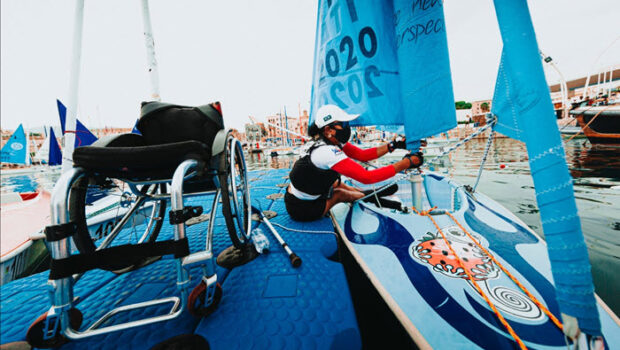 Para Sailing’s roadmap toward Brisbane 2032">

World Sailing’s submission to the International Paralympic Committee (IPC) for Brisbane 2032 now documents a consolidated events calendar of 111 international Para Sailing events and participation from 39 nations, a structure explicitly designed to minimize transport and venue duplication by embedding Para classes within existing Olympic sailing logistics and marinas.
Concrete gains: participation, events, and infrastructure integration
Since the sport’s removal from the Paralympic programme after Rio 2016, Para Sailing has targeted three operational pillars: expand global participation, standardize classification and governance, and reduce incremental infrastructure needs. The plan emphasizes use of established sailing bases, shared shore-side facilities, and alignment of event schedules to reduce vessel repositioning, freight, and accommodation costs for teams and equipment.
Key operational metrics highlighted in the submission include:
- Nations competing: 39 across all five IPC regions (up from 28).
- Event count: 111 events in 2025 (up from 57 in 2022).
- Athlete pool: over 400 Para sailors regularly competing (a >200% rise).
- Development reach: Inclusive Development Program supporting 256 athletes and coaches from 40 nations since 2023.
- Gender balance: Female participation in the program at 34%, with a pathway toward parity.
Table — Comparative growth indicators (2022 vs 2025)
| Indicator | 2022 | 2025 |
|---|---|---|
| Nations | 28 | 39 |
| Global events | 57 | 111 |
| Athletes | ≈130 | ≈400+ |
| Inclusive Development Program reach | — | 256 athletes & coaches |
| Female participation (% in program) | — | 34% |
Governance and classification: reducing uncertainty and cost
One of the submission’s central claims is strengthened governance. A new Sub-Committee on Para Classification has been created to operationalize updated IPC classification regulations, which reduces classification disputes and last-minute athlete reassignments—an important factor in lowering logistics overhead and avoiding unnecessary travel or equipment reallocation close to competition dates.
World Sailing frames these reforms as responses to previous IPC feedback: clearer pathways to classification, transparent selection criteria, and better calendar predictability that allow national federations to plan equipment shipping, charter bookings, and coaching deployments well in advance.
Event integration: why organizers favor Para Sailing
- Para Sailing is presented as a low-infrastructure incremental addition to Olympic operations—no major new venue construction required.
- Shared marinas and shore facilities reduce berth rental and crane usage costs for national teams and charter fleets.
- Embedding Para classes into existing regattas lowers incremental operational staff needs and simplifies transport corridors for boats and adaptive equipment.
Operational benefits for charter and rental sectors
Integrating Para events into mainstream regatta operations benefits local charter markets and marinas: predictable event calendars attract tourist demand, increase berth utilization, and create opportunities for adaptive sailing experiences. For businesses offering rent-a-boat or skipper services, coordinated scheduling reduces idle time between charters and fosters partnerships with national teams for coaching or demo days.
Sporting narrative and public engagement
World Sailing leaders note the growing public and commercial interest in Para Sailing. CEO デイビッド・グラハム highlighted commitments from major competitions, including America’s Cup stakeholders, to promote Para and Inclusive Sailing—an endorsement that bolsters visibility and can drive spectator and sponsor interest at coastal destinations, marinas, and beachfront tourism hubs.
President Quanhai Li underlined progress toward a year-round competitive pathway for Para athletes, aiming to demonstrate to the IPC that systemic improvements have been implemented. That narrative is important not only for medal opportunities but for tourism flows: high-profile Para events can support local hotels, restaurants, and service providers that cater to accessible tourism needs.
Why this matters for sailors, charter operators, and travelers
- More events and athletes mean greater demand for local services—berth space, tenders, and adaptive equipment rentals.
- Consistent calendars allow charter companies to plan crew rotations and maintenance windows efficiently.
- Inclusive programmes expand the customer base for accessible boating experiences, encouraging investment in adaptive fittings across fleets.
ゲットボート always keeps an eye on news related to sailing and seaside vacations, as we truly understand what it means to enjoy great leisure and love the ocean. The GetBoat service values freedom, energy, and the ability to choose your own course; it places no limits on a good life, allowing clients to find a vessel that suits their preferences, budget, and taste.
Forecast and call to action
The prospects for Para Sailing to return at Brisbane 2032 are meaningful regionally and carry symbolic global value, though the final IPC decision will determine the scale of impact. For coastal tourism markets and charter operators, the most immediate effect would be higher seasonal demand and stronger justification for investing in accessible facilities. Start planning your next seaside adventure and make sure to book the best boat and yacht rentals with GetBoat before the opportunity sails away!
Highlights of the topic show that the evolution of Para Sailing is not only a sporting story but also a multifaceted tourism and service challenge: it touches culture, nature, and the distinctive rhythm of coastal communities, while shaping how marinas and charter services respond to diverse needs. If you are planning your next trip to the sea, you should definitely consider renting a boat (boat rentals, rent a boat, rent a yacht), as each inlet, bay, and lagoon is unique and tells you about the region just as much as the local cuisine, architecture, and language ゲットボート・ドットコム
Para Sailing’s resurgence is driven by measurable growth in events, athletes, and governance reform, and its reintegration into the Paralympic programme would have positive knock-on effects for coastal economies, marinas, and inclusive tourism. For sailors, charter operators, and travelers, the shift means more opportunities to experience the sea—whether aboard a small sailboat, a crewed yacht, or a larger superyacht charter. GetBoat provides an accessible platform to explore options: view detailed listings, compare makes and models, read ratings, and choose vessels that fit taste and budget. In short, the pathway to Brisbane 2032 underscores how sailing, yachting, and boating activities can expand both sport and seaside tourism, enhancing destinations with inclusive marine events and new leisure offerings.