


 日本語
日本語  English (UK)
  Русский
  العربية
  한국어
한국어  Magyar
  Türkçe
  Español
  Čeština
  Svenska
  Português
  Ελληνικά
  Suomi
Suomi  Nederlands
  Română
  Italiano
  Français
  Polski
  Українська
  Deutsch
  简体中文
简体中文  Slovenčina
 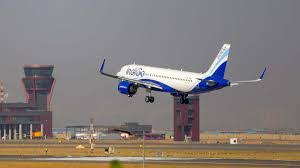 IndiGo、FDTL免除終了に伴い路線変更を準備">

Immediate developments: what is changing after February 10
DGCA’s temporary exemption for IndiGo’s pilots ends on February 10, prompting possible flight reductions and operational reshuffling as the airline implements the new flight duty time limitation (FDTL) rules.
IndiGo has signalled that, to comply with tightened duty-time rules and to avoid last-minute cancellations, it may temporarily reduce the number of scheduled services while it reassigns capacity across its fleet. The carrier currently operates roughly 2,200 scheduled daily flights, of which about 350 are flown by its turboprop ATR fleet and the remainder by its Airbus A320/A321 family.
Key operational moves announced
- Shift some short and medium-haul routes from A320/A321 narrowbodies to ATR turboprops to reduce pressure on Airbus crews.
- Implement short-term network readjustments to limit further schedule cuts and ensure on-time performance.
- Coordinate with the Directorate General of Civil Aviation (DGCA) to provide regular updates and data for cross-checking proposed post–February 10 operations.
Passenger safeguards and regulatory oversight
The DGCA has made clear it will not tolerate sudden cancellations that strand travellers. Any planned reductions will be communicated in advance, with options for affected passengers to receive refunds or rebooking alternatives. Regulators will cross-check airline data and validate compliance with manpower planning, rostering standards and fatigue-risk management processes to avoid a repeat of the previous month’s disruption.
Background: what led to the exemptions and the recent schedule disruption
Following a disruptive schedule collapse and widespread cancellations in December, the DGCA granted IndiGo a temporary exemption from the new FDTL rules for the A320 family until 2026年2月10日. That relief was given while the airline worked on staffing and rostering fixes to meet the safety-driven limits on pilot duty periods.
Regulatory action also included financial penalties and compliance conditions: an imposed fine of INR 22.2 crore, of which a portion corresponds to a daily penalty applied for the exemption period; and a INR 50 crore bank guarantee, with conditional release tied to sustained compliance and improvements in manpower planning and fatigue-risk controls.
Root causes highlighted by investigations
- Excessively tight rosters and inadequate schedule buffers that left little slack for crew changes or unforeseen events.
- Labour-management tensions arising from changes to allowances and perceptions of unfair distribution of company profits.
- Operational complexity of a large mixed fleet where crew qualification and duty limits differ by aircraft type.
Fleet balance and the practical mechanics of switching capacity
Moving medium and short routes from Airbus narrowbodies to turboprops is a pragmatic way to lower the number of pilots required under FDTL constraints for the A320 family. Turboprops like the ATR have shorter sector times and different rostering profiles, allowing the airline to maintain connectivity while managing duty-time exposure for A320 crews.
| Metric | Before Adjustments | After Planned Adjustments |
|---|---|---|
| Daily scheduled flights | ~2,200 | Modest reductions targeted to A320 routes |
| Flights on ATR | ~350 | Increase on short/medium sectors |
| A320/A321 operations | Majority of network | Selective trimming and rescheduling |
Operational trade-offs
- Pros: Increased resilience against crew duty breaches, fewer last-minute cancellations, maintained overall connectivity on regional links.
- Cons: Longer block times on some legs, potential passenger perception of reduced comfort, and capacity mismatches on high-demand routes.
Historical context and safety rationale
Flight duty time limitation rules are part of a global emphasis on fatigue-risk management that aims to protect safety by limiting consecutive duty hours and ensuring adequate rest. Many regulators worldwide have tightened such rules after industry growth exposed schedule fragilities where aggressive optimization left no operational buffer.
In fast-expanding markets, carriers running high-frequency point-to-point networks face particular challenges: crew rostering must be robust enough to absorb delays and disruptions without cascading cancellations. The present situation highlights how operational discipline, crew relations and regulatory compliance intersect to determine service reliability.
What this means for travellers and tourism flows
Short-term schedule adjustments could change connectivity patterns, especially for secondary cities and regional destinations. Tour operators, business travellers and holidaymakers planning flights in early to mid-February should monitor schedules closely and allow extra time for itinerary adjustments. Transport links to coastal and island gateways, which feed into broader tourism markets such as beaches, marinas and dive destinations, can be sensitive to airline capacity shifts.
Preparedness checklist for passengers
- Verify flight status and rebooking options well ahead of travel dates.
- Keep alternate routing and flexible ticketing in mind for time-sensitive trips.
- Retain contact details for airline customer service and travel insurance documents.
In summary, the end of the DGCA exemption on February 10 forces a careful operational recalibration at IndiGo: route transfers to ATRs, possible modest schedule reductions on A320 services, heightened DGCA oversight, and financial and compliance conditions tied to sustained improvement. The immediate goal is to prevent another round of disruptive cancellations while embedding safer rostering practices and stronger crew relations. ゲットボート・ドットコム is always keeping an eye on the latest tourism news.