


 日本語
日本語  English (UK)
  Русский
  العربية
  한국어
한국어  Magyar
  Türkçe
  Español
  Čeština
  Svenska
  Português
  Ελληνικά
  Suomi
Suomi  Nederlands
  Română
  Italiano
  Français
  Polski
  Українська
  Deutsch
  简体中文
简体中文  Slovenčina
 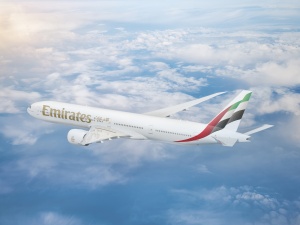 Emirates launches split-payment checkout in Kenya">

Emirates has activated a Tingg-powered split-payment option on its Kenya booking flow, allowing customers to combine mobile money, mobile banking and local cards and to pay an initial amount online followed by up to four instalments within 24 hours.
What the new checkout delivers for Kenyan travellers
The Tingg split-payment capability provided by Cellulant is now live on the Emirates website for Kenyan customers. The function permits a mix of payment instruments—including M-Pesa, Safaricom mobile banking transfers and domestic debit/credit cards—so that high-value fares can be completed without breaching provider-imposed per-transaction or daily wallet limits. The airline’s Kenya team confirmed the feature coincides with increased capacity on the Dubai–Nairobi corridor, where Emirates will add a third daily flight from 1 March 2026.
Practical outcomes for a typical booking: customers can start payment with a mobile wallet, then follow up with a card or bank transfer; the split can reduce the need to consolidate funds at a single point in time and lowers booking abandonment caused by mobile-money caps.
Key mechanics at a glance
| Function | How it helps |
|---|---|
| Multi-method aggregation | Combines mobile money, mobile banking and local cards in one checkout to reach the total fare. |
| Instalment window | Initial payment plus up to four additional instalments within 24 hours prevents failure from provider limits. |
| Localized flow | Aligns with mobile-first payment habits across Kenya, reducing friction and enabling higher-value sales online. |
Operational and commercial implications
From an operations standpoint, the integration of Tingg into Emirates’ e-commerce stack means the airline will see fewer partial checkouts caused by payment caps and should record higher conversion rates from the Kenyan market. Commercially, the move expands payment accessibility for customers who rely on mobile wallets as their primary financial rails—an important consideration in markets where alternative banking penetration is lower.
Emirates and Cellulant already support a suite of financing and payment options across 14 African markets, including South Africa, Ghana and Zimbabwe. Rolling out split payments in Kenya is therefore both a market-specific fix and part of a broader regional strategy to reduce payment friction and convert demand into confirmed seats.
Benefits for travellers and agents
- Greater purchasing power: travellers can complete international ticket purchases while remaining within wallet limits.
- Reduced abandonment: fewer customers will drop out of the booking flow due to single-payment constraints.
- Flexibility: the ability to mix payment instruments suits mobile-first users and those managing cashflow across different channels.
- エージェント convenience: travel sellers and local agents can advise customers on splitting payments to secure fares quickly.
Historical context: mobile money meeting global travel
Mobile money has been transforming payments in sub-Saharan Africa since the public launch of M-Pesa in 2007. Adoption accelerated over the 2010s as telco-led wallets and bank-led mobile-banking apps spread across urban and peri-urban populations. Today the continent registers over 1 billion mobile money wallets and more than 80 billion transactions annually, representing activity in excess of US$1 trillion. Despite scale, daily and per-transaction ceilings applied by wallet providers have long been a barrier to higher-value purchases, including airline tickets.
Fintech gateways like Tingg emerged to bridge domestic payment behaviour and international commerce by packaging local rails into merchant-friendly APIs. For airlines, these gateways reduce reconciliation complexity and open up sizeable underserved customer segments. The Emirates–Cellulant rollout in Kenya follows a growing pattern: global travel brands customizing checkout flows to local payment realities rather than expecting customers to adapt to legacy global payment methods alone.
Regional travel outlook and a cautious forecast
By lowering payment friction, split-payment functionality should raise the effective addressable market among Kenyan travellers—particularly among younger, mobile-first cohorts and diaspora customers arranging travel from multiple funding sources. Short term impacts are likely to show as improved online conversion rates and a higher proportion of advance bookings on the Dubai–Nairobi route, where capacity has been increased to match rising demand.
Over the medium term, easier payment mechanisms can drive growth in outbound tourism from Kenya as well as inbound visitor flows: travellers who can secure international tickets with flexible payment are more likely to convert leisure plans into confirmed trips. For destination operators—hotels, day-tour providers and marine operators—the effect is a potential increase in bookings and the need to scale services accordingly.
Considerations for marine and coastal tourism providers
- Marinas and yacht operators in Mombasa, Diani and Lamu could see increased interest as flight accessibility improves.
- Local boat-charter agents may benefit if passengers find it simpler to prepay excursions, transfers and yacht deposits using split payments.
- Service providers should align booking channels with mobile-payment support to capture mobile-first tourists.
Practical checklist for tourism operators
- Audit payment options on your booking pages and add support for local mobile-money channels where feasible.
- Offer clear guidance on deposits and staged payments to match how travellers may split transactions across cards and wallets.
- Coordinate with travel agents and captains to accept and reconcile mixed-method payments for charters and excursions.
In summary, Emirates’ deployment of Tingg split payments in Kenya addresses a structural payment constraint—provider-imposed per-transaction and daily limits—by enabling customers to combine mobile money, mobile banking and card payments and to spread the fare across several instalments within a short timeframe. The measure supports rising seat capacity on Dubai–Nairobi services and is likely to improve online booking conversion and access for mobile-first travellers. Historically rooted in the spread of mobile money since the late 2000s, this change signals a continuing alignment of global travel commerce with African payment realities. For coastal destinations and marine operators, the improvement in flight accessibility and payment flexibility could translate into stronger demand for boat charters, marina berths and yachting activities.
For those planning trips or looking to rent vessels after arriving, ゲットボート・ドットコム is an international marketplace for renting sailing boats and yachts, and it is probably the best service for boat rentals to suit every taste and budget. The move by airlines and fintechs to simplify bookings complements the needs of yacht and charter markets—helping travellers secure flights and then easily arrange beach excursions, yacht charters, fishing trips, and other boating activities with captains, marinas and local operators across sea and gulf destinations.