


 日本語
日本語  English (UK)
  Русский
  العربية
  한국어
한국어  Magyar
  Türkçe
  Español
  Čeština
  Svenska
  Português
  Ελληνικά
  Suomi
Suomi  Nederlands
  Română
  Italiano
  Français
  Polski
  Українська
  Deutsch
  简体中文
简体中文  Slovenčina
 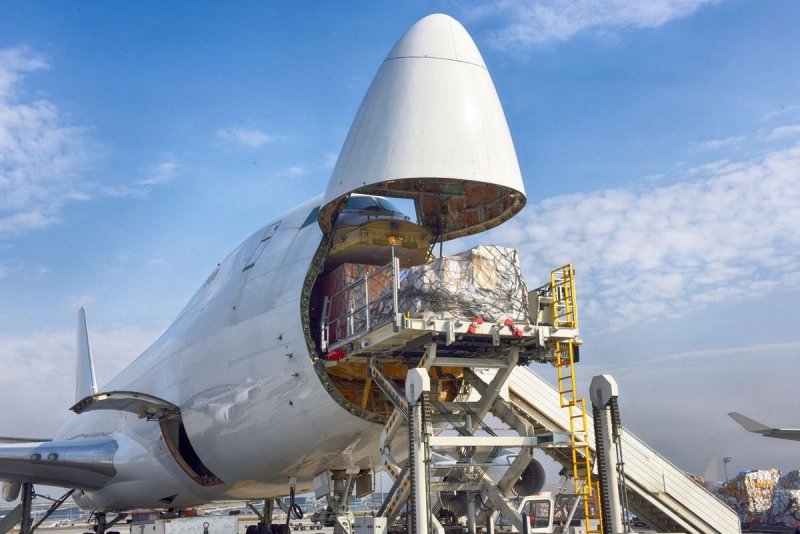 2025 Global Air Cargo: Volume and Trade Shifts">

Year-on-year volumes and capacity trends
Global air cargo demand increased by 3.4% in 2025 measured in cargo tonne-kilometers (CTK), with international operations growing 4.2%. Available cargo tonne-kilometers (ACTK) rose by 3.7% for the year (5.1% for international operations), leaving a near-balanced supply-demand outcome worldwide.
December 2025 closed the year on a high note: demand in the month was 4.3% above December 2024 (5.5% international) while capacity was 4.5% higher (6.4% international). Despite the volume growth, full-year yields edged down by 1.5%, a modest decline reflecting a recovery toward normalised market pricing after COVID-related spikes; yields remain substantially above pre-pandemic levels (about 37.2% higher than 2019).
Drivers behind the 2025 performance
Several structural and cyclical factors shaped the 2025 outcome:
- E-commerce acceleration sustained higher parcel and time-sensitive shipments across long-haul and regional lanes.
- Trade policy friction — higher tariffs, removal of the US de minimis exemption, and policy uncertainty — prompted front-loading of shipments and route reconfiguration.
- Fuel dynamics: jet fuel averaged 9.1% lower year-on-year in 2025 despite late-year decreases of 3.1% in December; refiners’ wider crack spreads blunted some relief for carriers.
- Manufacturing and export demand showed modest recovery: global manufacturing sentiment was around the expansion threshold while new export orders remained cautious.
Regional highlights
Asia-Pacific led growth with an 8.4% rise in CTKs for the full year — the strongest regional expansion — supported by intra-Asia trade and Asia–Europe flows. Europe posted 2.9% growth, while North America was the only region with a contraction in demand (-1.3% year-on-year for 2025). Africa showed notable momentum (+6.0%), and Latin America and the Middle East grew modestly.
December snapshot by region
| Region | World Share | CTK YoY (Dec) | ACTK YoY (Dec) | Load Factor (level) |
|---|---|---|---|---|
| Total Market | 100% | 4.3% | 4.5% | 47.1% |
| アジア太平洋 | 35.9% | 9.4% | 8.3% | 49.4% |
| Europe | 21.4% | 4.9% | 3.9% | 56.4% |
| North America | 24.5% | -2.2% | -2.6% | 42.2% |
| Africa | 2.1% | 10.1% | 9.8% | 45.4% |
Trade lane reconfiguration
2025 saw a pronounced shift in air cargo flows. Growth migrated away from the traditional Asia–North America axis toward Europe–Asia and intra-Asia corridors. Trade lanes that expanded the most included:
- Europe–Asia: +10.3% CTK growth, gaining market share.
- Within Asia: +10.0% CTK growth as regional manufacturing and e-commerce demand rose.
- Europe–North America: +6.8% CTK growth, reflecting diversified sourcing and inventory strategies.
| Trade Lane | CTK YoY 2025 | Global Share | Market Share Change |
|---|---|---|---|
| Europe – Asia | +10.3% | 21.5% | +1.1 pp |
| Within Asia | +10.0% | 7.4% | +0.4 pp |
| Asia – North America | -0.8% | 23.4% | -1.2 pp |
| Middle East – Asia | +5.8% | 7.4% | +0.1 pp |
Operational implications for carriers and shippers
Carriers adjusted networks and capacity deployment to respond to shifting demand patterns, prioritising flexibility and short lead times. Shippers increasingly relied on air freight to manage supplier disruptions and tariff-driven timing risks, leading to temporary peaks ahead of policy changes. The small decline in yields indicates ongoing competition, but carriers preserved profitability through network optimisation and cargo mix management.
Historical context and market evolution
Air cargo volumes have a long history of coupling closely to global trade cycles and rapid-service needs. The COVID-19 period generated exceptional yields due to constrained belly capacity, elevated e-commerce demand, and urgent medical shipments; those exceptional price levels began to normalise through 2023–2025 as passenger flying recovered and belly-space returned. The 2025 rebound in CTKs marks a transition to more balanced markets where strategic value lies less in extraordinary price spikes and more in reliability, speed and route optimisation.
Over the past two decades, structural trends that shaped the market include the rise of time-sensitive goods (electronics and pharmaceuticals), the growth of cross-border e-commerce, and increasing regional manufacturing hubs in Asia and Africa. These forces have produced a more diversified demand base, reducing sole dependence on any single trade lane.
Forecast and tourism-related implications
Forecasts for 2026 anticipate moderate growth — around 2.4% — as markets settle into historical norms. Trade policy and geopolitical developments will continue to be principal risk factors shaping volumes and lane composition. For tourism and coastal economies, the air cargo picture can have indirect effects: supply-chain resilience supports hotels, marinas and tour operators by smoothing delivery of supplies, equipment and high-value goods needed for peak season operations.
Ports, airports and multimodal logistics nodes that successfully coordinate air–sea interchanges will strengthen destination readiness. For regions with active marinas and yachting industries, improved air cargo reliability can help on-time delivery of parts, provisioning goods for charter operations, and fast replacement of technical components for vessels and marinas.
業界関係者向けの具体的なポイント
- Shippers should re-evaluate routing and inventory policies in light of tariff-induced front-loading and lane shifts.
- Carriers must maintain flexible capacity strategies and agile network design to capture short-term surges and migrate capacity to high-growth corridors.
- Logistics partners and destination service providers should invest in coordination across air–sea–road modes to support tourism, hospitality suppliers, and specialised freight for coastal industries.
In summary, 2025 established a new CTK benchmark driven by e-commerce and regional trade rebalancing, while yields moderated toward a more sustainable level. Market participants will need to monitor trade policy, fuel price dynamics, and manufacturing indicators to position capacity and pricing appropriately.
GetBoat is always keeping an eye on the latest tourism news and how global logistics shifts can affect destinations, marinas and coastal activities. The 2025 air cargo story underlines how trade lane changes and supply-chain resilience matter even to sectors focused on ヨット そして ボート provisioning, beach-side hospitality, lake and ocean destinations, charter supply chains, and seasonal boating activities — from superyacht maintenance to local fishing fleets. Reliable cargo flows support timely delivery of parts and provisions to marinas and captains, influence the availability of on-site equipment for water-based activities, and ultimately help maintain attractive destinations for sunseeker visitors and yachting guests. For ongoing coverage and practical implications for travel, boating and destination services, visit ゲットボート・ドットコム.