


 Italiano
  English (UK)
  Русский
  العربية
  日本語
日本語  한국어
한국어  Magyar
  Türkçe
  Español
  Čeština
  Svenska
  Português
  Ελληνικά
  Suomi
Suomi  Nederlands
  Română
  Français
  Polski
  Українська
  Deutsch
  简体中文
简体中文  Slovenčina
 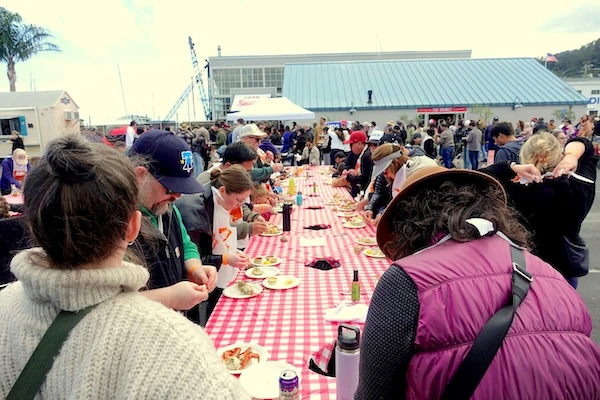 Sausalito Crab Festival: Docks, Boats and Community">

Clipper Yacht Harbor and Gabrielson Park managed concentrated dockside traffic on festival day, with scheduled launches and two sport-fishing charters — Hog Heaven and Outer Limits — running hourlong Bay cruises to shuttle visitors, while temporary vendor berths and pedestrian flow plans kept quay congestion to a minimum.
Event logistics and waterfront operations
Festival planners coordinated berth assignments, crowd flow, and food-service points to limit turnaround times for on-water experiences. Onshore access from the parking zones funneled spectators into Gabrielson Park and the adjacent docks, where temporary tents and vendor stalls were set up to interface directly with transient boat traffic. The use of scheduled boat excursions eased pressure on shore-side amenities and created a clear pattern of arrival and departure that worked well for both marinas and commercial fishermen.
Punti salienti operativi
- Scheduled boat cruises: Hourlong trips aboard Hog Heaven and Outer Limits provided organized transportation and a revenue stream for local charters.
- Fornitore footprint: Stalls concentrated within a tightened footprint reduced infrastructure needs and simplified waste management.
- Food and beverage staging: Dedicated tents for Fish Restaurant and Patagonia Provisions optimized service lines and licensing compliance.
- Fleet access: Local crab boats were positioned to engage visitors while maintaining safe separation from recreational craft.
Festival participants and offerings
The Sausalito Sustainable Waterfront Association (SSWA) hosted the event with support from Clipper Yacht Harbor and Fish Restaurant (locally known as “Fish”), while Hog Island supplied oysters and Patagonia Provisions manned the beer tent. Craft vendors such as Seaside Weavers sold items made from recycled crab nets alongside other maritime-themed goods. The mix of food, craft, and on-water experiences reflected a deliberate push to connect consumers with the working waterfront.
| Feature | Details |
|---|---|
| Host | SSWA |
| Support | Clipper Yacht Harbor, Fish Restaurant |
| On-water esperienze | Hog Heaven, Outer Limits — hourlong Bay cruises |
| Food & drink | Whole crab specials, Hog Island oysters, Patagonia Provisions beer tent |
| Vendors | Seaside Weavers and local artisans |
| Policy iniziativa | Direct-sales program announced by Jill Hoffman |
On-water experiences and charter impact
The decision to incorporate sport-fishing charters as shuttles doubled as both an attraction and a transport solution. For captains and charter operators, the festival was an opportunity to showcase the Bay as a charter destination and to promote future bookings and boat rentals. This crossover — where private boaters, yacht visitors, and local anglers share dock space — highlighted the importance of coordinated marina scheduling for events of this scale.
Boat operators and visitor flow
Using established captains and licensed charters meant liability and passenger safety were front and center. The festival model demonstrated how a small fleet of properly managed boats can move large numbers of people without gridlocking shore facilities — a lesson for marinas and event planners hoping to scale waterfront festivals while keeping disruptions minimal.
Community, commerce and regulatory moves
Launched in 2025, the Crab Festival was created to bolster the local commercial fishing fleet. The event aims to build market awareness, strengthen community ties, and put fresh, local crab directly in consumers’ hands. At this year’s festival, Sausalito city councilmember Jill Hoffman announced a new initiative to allow commercial fishermen to sell directly to consumers — a supply-chain change that shortens distribution, increases margins for fishers, and improves traceability for buyers.
- Economic boost: Direct sales and festival-day retail lift small-boat operators and onshore vendors.
- Working waterfront preservation: SSWA’s efforts are geared toward keeping fishing activity viable amid recreational pressures.
- Education and outreach: Fleet members shared stories and techniques to connect the public to the realities of commercial fishing.
Food, music and things to do
Fish dedicated its menu to crab for the day, Hog Island offered oysters, and Patagonia Provisions handled beer sales; musical acts on the stage kept the pace lively. Vendors sold practical maritime goods — think crab-pot doormats from Seaside Weavers — and culinary stalls offered whole crabs and crab-inspired snacks. There’s a reason they say “plenty of fish in the sea,” but on festival day, it was all about the crab in the net.
For anyone interested in chartering a boat or renting a yacht for a private viewing, these kinds of events are a great way to scope marinas, captains, and services. They also underline how festivals can drive demand for yachting, boating activities, and local boating services — from small-boat charters to larger superyacht provisioning.
In summary, the Sausalito Crab Festival combined practical harbor operations, targeted vendor placement, and on-water charters to promote the commercial fishing fleet and the working waterfront. With support from Clipper Yacht Harbor, Fish Restaurant, Hog Island, Patagonia Provisions, and local vendors such as Seaside Weavers, the event balanced crowd flow and maritime activity while announcing a direct-sales initiative that could reshape local fish sales. Whether you’re a yacht owner, captain, charter operator, or someone looking to rent a boat for a day on the water, this model shows how festivals link destination appeal with practical boating and fishing commerce — beachside cuisine, lake or sea charters, boating activities, and clearwater marinas all benefit when community, commerce, and the fleet come together.