


 Italiano
  English (UK)
  Русский
  العربية
  日本語
日本語  한국어
한국어  Magyar
  Türkçe
  Español
  Čeština
  Svenska
  Português
  Ελληνικά
  Suomi
Suomi  Nederlands
  Română
  Français
  Polski
  Українська
  Deutsch
  简体中文
简体中文  Slovenčina
  Night Navigation Lights: Rules and Best Practices">

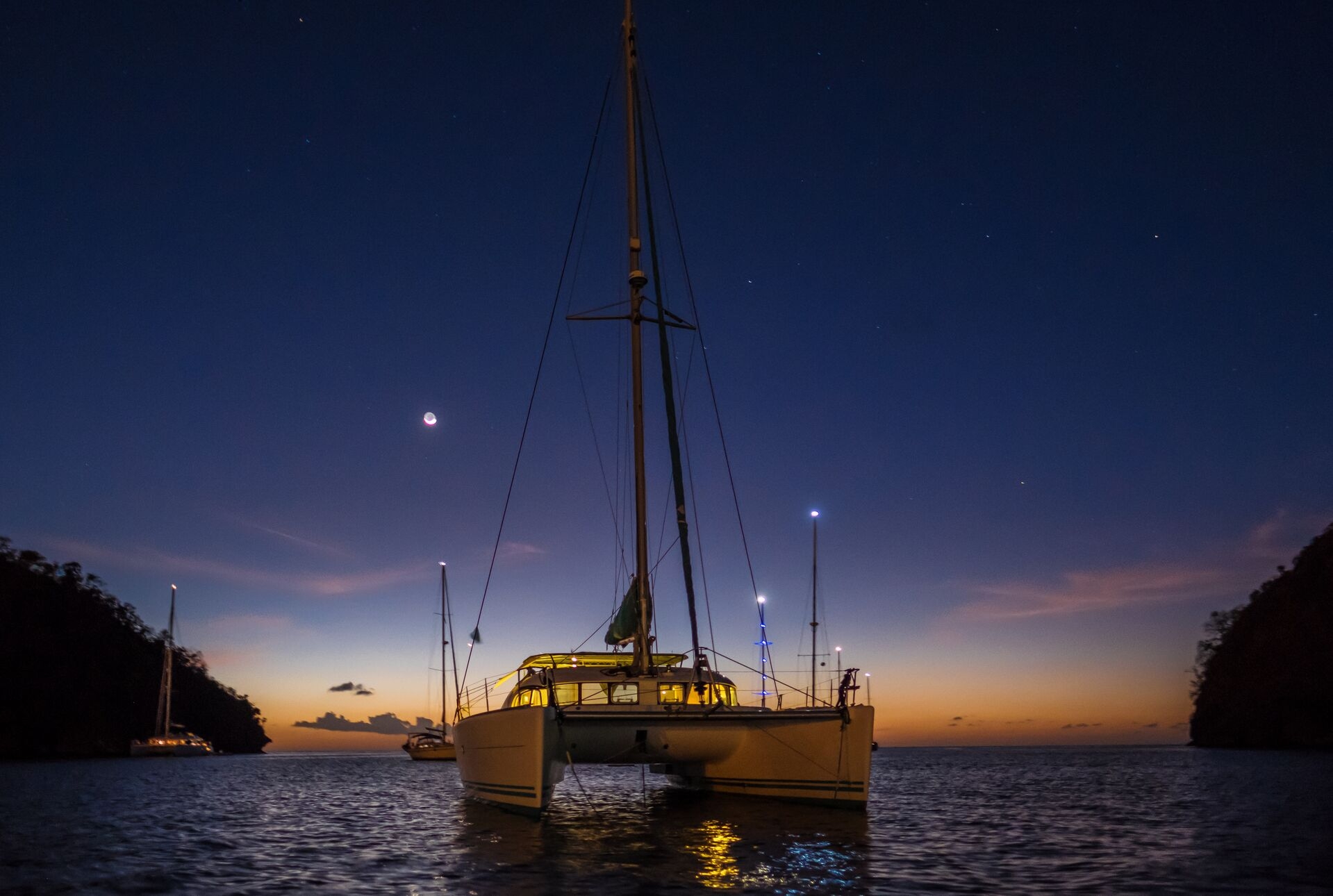
Between sunset and sunrise, every vessel underway must display the correct navigation lights: red on port, green on starboard, and a visible white stern or all-round light, with power-driven vessels also required to show a white masthead light forward.
Types of Lights and Where They Matter
Navigation lighting is about clarity on the water. Sidelights (red port, green starboard) indicate a vessel’s orientation; the stern light gives other skippers a rear reference; and the masthead light identifies power-driven craft and their approximate length and direction. Smaller non-powered or paddle craft often substitute an all-round white light for simplicity.
Navigation Lights
Red and green sidelights must be visible from the required arcs: roughly 112.5° each, covering from dead ahead to just aft of the beam. The stern light must be visible from 135° aft and mounted as low and as far aft as practicable. Masthead lights sit on the foredeck or mast and provide forward visibility.
Anchor and Special Lights
When at anchor, the vessel must display an all-round white anchor light visible for 360°. Towing operations, fishing activities, and law enforcement craft use special combinations and flashing lights—these are task-specific and can override general navigation configurations.
Visibility, Brightness, and Mounting
Light placement and intensity are regulated to prevent confusion. Obstructed or poorly aimed lamps defeat the purpose—lenses should be cleaned and positioned so the arcs are met without blinding nearby crew or other vessels.
Requirements by Vessel Size
| Vessel Type / Size | Required Night Lights | Typical Placement |
|---|---|---|
| Small sailboat (under power) or paddlecraft | All-round white OR sidelights + stern | Centerline or bow for all-round; sidelights on port/starboard |
| Power-driven vessels (underway) | Masthead white + sidelights + stern light | Mast/head for masthead; sidelights on hull/rails; stern aft |
| At anchor (any size) | All-round white anchor light | Highest practicable point visible 360° |
Common Mistakes and How to Avoid Them
- Wrong colors or swapped positions — red/port and green/starboard are not interchangeable.
- Insufficient brightness — dull bulbs or fogged lenses reduce range and cause misidentification.
- Using anchor lights while underway — this can confuse other vessels about your status.
- Poor mounting — lights blocked by lifelines, dinghies, or canvas don’t meet arc requirements.
Simple Checks Before Leaving the Dock
Walk the boat at dusk: switch on each lamp, check visibility from several angles (bow, beam, stern), and verify spare bulbs are aboard. In charter and rental operations, this pre-departure check is golden—clients expect a safe, legally equipped boat.
Maintenance Tips Every Captain Should Use
Routine care keeps you legal and safe. Clean lenses, secure wiring, and store spare bulbs and basic tools in the same locker as lifejackets. For electrically complex systems on superyacht or larger charter boats, inspect connectors and fuses routinely.
- Inspect lights monthly and before every charter.
- Carry spare bulbs and a multimeter for quick diagnostics.
- Replace fogged or yellowed lenses—visibility matters more than aesthetics.
How Rules Affect Sailing and Boat Rent Operations
Rental fleets and marinas must enforce light standards: a mislit rental boat on a busy gulf or lake night run is a liability. For charter operators, clear signage and briefing on lights reduce incidents and customer complaints. In high-traffic Destinations, marinas often require lighting checks at check-in.
On-the-water Scenarios
Picture a late sunset crossing to a small beach anchorage: a properly lit boat avoids an awkward hail from the marina patrol and keeps the group’s night fishing or sunset drinks uninterrupted. As they say, “better safe than sorry” — and that’s doubly true at sea.
Quick FAQ
Do small boats need red and green lights?
Most small powered boats do. Very small non-powered craft may legally use an all-round white, but always check local rules for rentals and charters.
When must lights be used?
From sunset to sunrise and during restricted visibility (fog, heavy rain), navigation lights are required to prevent collisions.
In summary, proper night lighting—sidelights, stern or masthead lights, and an all-round anchor light when anchored—is essential for safe boating, legal compliance, and smooth charter or rental operations. Regular maintenance, correct mounting, and pre-departure checks keep yachts, boats, and charters running smoothly across lakes, gulfs, and open ocean; they protect captains and guests, improve boating experiences at marinas and beach Destinations, and support activities from fishing to yachting and superyacht charters. Rent smart, sail safe, and keep those lights bright for clearwater cruising.