


 Italiano
  English (UK)
  Русский
  العربية
  日本語
日本語  한국어
한국어  Magyar
  Türkçe
  Español
  Čeština
  Svenska
  Português
  Ελληνικά
  Suomi
Suomi  Nederlands
  Română
  Français
  Polski
  Українська
  Deutsch
  简体中文
简体中文  Slovenčina
 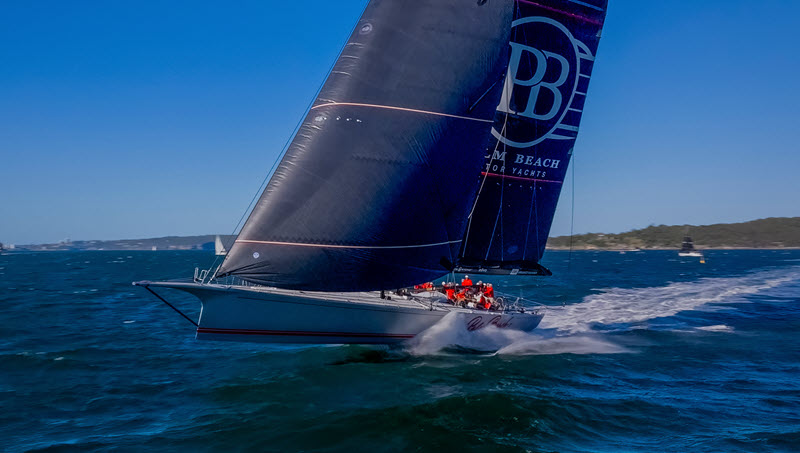 How ORR will rate Palm Beach XI’s C-foil conversion">

ORR measurers and race officials must now quantify dynamic lift, effective righting moment and the dramatic reduction in wetted surface after sea trials showed Palm Beach XI lifting cleanly with roughly two metres of bow rise — a change that directly affects time-on-distance allowances for the 636 nm Newport Bermuda Race.
From Wild Oats XI to Palm Beach XI: the conversion in logistics terms
The 100‑foot former Wild Oats XI, now racing as Palm Beach XI, underwent a structural and hydrodynamic overhaul that altered its operational profile. Designers and shipyard teams coordinated hull reinforcements, foil housings and control systems upgrades; the result is a yacht that spends measurable portions of a race with reduced wetted area and altered trim. That has immediate knock-on effects for race logistics: start window strategies, on‑course overtaking calculations, and safety margins at night and in rough seas.
Who engineered the change?
The conversion was led by designer Juan Kouyoumdjian and Juan K Naval Architects with construction and prototype development support from McConaghy Boats. Their brief: install radical C‑foils to generate dynamic lift, reduce drag and increase effective righting moment to unlock higher reaching and downwind speeds.
Key performance shifts observed in trials
Sea trials reported controlled, stable foiling and a clear decrease in resistance at speed. Those shifts are the heart of the rating problem — if a boat is effectively flying much of the time, traditional handicap factors based on displacement and wetted surface need adjustments to remain fair across the fleet.
| Parameter | Pre-conversion | Post-conversion (sea trials) |
|---|---|---|
| Bow trim at speed | Nominal | Approximately +2 m bow rise |
| Wetted surface | Baseline hull immersion | Significantly reduced (dynamic) |
| Righting moment | Static ballast and heel-derived | Increased effective righting via foil lift |
| Primary race impact | Conventional ORR inputs valid | Requires dynamic allowances and new test data |
ORR considerations: what must change
- Measure dynamic lift envelopes and correlate to observed speed gains over a range of wind angles.
- Develop test protocols for foiling periods versus displacement periods during a race.
- Adjust time allowances for extended reaching and downwind legs where foils deliver greatest benefit.
- Consider safety factors for strutted foil failures and their timing when assessing rating penalties.
- Create an evidence-based provisional rating prior to the Newport Bermuda Race and refine after on-course data.
How testing data should be gathered
Race committees and rating authorities need repeatable on‑water runs: fixed wind windows, instrumented logs (GPS, heel, pitch, ride height), and independent observation to verify the proportion of distance spent foiling. Think of it like weighing cargo — you need consistent scales before you can be fair at the docks.
Implications for the Newport Bermuda Race and offshore events
At 636 nm, tidal currents, night conditions and heavy weather sections of the Newport Bermuda Race create mixed-mode sailing where both displacement and foiling characteristics matter. The race’s co-organizers, the Cruising Club of America and the Royal Bermuda Yacht Club, will be monitoring whether the new Palm Beach XI requires a separate class or a custom rating band to preserve safety and fairness.
Operationally, teams may need to rethink provisioning, watch systems, and crew training: sustaining higher average speeds changes fuel needs for auxiliary systems, crew rotations and emergency planning. Marinas and race berthing logistics should also anticipate different draft and handling behavior when the yacht is foiling in confined waters.
Practical takeaways for owners and charter operators
- Owners contemplating foil retrofits should budget for naval architect fees, load-path analyses and recommissioning trials.
- Charter operators and captains must document performance envelopes and ensure client safety briefings reflect higher-speed downwind legs.
- Marinas may need to adapt berthing advice and tender handling where foiling craft have altered trim and docking profiles.
Seeing a supermaxi lift cleanly is, honestly, a bit like watching a heavyweight suddenly get wings — awe-inspiring, but it forces the whole ecosystem to catch up. For crew, captains and race organizers, the speed gains are welcome but the rules and logistics must be caught up in short order so everyone races on a level playing field.
Conclusion: where this leaves sailing and charter communities
In short, Palm Beach XI’s C‑foil conversion forces the ORR and race organizers to adopt dynamic measurement approaches and provisional ratings based on observed foiling behavior. The technical staff of Juan K Naval Architects and McConaghy Boats delivered a controlled and repeatable system that will change how we think about long-distance offshore events like the Newport Bermuda Race. For the wider boating and charter world — from yacht owners considering retrofits to captains running charters — the lesson is clear: foiling alters performance, safety planning and marina logistics. Wrap it up: the conversion of this legendary yacht from Wild Oats XI to Palm Beach XI marks a practical shift in racing, with effects that ripple into yacht charter, sale, marinas, and recreational boating activities on the sea, ocean, gulf and lake alike — whether you’re into superyacht cruising, renting a boat for fishing and sun, or plotting new Destinations for yachting and boating adventures.