


 Italiano
  English (UK)
  Русский
  العربية
  日本語
日本語  한국어
한국어  Magyar
  Türkçe
  Español
  Čeština
  Svenska
  Português
  Ελληνικά
  Suomi
Suomi  Nederlands
  Română
  Français
  Polski
  Українська
  Deutsch
  简体中文
简体中文  Slovenčina
  Lagoon 38 — Design, Performance and Charter Use">

Immediate delivery and marina logistics
Lagoon 38 units are commonly routed from the yard to regional marinas by short-sea coastal transits and specialized road movements for shorter relocations, with masts often unstepped during overland transport to comply with height restrictions and with cradles and lashings specified by the shipyard for secure freight. Docking and commissioning at destination marinas require tidal windows, berth depth of at least 1.4 m for safe approaches in many harbors, and pre-booked lifting or travel-lift slots where the boat arrives without masts. These logistical constraints affect delivery timelines for owners and charter operators alike.
Overview and key specifications
The Lagoon 38 is a compact cruising catamaran designed to balance liveaboard comfort with manageable handling. Typical production variants emphasize a shallow draft and broad beam for interior volume and stability. Below is a representative specification table intended for quick comparison; exact numbers vary by year and factory options.
| Metric | Typical Value |
|---|---|
| Length overall (LOA) | 11.5 m (~38 ft) |
| Beam | 6.8 m |
| Draft | 0.9–1.2 m (centerboard or fixed) |
| Displacement | lightship ~7–9 t |
| Motori | twin diesel 20–30 hp each (typical) |
| Sail area | mainsail and genoa combined ~75–95 m² |
| Berths | 2–8 depending on layout |
| Carburante / Acqua | ~150–300 L fuel, ~400 L water (varies) |
Construction and systems
Construction typically uses cored fiberglass sandwich for hulls and deck to optimize stiffness vs weight. Standard systems include twin engines for close-quarters maneuvering, simple rigging with an emphasis on safe, easy sail handling, and modest electrical systems scalable for solar charging. For charter adaptation, redundant pumps and clear labeling of seacocks and service points simplify maintenance and reduce downtime in marinas and on the road.
Deck layout and cockpit ergonomics
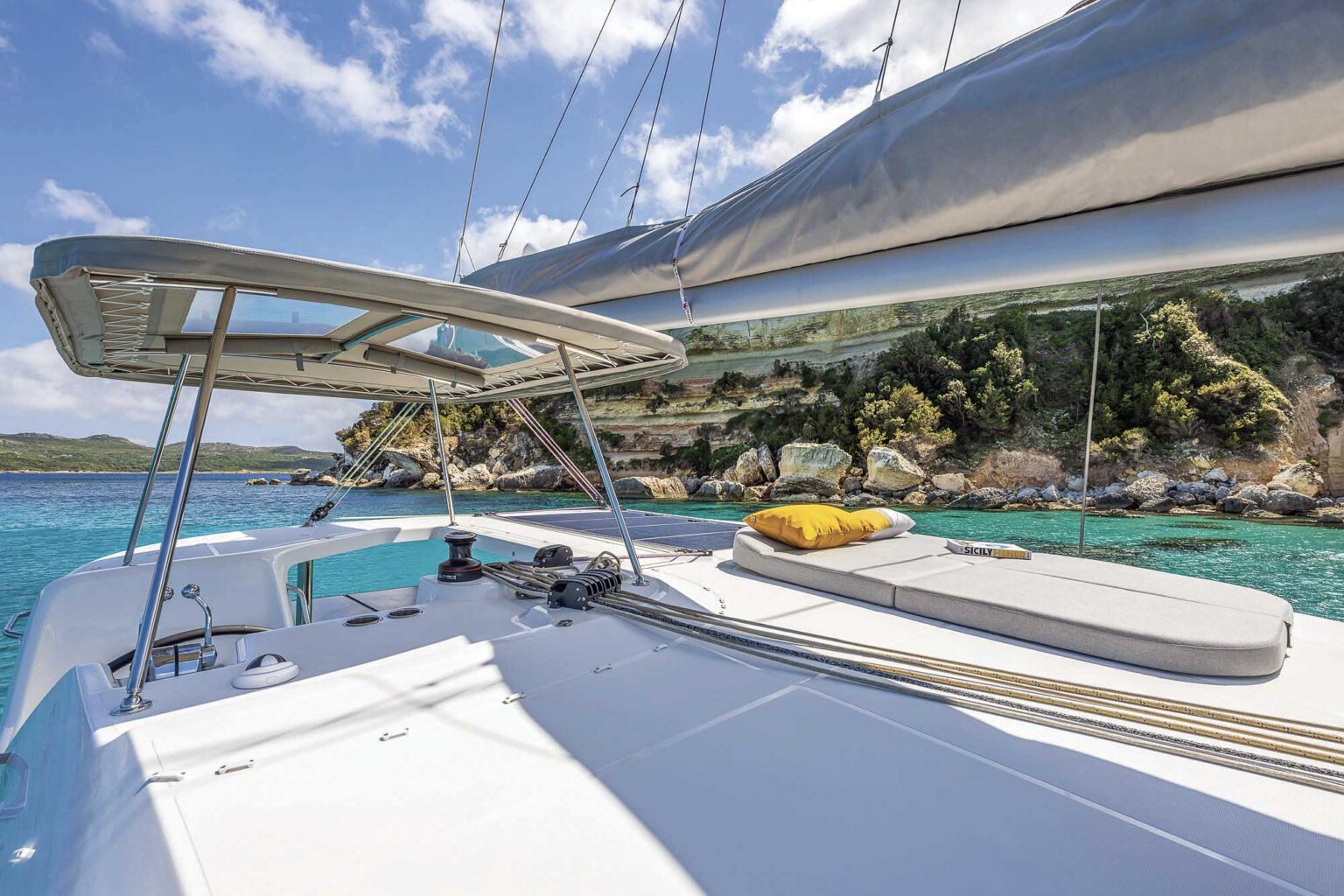
The cockpit on the Lagoon 38 favors social use and protected helm positions. Cockpit access and walkway width are important when planning dockside operations, tender transfer, and provisioning for charters. A sheltered cockpit improves comfort in variable conditions, and the transom design affects swim-platform operations and dinghy stowage.
Performance and handling characteristics
As a moderate-displacement catamaran, the Lagoon 38 is optimized for comfortable cruising rather than outright speed. In light airs the hulls track steadily, while moderate-swell conditions highlight the catamaran’s reduced heeling and increased living comfort. Close-quarters handling relies on the twin-engine setup and bow thruster options, which are important considerations for marinas and charter operators in crowded seasonal destinations.
- Advantages: shallow draft access to coves and beaches, spacious saloon and cockpit, easy boarding for guests and crew.
- Limitazioni: not a performance racer, requires attention to weight distribution and sail trim to reach optimal speeds.
- Operational note: routine checks of seacocks, standing rigging and engine mounts reduce service interruptions on tours or charters.
Charter market and operational considerations
The Lagoon 38 is frequently found in the charter fleets of Mediterranean and Caribbean marinas due to its balance of accommodation and simplicity. For operators, the model’s shallow draft opens access to protected anchorages and beachside stops, important for itineraries that emphasize swimming, snorkeling and coastal exploration. Provisioning, berthing fees, and marina availability will drive route planning; berths that can accept a 6.8 m beam must be pre-confirmed.
Charter checklist for owners and managers
- Documented delivery route and lifting schedule for transfers between regions.
- Insurance and regulatory compliance for commercial hire in local waters.
- Standardized inventory of safety gear, spare parts and service tools.
- Clear crew briefing materials and simple systems labeling for captains and bareboat renters.
Maintenance, resale and lifecycle logistics
Lifecycle planning for a Lagoon 38 includes scheduled antifouling, sail inspections, and occasional deck refits. The resale market for compact catamarans often favors well-documented maintenance histories and recent upgrades such as energy-efficient refrigeration, upgraded navigation electronics, or solar arrays—features that increase appeal for charter companies and private buyers alike. Transport logistics for sale also depend on regional demand; boats may be shipped across oceans or repositioned seasonally to meet high-season demand in popular yachting destinations.
Typical service intervals
Owners should budget for annual engine service, sail servicing every 2–5 years depending on use, and hull inspections at least once annually. For charter operators, tighter service windows are common: turnarounds between charters often require quick checks of safety gear, batteries and sanitation systems.
Brief historical context and model lineage
The Lagoon brand has long been associated with production catamarans designed for comfortable cruising and charter use. The compact models like the Lagoon 38 evolved from earlier catamarans that prioritized volume and stability for family cruising, while later designs integrated more efficient hull shapes and simplified deck systems to improve handling for short-handed crews. Over decades, the catamaran market shifted from niche to mainstream, with demand in marinas and charter fleets growing as yachting destinations expanded and boating activities diversified.
Historically, catamarans gained traction because they offered a different value proposition from monohulls: reduced motion at sea, faster passages in trade winds, and larger usable living spaces—attributes that supported the growth of yachting tourism, coastal beach-hopping itineraries, and charter itineraries catering to both families and groups seeking safe, stable platforms for water sports and fishing.
Forecast for charter and tourism relevance
Given ongoing interest in experiential travel and coastal destinations, the Lagoon 38 remains relevant for operators and private owners who prioritize flexible itineraries and accessible beach landings. As marinas and marinas infrastructure continue to develop in popular gulfs and island chains, such models will remain a practical choice for short-term charters, flotillas and owner-operated cruises.
Key operational takeaways
- Plan deliveries with attention to tidal windows and berth depth.
- Prioritize simple, robust systems for charter reliability.
- Confirm marina berthing for beam and dinghy stowage.
- Market well-documented maintenance and owner upgrades at sale or charter listing.
In summary, the Lagoon 38 is a pragmatic catamaran that balances comfort, shallow-water access, and straightforward serviceability—qualities that make it popular in charter pools and private ownership alike. Its logistics requirements (transport, berthing, and servicing) are manageable when planned in advance, and its design supports a wide range of activities from relaxed coastal cruising to active boating, fishing and snorkeling itineraries. For those seeking to rent o charter a capable small catamaran for beach hopping, lake cruising or coastal passages, an international marketplace for yachts and boats can help match needs to destinations and budgets. GetBoat.com is an international marketplace for renting sailing boats and yachts, a service that can help locate charters, captained or bareboat, across marinas and popular yachting destinations—supporting yacht selection, boat hire, and sale or rent decisions for everything from small sailing boats to larger superyacht options in clearwater coves and open ocean cruising grounds.