


 Italiano
  English (UK)
  Русский
  العربية
  日本語
日本語  한국어
한국어  Magyar
  Türkçe
  Español
  Čeština
  Svenska
  Português
  Ελληνικά
  Suomi
Suomi  Nederlands
  Română
  Français
  Polski
  Українська
  Deutsch
  简体中文
简体中文  Slovenčina
  How Early Record Boats Pushed Marine Design and Charter Markets">

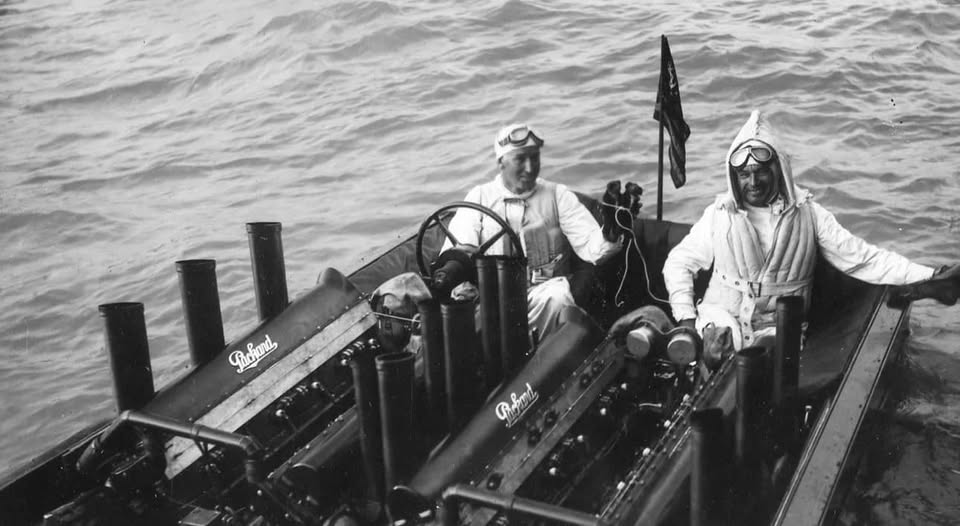
By 1932, running the 38‑foot Miss America X with four Packard supercharged V‑12s demanded a bespoke logistics chain: specialized fuel blends, reinforced cradles for road transport, and coordinated launch windows on rivers with sufficient depth and current control to support 125 mph runs.
Technical leaps and the birth of modern planing hulls
Between 1903 and the early 1930s, hull and propulsion innovations radically altered speed expectations. The transition from displacement hulls to pianificazione, stepped, and three‑point hydroplane designs cut wetted surface and reduced drag, enabling a jump from 20–30 mph to well over 100 mph within three decades. Designers such as John L. Hacker and builders like Chris-Craft were central to that shift.
Key design features
- Shallow V‑bottoms and planing flats for rapid lift onto plane.
- Calpestato hulls to trap air beneath the hull and break suction.
- Side‑mounted sponsons evolving into three‑point hydroplanes for reduced wetted area at speed.
- Use of high‑power aircraft engines (Napier, Rolls Royce, Packard) adapted for marine use.
Milestones on water: boats, speeds, and people
From Dorothy Levitt’s 21 mph Napier I in 1903 to Gar Wood’s 125 mph in 1932, record runs followed a pattern of incremental hull refinement paired with explosive gains in engine output. Hydrofoil experiments by Sir Alexander Graham Bell added another vector: lift provided by submerged foils minimized hull contact without sacrificing stability, as seen with the HD‑4.
| Barca | Year | Top Speed (mph) | Powerplant |
|---|---|---|---|
| Napier I | 1903 | 21 | Napier ICE |
| Au Revoir | 1904 | — (fastest of its day) | Hacker design |
| Kitty Hawk | 1911 | >50 | Stepped hull |
| HD‑4 (Bell) | 1919 | 71 | Renault → 2 × 350 hp |
| Miss America X | 1932 | 125 | 4 × Packard V‑12 |
| Miss England II / III | 1930–1932 | 99–120 | Rolls Royce V‑12 aero engines |
Notable figures
- Gar Wood — bought Chris Smith’s company, pushed powerboat records, pioneered logistics for heavy powerplants and transport.
- Chris Smith — early Chris‑Craft racer and builder of mahogany speed hulls.
- Sir Alexander Graham Bell — transferred airfoil theory into hydrofoil HD‑4 development.
- Henry Segrave and Kaye Don — British drivers who alternately raised the bar for single‑engine and twin‑engine craft.
Operational realities: what record attempts taught mariners and charter operators
Those early record campaigns were logistics masterclasses. You needed fuel bunkering tailored to high‑compression aero engines, shore crews skilled in marine engine servicing, specialized trailers and slipways, and accurate environmental data—wind, current, and depth—for safe runs. In short, racing forced professionalization of support services that later fed into recreational boating infrastructure: improved marinas, towing rigs, and engine maintenance standards that now benefit charter e rental fleets.
Practical lessons still relevant to charters
- Pre‑check protocols for high‑performance engines reduce downtime and accidents.
- Marina logistics—adequate berths, lifting gear, and secure transport—are crucial for fast boats and superyachts alike.
- Training captains and engineers on performance hull behavior improves passenger safety during high‑speed activities.
Funny little anecdote: a retired harbor captain once said that watching a Miss America climb onto plane was “like seeing a sea bird take off,” and that image stuck—designs that lift cleanly and predictably make all the difference whether you’re racing or running a fast charter to island destinations.
Legacy and the path forward
The 1930s marked the end of one era—the last conventional single‑keel monohull record chasers like Miss England III and Miss America X—and the beginning of more experimental, lightweight attempts that followed. Those experiments seeded technologies that modern sportboats and high‑performance tenders use today. For GetBoat.com users, the throughline is clear: faster hulls and better marine logistics expanded the possibilities for day charters, activity packages, and specialized rental markets.
In summary, the race to 100+ mph wasn’t just about bragging rights. It drove hull innovation, created supply chains for exotic engines and fuels, improved marina and transport infrastructure, and raised operational standards that trickled down to yachting and boat rental markets. From historic lake runs to ocean trials, these developments influence modern yacht and boat charters, captains, marinas, and destinations—whether you’re booking a fishing trip, renting a sunseeker, or planning a superyacht sale and transfer between clearwater marinas. The echoes of those record‑breaking days still shape boating, sailing, and charter activities across seas, gulfs, lakes and beaches.