


 Italiano
  English (UK)
  Русский
  العربية
  日本語
日本語  한국어
한국어  Magyar
  Türkçe
  Español
  Čeština
  Svenska
  Português
  Ελληνικά
  Suomi
Suomi  Nederlands
  Română
  Français
  Polski
  Українська
  Deutsch
  简体中文
简体中文  Slovenčina
  Il turismo interno del Ghana stimola l'economia con 6,6 miliardi di GH¢ nel 2023">

Record Growth in Ghana’s Domestic Tourism
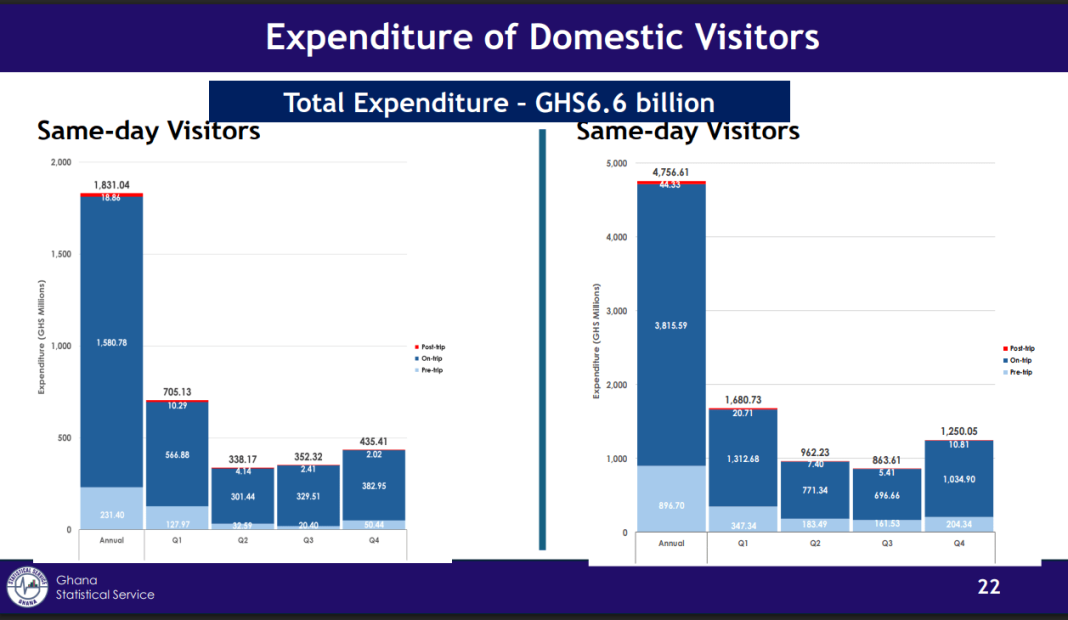
In 2023, domestic tourism in Ghana made a remarkable economic contribution, generating an estimated GH¢6.6 billion through approximately 15 million trips taken by residents nationwide. This surge highlights the vital role of internal travel in supporting local economies and communities across the country.
The data shows a split between 6.6 million same-day visitors e 8.8 million overnight visitors. Notably, overnight stays accounted for the majority of expenditures, with around GH¢4.8 billion spent on lodging, transport, dining, and community businesses—making up about 73% of domestic tourism spending. Same-day trips contributed the remaining GH¢1.8 billion.
Who’s Traveling and Why?
The predominant travelers were working-age adults aged 25 to 44, who represented over 40% of same-day travel and more than a third of overnight trips. The survey found that social reasons such as visiting friends and relatives or attending funerals largely motivated these trips, with 80% of overnight and 70% of same-day visits linked to these familial and cultural ties.
Interestingly, more than 95% of the trips were self-organized, with road transport—primarily buses and minivans—being the dominant method of getting around.
Regional Hotspots and Travel Patterns
The Ashanti and Greater Accra regions emerged as leading destinations for same-day trips, while the main draws for overnight stays included Ashanti, Eastern, and Greater Accra regions. These patterns emphasize the attractiveness of urban hubs and culturally rich areas within the country.
| Trip Type | Number of Trips (Millions) | Spending (GH¢ Billion) | Spending % of Total |
|---|---|---|---|
| Same-day Visits | 6.6 | 1.8 | 27% |
| Overnight Visits | 8.8 | 4.8 | 73% |
Economic Impact and Infrastructure Needs
While domestic tourism in Ghana is already thriving, infrastructure improvements remain essential to sustain and expand its benefits. Enhanced road networks, better safety measures, clear signage, and rest stops along key routes can greatly improve travel experiences. Likewise, raising the quality standards of public transport, especially buses and minibuses that ferry the majority of travelers, would further stimulate this economic engine.
Strategic investment to support local festivities, markets, heritage attractions, and community-based tourism businesses could help retain more spending within regions. Integrating the insights from domestic travel data into national planning and SME development programs will also be decisive for regional growth.
A Brief History of Domestic Tourism and Its Socio-Economic Role
Domestic tourism worldwide has traditionally been a significant part of many nations’ travel and leisure activities, often underpinning local economies. In Ghana, as in numerous other countries, it plays a crucial role beyond the spotlight of international arrivals. Historically, visiting family, attending cultural ceremonies, and social engagements have been the backbone of domestic travel.
The evolution of transport and communication infrastructure has steadily facilitated longer and more frequent travel within countries. Self-arranged trips have become common, as digital platforms and improved roads make spontaneous journeys easier. Understanding these travel dynamics allows governments and businesses alike to tailor services, improve access to destinations, and create complementary tourism products that extend visits and increase spending.
Future Outlook on Domestic Tourism and Regional Development
Looking ahead, domestic tourism carries immense potential for fostering sustainable economic progress in Ghana. By enhancing travel infrastructure and improving services, the industry can attract not only repeat visits but also encourage locals to explore less frequented regions. Packaging social trips with festivals, heritage tours, and leisure activities could transform traditional travel behaviors into experiences with higher economic returns.
Such developments often ripple into associated sectors like hospitality, transportation, and local craft markets, providing diverse employment and entrepreneurial opportunities. The resulting diversification helps spread the economic benefits of tourism more evenly across communities, reducing regional disparities commonly seen in more international-centric tourism markets.
Key Recommendations for Maximizing Domestic Tourism Benefits:
- Invest in road and transport infrastructure upgrades for safer and more comfortable travel.
- Support community-based tourism initiatives to retain expenditure locally.
- Create affordable, bundled tourism packages linking social visits with cultural and recreational activities.
- Develop digital platforms for easy booking and information access to enhance self-arranged trips.
- Integrate domestic tourism data into wider economic and regional development planning.
Connecting Domestic Tourism with Sailing and Boats Rent
Though this report mainly examines domestic land travel, its implications stretch to coastal and maritime leisure sectors as well. Ghana’s coastal areas and inland lakes present exciting opportunities for boating, yachting, and sailing activities, increasingly popular among both locals and visitors. As domestic tourism thrives, demand for varied water-based experiences often rises in tandem.
Improving access to marinas, developing yacht charter services, and promoting water sports can offer fresh dimensions to Ghana’s tourism offerings. Encouraging travel to seaside towns paired with boating adventures can elevate the quality and duration of stays, benefiting hospitality, boating rental, and related service industries.
Conclusione
Ghana’s domestic tourism sector has demonstrated impressive resilience and economic weight in 2023, with GH¢6.6 billion generated from over 15 million trips. The dominance of social motivations underlines the importance of cultural and family ties in shaping travel patterns across regions such as Ashanti, Greater Accra, and Eastern.
Continuous investments in infrastructure, combined with innovative tourism packaging and digital solutions, present viable pathways to transform self-arranged trips into higher-value experiences. Such efforts not only enhance the overall travel experience but also strengthen regional economies through improved spending retention.
Additionally, expanding access to coastal and aquatic destinations aligns well with the growth of sailing, yacht chartering, and boating activities, presenting exciting opportunities to diversify tourism offerings.
For travelers interested in exploring Ghana’s waterscapes and vibrant domestic destinations through sailing or yacht charters, GetBoat.com offers an international marketplace with options suited to every taste and budget, helping visitors discover the best boating experiences alongside their journeys on land.