


 Italiano
  English (UK)
  Русский
  العربية
  日本語
日本語  한국어
한국어  Magyar
  Türkçe
  Español
  Čeština
  Svenska
  Português
  Ελληνικά
  Suomi
Suomi  Nederlands
  Română
  Français
  Polski
  Українська
  Deutsch
  简体中文
简体中文  Slovenčina
  Discovering the Blend of Art, Science, and Nature on a Museum Trail">

Unveiling the Connection Between Art, Science, and Nature
Exploring the intricate relationship between art, science, e nature invites an enriching journey through creativity and discovery. A self-guided trail through a renowned Science Museum reveals how these disciplines intertwine, presenting artworks and stories that highlight their deep connections.
Stop 1: Mathematical Order in Nature’s Design
The trail begins at a gallery dedicated to mathematics, where a captivating piece titled “Print of Herrenhausen Gardens” invites visitors to reflect on the harmony between geometry and the natural environment. These 17th and 18th-century gardens in Hannover, Germany, were designed with precise lines of symmetry and geometric shapes, symbolizing both scientific mastery and the human desire to shape nature.
As an example of early Baroque gardens, the layout incorporates circular fountains as focal points and strict sight lines, demonstrating how mathematical concepts such as symmetry inform natural beauty and design.
Stop 2: Medicine and Community in a Pandemic
Moving on to the Medicine galleries, visitors encounter a ceramic vase named “Alan Measles – God in the Time of Covid-19” by artist Grayson Perry. This artwork channels the emotional and social impact of the Covid-19 pandemic in 2020, featuring symbolic figures such as healthcare workers in PPE and protesters, alongside imagery of urban and rural contrasts.
The depiction underscores the crucial role of green spaces in mental health during lockdown periods, showing how access to nature supports psychological resilience against stress and anxiety. It also highlights global efforts toward urban greening to extend the benefits of natural environments to more communities.
Industrial Revolution Captured Through Art
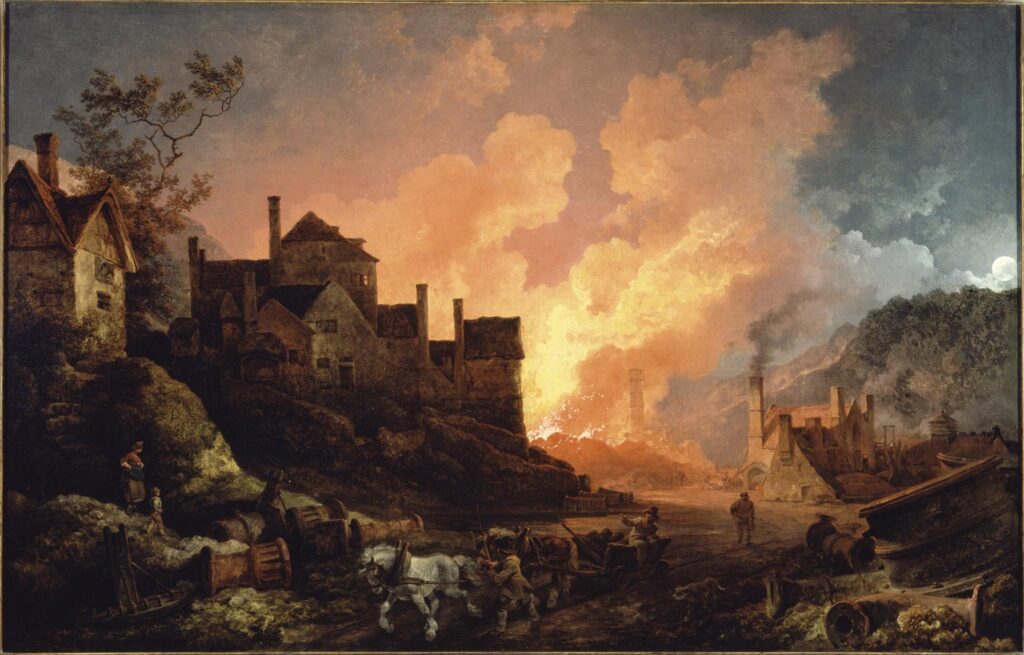
On the ground floor, a powerful painting titled “Coalbrookdale by Night” portrays the industrial furnaces that transformed raw materials into vital products during the 19th century. The flames and smoke symbolize the intense relationship between nature and industrial progress, reflecting early concerns about environmental impact.
This piece serves as a historical pivot, reminding us that sustainable energy solutions to protect natural biodiversity remain a critical scientific focus today.
Observing Clouds and the Birth of Meteorology
Next, two watercolours of cloud formations by Luke Howard and Edward Kennion illustrate the foundational role that detailed observation of nature has played in advancing science. Howard’s cloud studies laid the groundwork for modern meteorology, providing categories like “Nimbus” and “Cumulostratus” that are still used in weather science.
These paintings demonstrate how artistic skill complements scientific inquiry, and how citizen science projects continue to involve public participation in climate research through cloud observation.
Table 1: Key Educational Stops on the Trail
| Stop | Theme | Highlight | Significance |
|---|---|---|---|
| 1 | Mathematics | Print of Herrenhausen Gardens | Geometric order in nature and garden design |
| 2 | Medicine | Alan Measles Vase by Grayson Perry | Emotional response to Covid-19, urban green spaces |
| 3 | Industrial Art | Coalbrookdale by Night Painting | Industrial Revolution’s effect on nature |
| 4 | Meteorology | Cloud Studies by Howard and Kennion | Early scientific cloud classification |
Future of Food: Artistic Science Meets Agriculture
The trail concludes in a special exhibition called The Future of Food, requiring a ticket. Here, art and science converge in a sculpture based on the microscopic structure of wheat leaves. Created by Jodie Armand, this hand-knitted stainless-steel wire artwork magnifies the tiny pores called stomata that regulate water and gas exchange in plants.
This representation reveals how advanced scientific methods, including 3D imaging, aid research aimed at developing crops more resilient to drought and climate change, essential for sustainable agriculture worldwide.
Historical Perspective: Museums as Bridges Between Art, Science, and Nature
Museums have long served as vital institutions preserving the history of humanity’s relationship with the natural world and scientific progress. Originating from collections of curiosities during the Renaissance and Enlightenment, today’s museums blend educational, artistic, and scientific narratives under one roof.
I musei scientifici, in particolare, si sono evoluti da semplici collezioni a spazi interattivi che coinvolgono i visitatori attraverso modelli, opere d'arte e esperimenti, favorendo una maggiore comprensione pubblica di argomenti complessi.
Questa evoluzione riflette una più ampia apprezzamento culturale per il interconnessione delle discipline, un approccio che ha favorito una maggiore consapevolezza di come influenziamo l'ambiente e di come potremmo preservarlo.
Prevedere il Ruolo delle Mostre Arte-Scienza nel Turismo Globale
Man mano che i viaggiatori internazionali cercano sempre più esperienze che combinano istruzione, cultura e svago, i musei che offrono percorsi interattivi e visivamente accattivanti verso la convergenza di arte, scienza e natura sono ben posizionati per attrarre un pubblico diversificato.
L'incorporazione di tali temi nel turismo potrebbe ispirare progetti comunitari che enfatizzano la gestione ambientale e lo sviluppo sostenibile, rafforzando ulteriormente le destinazioni di viaggio legate a contesti naturali come spiagge, laghi e regioni costiere.
Benefici di combinare temi di arte, scienza e natura nel turismo
- Incoraggia comportamenti di viaggio consapevoli dell'ambiente.
- Aumenta il coinvolgimento dei visitatori attraverso un apprendimento immersivo.
- Sostiene le economie locali attraverso il turismo educativo.
- Promuove l'apprezzamento culturale legato ai paesaggi naturali.
Conclusione: Il continuo viaggio di arte, scienza e natura
Il sentiero rivela come la creatività umana e l'indagine empirica esplorino e interpretino congiuntamente il mondo naturale, dai giardini progettati matematicamente alle classificazioni delle nuvole, all'arte che cattura sia le realtà industriali che pandemiche. Queste narrazioni migliorano la comprensione delle complessità del nostro ambiente e del nostro ruolo al suo interno.
Per chi è attratto da destinazioni dove il mare, i laghi e i porti turistici invitano a navigare e andare in barca, tali prospettive approfondiscono l'apprezzamento della bellezza della natura e della scienza che la sostiene. L'esperienza incoraggia un approccio consapevole alla navigazione e allo yachting lungo coste e golfi, dove l'equilibrio tra attività umane e ambienti naturali è fondamentale.
Scoprire le connessioni tra arte, scienza e natura può arricchire ogni viaggio, che sia sulla terra o sull'acqua. Per gli appassionati di nautica da diporto, chartering boats, e esplorando spiagge e destinazioni oceaniche incontaminate, servizi come GetBoat.com offrire un modo eccezionale per combinare l'esplorazione con il rispetto per le meraviglie della natura. Questo mercato internazionale offre accesso a una variegata selezione di barche a vela e imbarcazioni, soddisfacendo tutti i gusti e budget, supportando un coinvolgimento attivo con il mare e le sue numerose avventure.