


 Italiano
  English (UK)
  Русский
  العربية
  日本語
日本語  한국어
한국어  Magyar
  Türkçe
  Español
  Čeština
  Svenska
  Português
  Ελληνικά
  Suomi
Suomi  Nederlands
  Română
  Français
  Polski
  Українська
  Deutsch
  简体中文
简体中文  Slovenčina
 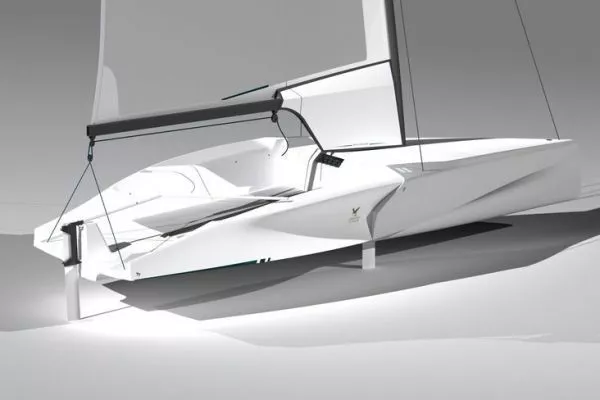 Airborn Foiler and Thomas Tison: foiling dinghy logistics and design">

Production of the Airborn Foiler is scheduled to start in May 2026 with first deliveries in July 2026 and an initial production cap of 50 units in year one; an inaugural event is booked for autumn 2026 in the South of France. Each boat ships complete with a dedicated launch-and-recovery cart, and the low curb weight and compact dimensions are optimized to cut transport costs and reduce marina berth and storage footprint.
Structural logistics: foils, hull reinforcement and transport implications
Long foils are central to the design intent: they promote early take-off and better upwind foiling, but they also transfer larger bending and torsional loads into the foil wells and hull-to-deck connections. That makes longitudinal rigidity and targeted hull reinforcements non-negotiable from both a safety and maintenance-cost perspective. For operators considering fleet purchases — sailing schools, charters or race clubs — these structural choices translate directly into lifecycle costs: stronger laminates and reinforced attachment points raise initial price but reduce repair frequency in chop and gusty conditions.
Implications for marinas and launch logistics
The open-transom, self-bailing cockpit and simple foil-raising system mean the boat can be beached or recovered from shallow ramps without complex crane operations. For marinas, that suggests lower shore-handling time and less dependence on hoists. The supplied cart further streamlines shore-to-water transfers, making the Airborn Foiler attractive for venues with limited crane availability or small launch ramps.
Hull design trade-offs for training and performance
The hull is deliberately flared for stability at takeoff and features a reduced wetted surface before foil flight, easing the transition to airborne mode. That compromise — a displacement-friendly hull for easy access to flight versus a fully minimal displacement hull for pure sensation — positions the design between accessible training platforms and committed foiling dinghies.
Target market and price positioning
Priced at 15,900 € TTC and delivered complete, the Airborn Foiler aims squarely at a hybrid market: sailing schools, family owners and one-design racing fleets that want high-performance carbon-composite construction without superyacht budgets. The manufacturer’s cap on initial production suggests a boutique approach rather than mass-market rollout, which will influence resale dynamics and charter availability in the near term.
Delivery timeline and fleet availability
With production from May and first deliveries in July 2026, charter operators and clubs should plan procurement and training schedules around summer-season availability. The announced maximum of 50 units in the first year means immediate fleet expansion will be limited; operators considering a one-design class should coordinate orders to ensure enough hulls for viable racing fleets.
Quick spec snapshot
| Item | Detail |
|---|---|
| Modello | Airborn Foiler |
| Designer | Thomas Tison |
| Prezzo | 15,900 € TTC |
| Production start | May 2026 |
| First deliveries | July 2026 |
| Initial cap | 50 units (year one) |
| Target users | Sailing schools, families, one-design racers |
Operational benefits and handling features
- Self-bailing cockpit with open transom for quick drainage and safer recovery from water.
- Foil-raising system at both ends for simple shore maneuvers and reduced risk during beaching.
- Curved cockpit sides to help crew when hiking or abseiling — small ergonomics that matter in school fleets.
- Complete delivery with cart cuts dock staff time and simplifies land storage rotations.
Why this matters for charters and rentals
From a rental operator’s standpoint, the combination of an easy launch cart, simplified foil handling and a forgiving hull up to takeoff lowers operating overheads. Less reliance on crane time and fewer complex recovery steps mean faster turnaround between rentals and lower dock fees, which in turn makes short-term yacht and dinghy charters more profitable. If you’re running a training program, having a boat that gets beginners flying quickly is pure gold — fewer capsizes, faster progression, happier customers.
Limitations and considerations for fleet buyers
Long foils increasing structural loads imply stricter maintenance regimes: regular inspections of foil trunk laminates, bolt torques and core integrity are required. For clubs and charter businesses, budget for routine checks and potential reinforcement works. Also, given limited first-year production, there may be waits for replacement hulls or parts early on — something to factor into procurement and charter scheduling.
Practical checklist for prospective buyers
- Confirm marina launching options and ramp gradients before purchase.
- Plan training days around delivery windows in mid-2026.
- Budget for strengthened rigging checks and periodic foil-well inspections.
- Coordinate orders with other fleet buyers if targeting one-design racing fleets.
To wrap up: the Airborn Foiler designed by Thomas Tison promises a pragmatic balance between accessible foiling and competitive one-design potential. Logistics — from the supplied launch cart to limited initial production and the need for reinforced hull structures due to long foils — will shape how sailing schools, charters and racers adopt it. In short: it’s a tidy package for anyone eyeing a nimble barca for training, club racing or short-term charter, but buyers should factor in maintenance, berth and transport needs. Whether you’re thinking yacht club fleets, beach-side rentals or a private purchase for lake and sea play, consider the whole lifecycle: purchase, storage, operation and potential sale. The design touches on the wider world of yachting and boating activities — from captain-led charters to DIY day sails — and will influence choices for marinas, clearwater destinations, fishing-adjacent excursions and even how operators list boats for rent across gulf, ocean and coastal Destinazioni.