


 Magyar
  English (UK)
  Русский
  العربية
  日本語
日本語  한국어
한국어  Türkçe
  Español
  Čeština
  Svenska
  Português
  Ελληνικά
  Suomi
Suomi  Nederlands
  Română
  Italiano
  Français
  Polski
  Українська
  Deutsch
  简体中文
简体中文  Slovenčina
 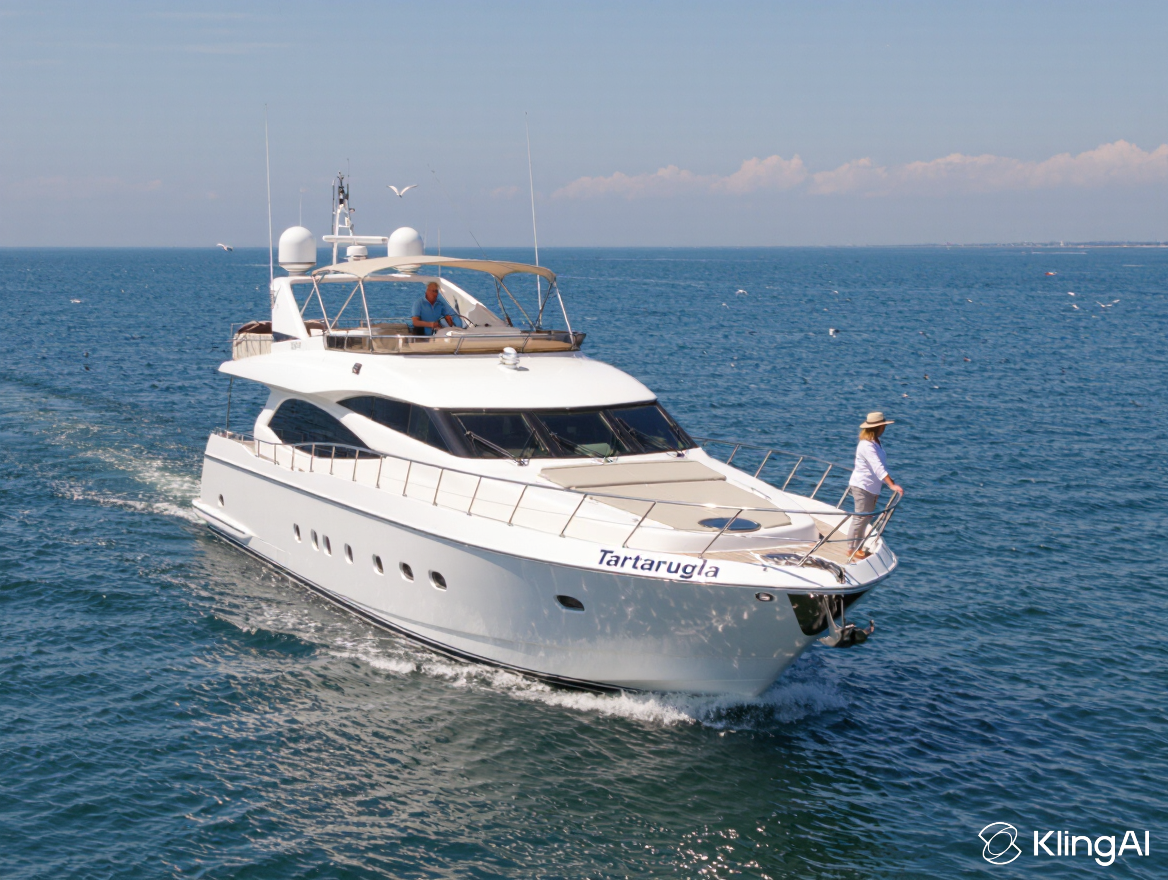 Tartaruga Sets Course for Long-Range, Gentle Cruising">

Range of 4,500 nautical miles at 10 knots and a Dynamic Positioning system are central to Tartaruga’s operational profile, enabling extended passages and sensitive-area visits without anchoring. The 32.6 m hull and a forward-mounted davit for a nearly 6 m tender also influence deck logistics and marina handling requirements.
Yacht Overview and Mission Profile
Launched as hull number six in Cantiere delle Marche’s Nauta Air series, Tartaruga was commissioned by an American owner with a clear brief: globe-trotting at a moderated pace. The vessel’s dimensions and systems were selected to prioritize endurance and environmental care over sprint performance. With accommodation for 12 guests and a crew of six, Tartaruga is configured for extended family cruising rather than regatta speed.
Operational footprint
A 4,500 nm cruising range at economical speed means fewer bunkering stops and more flexibility in route planning — think transoceanic hops that stitch together islands, gulfs and remote anchorages. The presence of Dynamic Positioning (DP) changes the anchoring calculus: in marine protected areas and coral-rich bays, DP allows for station-keeping without dropping an anchor that could damage seabed habitats.
Design Language and Interior Flow
Nauta Design carried a signature aesthetic into this build, favoring light tones and clean lines to blur interior and alfresco transitions. Windows have been enlarged on all decks to increase sightlines and visual continuity, while the main deck styling was refined to integrate exterior glazing with the superstructure.
Guest spaces
- Main aft deck with comfortable seating for underway or at-anchor socializing
- Sundeck with uninterrupted views and lounge areas for sun and sea watching
- Five staterooms configured to host 12 guests in family-oriented layouts
Materials and mood
The chosen palette emphasizes natural materials and subdued tones to create an atmosphere described by the design team as “understated elegance and quiet luxury.” Architectural geometry meets curated furniture to balance contemporary lines and organic details — a practical approach for owners who expect both resilience and style on long cruises.
Technical and Naval Architecture
Built by Cantiere delle Marche with Hydro Tec collaboration on naval architecture, the yacht’s propulsion package centers on two 715-hp Caterpillar engines. The hull form and propulsion choices were optimized for efficient passages at displacement speeds rather than planing bursts.
| LOA | 106’11” (32.6 m) |
|---|---|
| Beam | 24’9” (7.55 m) |
| Draft | 8’2” (2.5 m) |
| Guests | 12 in 5 staterooms |
| Legénység | 6 |
| Motorok | 2 × 715-hp Caterpillars |
| Range | 4,500 nm @ 10 knots |
| Építő | Cantiere delle Marche |
| Stylist | Nauta Design |
Deck operations and tender logistics
A nearly 20-foot (6 m) tender carried forward on the main deck with a dedicated davit alters deck-loading patterns and marina mooring tactics. That forward placement is handy for quick water access but requires coordination when transiting narrow channels or mooring stern-to in crowded marinas.
Environmental and Regulatory Considerations
The inclusion of DP is not just a convenience: it’s a regulatory and conservation tool. In many jurisdictions, anchoring restrictions in marine parks and coral zones are enforced or recommended; DP allows operators to comply while maintaining guest comfort. From an operational standpoint, DP also imposes maintenance discipline — positioning thrusters and sensors must be serviced to preserve both safety and environmental compliance.
Implications for insurance and charter rules
Flag state and insurer requirements often reward yachts that minimize seabed impact. Owners and captains should anticipate documentation of DP capabilities during port clearances and when applying for permits to visit sensitive anchorages.
Practical Notes for Charter and Boating Markets
While Tartaruga was commissioned as an owner-operated cruising platform, design decisions here have knock-on effects for the charter and rental market. Large windows, expansive alfresco spaces and an emphasis on comfort over blistering speed appeal to charter clients who prioritize scenery, beach-landings and water-based activities over performance. For brokers and marinas, the boat’s range means potential itineraries that cross traditional charter boundaries — longer itineraries, fewer refuels and more diverse destinations.
- Charter appeal: relaxed pace, family-friendly layout
- Marina considerations: forward tender davit requires berth planning
- Activities: fishing, diving, day cruises to clearwater coves and beaches
A captain’s perspective
Captains running similar yachts often report that guests appreciate the slow-steaming concept: more time on deck, more time ashore, less time in engines. It’s like the tortoise and the hare all over again — slow and steady, and you see twice as much.
In summary, Tartaruga combines long-range capability, environmental-minded systems and an interior-exterior design that favors relaxed yachting over racing. The technical package — including DP and a substantial tender — affects voyage planning, marina operations and potential charter applications. For anyone involved in yacht rental, charter brokerage, marina logistics or superyacht sale and management, the vessel is a useful case study in how endurance, comfort and conservation can steer future yacht designs and itineraries toward more thoughtful sea, ocean and gulf cruising.