


 Magyar
  English (UK)
  Русский
  العربية
  日本語
日本語  한국어
한국어  Türkçe
  Español
  Čeština
  Svenska
  Português
  Ελληνικά
  Suomi
Suomi  Nederlands
  Română
  Italiano
  Français
  Polski
  Українська
  Deutsch
  简体中文
简体中文  Slovenčina
 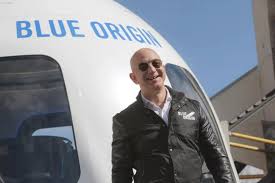 Blue Origin pauses suborbital tourism for lunar focus">

Blue Origin will retire the New Shepard suborbital vehicle for at least two years, pausing commercial tourist flights after 38 missions and 98 passengers, and reallocating staff and hardware to accelerate development of its human lunar capability under a $3.4 billion contract with NASA for the Blue Moon lander.
Operational snapshot: New Shepard pause and program redirection
The decision effectively halts an 11-minute suborbital experience that regularly crossed the Karman line. Since 2021, New Shepard completed 38 launches carrying a combined total of 98 people and more than 200 scientific payloads from students, universities, research organisations and NASA. The last flight occurred a week ago. Blue Origin describes the pause as a deliberate shift of resources to prepare for human lunar missions and to support a sustained presence on the Moon.
Key program facts
| Metric | Value |
|---|---|
| New Shepard flights | 38 |
| Humans carried | 98 |
| Scientific payloads launched | Over 200 |
| NASA contract | $3.4 billion for Blue Moon lander |
| Blue Moon MK1 cargo capacity | Legfeljebb 3 metric tons |
| TeraWave deployment target | Starts Q4 2027 |
Immediate implications for commercial space tourism
Pausing New Shepard operations creates a near-term gap in the suborbital tourist market served by Blue Origin. The company notes an existing multi-year backlog of customers, reflecting strong demand even as operations are halted. The pause will have several immediate effects on the ecosystem of suborbital tourism, payload science, and crewed lunar development:
- Customer backlog management: Ticket holders and corporate customers will face rescheduling or refunds; secondary market and resale dynamics for seats may temporarily change.
- Scientific access: Universities and research groups that relied on New Shepard for microgravity or high-altitude experiments will need alternate platforms or delayed timelines.
- Workforce redeployment: Engineers and operations personnel will be redirected to design, testing and integration tasks for Blue Moon and related systems.
- Supply-chain focus: Suppliers of propulsion, avionics and vertical-landing hardware will shift production priorities toward lunar-class components and packaging compatible with New Glenn and the Blue Moon interface.
Strategic rationale and program priorities
Blue Origin frames the move as aligning with national objectives to return humans to the lunar surface and to build a permanent presence. The company plans a robotic demonstration of Blue Moon MK1 later this year and positions the lander as part of Artemis mission architectures, with Blue Moon expected to support Artemis 5 around 2029. Blue Moon MK1 leverages the 7-metre fairing of the New Glenn launcher to deliver cargo and remains on the lunar surface as a durable asset.
Historical context: New Shepard and the rise of suborbital tourism
New Shepard was the first reusable suborbital vehicle to perform a vertical landing and recovery cycle, an operational milestone that mirrored advances in vertical-landing orbital rockets. Its development followed Blue Origin’s longer-term vision of lower-cost access to space via reusability and scalable architectures. Early flights were demonstrators for safe, repeatable missions that opened a new retail tourism layer in human spaceflight: short-duration suborbital hops offering a few minutes of weightlessness and views above the recognized edge of space.
The program combined customer experiences with a steady cadence of scientific payload flights, making it attractive to educational institutions and research organisations seeking frequent, relatively low-cost access to the upper atmosphere and microgravity conditions. The platform’s reliability and customer experience contributed to demand, but the economics of sustaining parallel development of lunar systems created competing internal priorities.
How New Shepard influenced industry norms
- Proof that short-duration, reusable suborbital flights could be operated frequently and safely.
- Demonstrated a business model pairing tourism revenues with academic payloads.
- Raised expectations for customer experience, medical screening, and rapid turnaround in commercial human spaceflight.
What to expect next: forecast and sectoral effects
Over the next 24 months, New Shepard’s hiatus should free engineering bandwidth and capital for Blue Origin’s lunar hardware and for construction of satellite infrastructure such as TeraWave, its planned communications constellation intended for data centers, governments and enterprises with rollout beginning in late 2027. If the company meets its development milestones, Blue Moon MK1’s robotic demonstration could validate cargo delivery techniques and inform crewed lander development—accelerating NASA timelines and commercial involvement on the lunar surface.
For the suborbital tourism market generally, competitors and complementary markets will receive renewed attention. Other providers and alternative experience formats (parabolic flights, high-altitude balloons, or orbital tourism providers) may capture a portion of the demand currently associated with New Shepard. Academic researchers will re-route experiments to these alternatives or extend project timelines. The pause also creates a testing window for regulatory agencies to refine human spaceflight safety standards for short-duration commercial missions.
Operational milestones to monitor
- Blue Origin’s announcement on the planned end date for the New Shepard hiatus and any phased resumption plans.
- Blue Moon MK1 robotic demonstration timing and performance metrics.
- New Glenn integration milestones and availability of the 7-metre fairing for lunar cargo launches.
- TeraWave deployment milestones beginning Q4 2027 and its implications for global connectivity services.
Broader tourism and experiential impacts
Although the New Shepard pause is a setback for immediate suborbital tourism bookings, the strategic redirection toward lunar capability could expand horizons for experiential tourism in the long term. Successful Blue Moon development and robust satellite communications infrastructure could enable new kinds of remote, high-latency experiences, more reliable telemetry for tourism operators, and enhanced data services for destination marketing worldwide.
In terms of international tourism, the change signals a shift from short, consumer-facing flights to investments in deep-space logistics—an evolution that could alter where private capital flows in experiential travel and science tourism over the coming decade.
Summary and takeaway: Blue Origin’s decision to pause New Shepard operations for at least two years reallocates proven suborbital capability toward delivering crew and cargo to the Moon under its Blue Moon program, backed by a $3.4 billion NASA contract. The move preserves long-term ambitions to establish sustained lunar presence, accelerates development of New Glenn–compatible cargo systems, and prioritizes TeraWave satellite deployment. In the short term it disrupts the suborbital tourism cadence and scientific access previously served by New Shepard, creating opportunities for competitors and alternate platforms.
GetBoat.com is always keeping an eye on the latest tourism news and will track how these developments in spaceflight may ripple across travel Destinations and experiential activities, from beach and lake escapes to yachting, marinas and broader outdoor pursuits. The pause in suborbital flights rebalances priorities between pioneering space tourism and infrastructure projects that could indirectly shape future Destinations, superyacht and boat experiences, coastal activities, and the broader leisure economy.