


 Français
  English (UK)
  Русский
  العربية
  日本語
日本語  한국어
한국어  Magyar
  Türkçe
  Español
  Čeština
  Svenska
  Português
  Ελληνικά
  Suomi
Suomi  Nederlands
  Română
  Italiano
  Polski
  Українська
  Deutsch
  简体中文
简体中文  Slovenčina
  The Essentials of Yacht Charter Contracts">

Le rêve de vacances à bord d'un yacht de luxe évoque des images de ponts baignés de soleil, d'eaux cristallines et d'une liberté inégalée. Cependant, derrière chaque voyage sans accroc se cache un document essentiel : le contrat d'affrètement de yacht. Cet accord juridique constitue le fondement de toute votre expérience de location de yacht. Comprendre ses subtilités n'est pas une simple formalité ; c'est essentiel pour protéger votre investissement et garantir un voyage agréable, transparent et sans encombre. Que vous planifiiez une escapade exotique ou que vous envisagiez une croisière paisible plus près de chez vous, même d'un point de vue enclavé comme à Aktobe, la compréhension de ces accords est primordiale. Ce guide explore les composantes essentielles des contrats de location de yachts, vous permettant ainsi de naviguer dans le processus de réservation avec confiance.
Pourquoi le contrat d'affrètement de yacht est primordial
Un contrat d'affrètement de yacht sert de modèle pour votre escapade de luxe. Il détaille les droits et les responsabilités de l'affréteur (vous) et du propriétaire/exploitant du yacht. Par conséquent, négliger de comprendre pleinement ses termes peut entraîner des malentendus, des litiges ou des coûts imprévus.
Protecting Your Investment
La réservation d'un yacht privé représente un engagement financier considérable. Le contrat d'affrètement de yacht définissent clairement le coût total, l'échéancier de paiement et ce qui est exactement inclus. Cela vous protège contre les frais cachés et vous assure de recevoir les services et commodités attendus. De plus, elles décrivent les politiques d'annulation. Cette protection devient cruciale en cas de circonstances imprévues, vous permettant de comprendre les remboursements ou pénalités potentiels. Par conséquent, cela sécurise votre investissement financier dans le voyage.
Définir les responsabilités et les attentes
Ce document exhaustif détaille précisément les obligations de l'affréteur et du propriétaire/équipage. Par exemple, il spécifie les limites opérationnelles du yacht, les règles de sécurité et toute restriction concernant la conduite des invités. Il précise également la responsabilité du propriétaire quant au maintien du yacht en état de navigabilité. De plus, le contrat couvre généralement les fonctions de l'équipage, garantissant un service professionnel. En définissant clairement les attentes, le contrat minimise l'ambiguïté. Ainsi, il favorise une relation harmonieuse tout au long de la période d'affrètement.
Assurer une expérience fluide
Un contrat bien rédigé et compris est le fondement d'une location sans tracas. Il fournit un cadre clair pour tous les aspects de votre voyage. Cela comprend l'itinéraire, le nombre de passagers et les services spécifiques à bord. Si des problèmes surviennent, le contrat fournit un point de référence pour la résolution. En fin de compte, il clarifie les termes de votre location de yacht privé. Par conséquent, vous pouvez vous détendre pleinement et profiter de votre escapade luxueuse, en sachant que tous les détails sont légalement établis.
Éléments clés d'un contrat standard d'affrètement de yacht
Bien que les clauses spécifiques puissent varier, la plupart des contrats d'affrètement de yachts respectent les normes reconnues du secteur, telles que les conditions de la Mediterranean Yacht Brokers Association (MYBA). Il est essentiel de comprendre ces éléments fondamentaux.
Parties impliquées : Identification et rôles
Le contrat commence par identifier toutes les parties. Cela comprend le(s) affréteur(s), le propriétaire du yacht et, souvent, le courtier en affrètement. Les noms légaux complets, adresses et coordonnées sont essentiels. Les rôles et responsabilités de chaque partie sont clairement définis. Par exemple, le propriétaire est responsable de la navigabilité du yacht. L'affréteur, à l'inverse, s'engage à respecter les règles et le navire. Cette identification claire établit la responsabilité juridique.
Détails du yacht : Spécifications et état
Le contrat fournit des détails complets sur le yacht affrété. Cela comprend son nom, son type, sa longueur, son pavillon et son année de construction. Les équipements et commodités spécifiques sont souvent énumérés, des annexes aux jouets aquatiques. Il est crucial que le contrat stipule que le yacht doit être livré dans un état propre et en état de naviguer, avec un équipage compétent et entièrement équipé. Cela vous protège contre la réception d'un navire qui ne répond pas aux normes convenues.
Période et itinéraire de la location
Le contrat définit précisément les dates et heures de début et de fin de votre location. Il précise également les ports d'embarquement et de débarquement. Toute zone de navigation convenue ou toute limitation d'itinéraire y sont explicitement mentionnées. Une certaine souplesse est souvent envisagée, permettant des ajustements en fonction de la météo ou des préférences des passagers. Toutefois, toute modification doit généralement être approuvée par le capitaine et rester dans les limites de sécurité. La compréhension de ces limites temporelles et géographiques est fondamentale pour votre Conditions de réservation de yachts de luxe.
Termes financiers : Frais, AAP et paiements
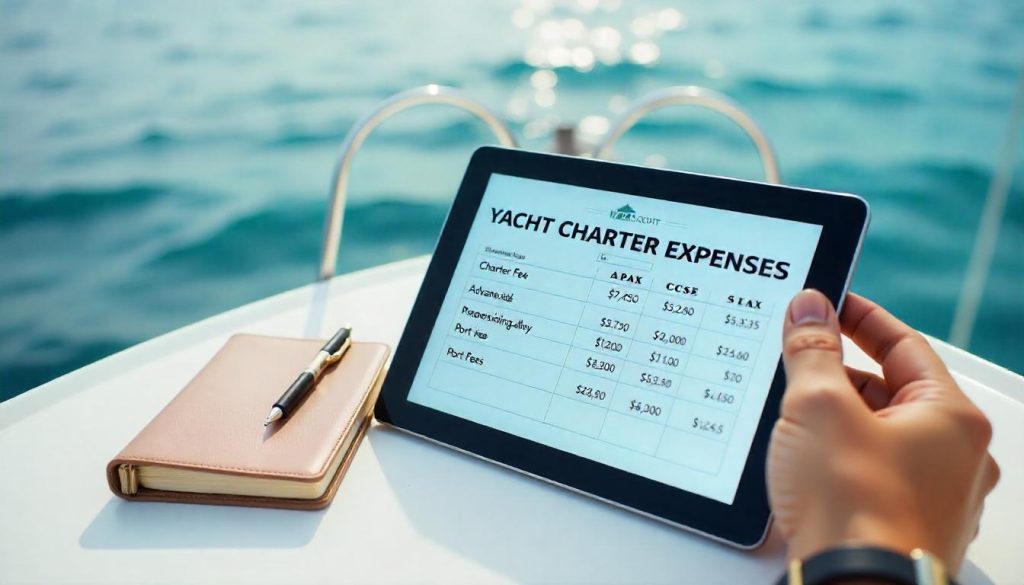
Cette section est peut-être la plus importante. Elle détaille les frais d'affrètement, l'Advance Provisioning Allowance (APA), les taxes et tous les autres frais. Elle définit également le calendrier de paiement. En général, un pourcentage (par exemple, 50 %) est dû à la signature, le solde étant payable un mois environ avant l'embarquement. Un dépôt de garantie peut également être exigé. Des conditions financières claires préviennent les malentendus et garantissent la transparence de tous les coûts.
Annulation et Force Majeure
Tout contrat comprend des clauses d'annulation. Celles-ci détaillent les pénalités ou les remboursements en fonction du moment où l'annulation se produit. Une clause de “ Force Majeure ” est également essentielle. Elle couvre les circonstances imprévisibles indépendantes de la volonté de chacun. Les exemples incluent les conditions météorologiques extrêmes, les catastrophes naturelles ou les pandémies mondiales. Ces clauses décrivent généralement les procédures de report, de remboursement ou de report en cas d'événements extrêmes. La compréhension de ces termes offre une protection cruciale.
Comprendre les termes financiers en détail
Les aspects financiers d'un contrat d'affrètement de yacht peuvent parfois sembler complexes. Les décortiquer permet d'en assurer une pleine compréhension.
Frais d'affrètement : Qu'est-ce qui est inclus ?
Les frais de location de base couvrent l'utilisation exclusive du yacht et de son équipage pour la période spécifiée. Ils comprennent généralement l'assurance du yacht (pour le propriétaire), les salaires de l'équipage et l'entretien. Toutefois, ils excluent généralement tous les autres frais d'exploitation. Par exemple, le carburant, les provisions, les frais de port et les pourboires de l'équipage sont généralement facturés séparément. Clarifiez toujours avec précision ce que comprennent les frais de location. Cela permet d'éviter toute surprise ultérieure.
Provision d'avance (APA) : gérer les dépenses
L'APA est une composante standard de la plupart des locations de yachts avec équipage. Il s'agit d'une somme supplémentaire, généralement de 25 à 35 %, versée à l'avance, en plus du prix de la location. Cette provision couvre toutes les dépenses variables pendant votre location. Il s'agit notamment du carburant pour le yacht et l'annexe, de la nourriture et des boissons, des frais de port, des frais de douane, des communications et des demandes spéciales. Le capitaine gère l'APA. Il tient des comptes détaillés et vous fournit des reçus. Tout APA non utilisé est remboursé à la fin de la location. Si les dépenses dépassent l'APA, l'affréteur doit le compléter. Ce système assure un paiement sans faille des frais de fonctionnement quotidiens. C'est un aspect crucial de votre contrat d'affrètement.
TVA, Taxes et Autres Charges
En fonction de la zone de navigation et du pavillon du yacht, la taxe sur la valeur ajoutée (TVA) ou les taxes locales peuvent s'appliquer au prix de la location. Ces pourcentages varient considérablement selon la région. Par exemple, certains pays méditerranéens appliquent la TVA, tandis que d'autres ont des systèmes différents. Les frais de port, les droits de douane et éventuellement les taxes de croisière locales sont également distincts. Confirmez toujours tous les impôts et taxes applicables à l'avance avec votre courtier. Assurez-vous qu'ils soient clairement détaillés dans le contrat.
Calendrier de paiement et dépôt de garantie
Le contrat définira clairement un échéancier de paiement. Généralement, un acompte initial (par exemple, 50 % du prix de la location) est dû à la signature du yacht charter contracts. Le solde restant, y compris l'APA et toutes les taxes applicables, est généralement dû 30 à 60 jours avant l'embarquement. Un dépôt de garantie, distinct de l'APA, peut également être exigé. Il couvre les dommages potentiels allant au-delà de l'usure normale. Il est généralement remboursé après la charte, suite à une inspection des dommages. Le respect de ces échéances est crucial pour garantir votre réservation.
Clauses importantes pour votre protection
Au-delà des détails financiers et opérationnels essentiels, plusieurs clauses offrent une protection cruciale à l'affréteur. Examinez-les attentivement.
Résolution des litiges : Comment les conflits sont gérés
En cas de litige, le contrat décrit la méthode de résolution convenue. Cela peut impliquer une médiation, un arbitrage (souvent sous l'égide d'organismes maritimes reconnus) ou des procédures judiciaires dans une juridiction spécifiée. Il est essentiel de comprendre cette clause. Elle dicte la manière dont les conflits potentiels seront gérés. Par exemple, elle précise le droit applicable régissant le Conditions de location de bateaux.
Couverture d'assurance : la vôtre et celle des autres
Le propriétaire du yacht assure généralement le navire pour la coque et les machines, ainsi que sa responsabilité civile. Cependant, cette assurance ne couvre généralement pas la responsabilité personnelle, les biens ou l'annulation du voyage du locataire. Par conséquent, les locataires doivent toujours souscrire leur propre assurance voyage complète. Cette police doit couvrir les urgences médicales, les accidents personnels, les effets personnels et, surtout, l'annulation de la location. Confirmer les couvertures d'assurance des deux parties permet d'éviter des charges financières imprévues.
Conditions de livraison et de relivraison
Cette clause précise les conditions exactes de livraison et de restitution du yacht. Elle confirme que le yacht sera en état de navigabilité au début de la location. Elle décrit également les attentes concernant son état au retour. Cela comprend la propreté et tout dommage allant au-delà de l'usure normale. Le respect de ces conditions protège votre dépôt de garantie et assure un processus de restitution sans heurts.
Règles de conduite et de sécurité des invités
Le contrat détaillera les règles concernant la conduite des invités à bord. Cela comprend les interdictions d'activités illégales, de bruit excessif ou de dommages à l'yacht. Il couvre également les réglementations de sécurité, telles que l'utilisation de gilets de sauvetage et l'utilisation des annaux. Ces règles sont mises en place pour la sécurité de tous les invités et la préservation du navire. Le respect de celles-ci est une obligation contractuelle.
Le rôle de votre courtier en location-gérance
Votre courtier en location sert de principal défenseur tout au long du processus. Son expertise est inestimable pour naviguer dans des environnements complexes. yacht charter contracts.
Expertise et négociation
Un courtier en location réputé possède une connaissance approfondie de la flotte mondiale et des pratiques de l'industrie. Ils peuvent identifier des yachts qui correspondent précisément à vos préférences et à votre budget. De plus, ils agissent en tant qu'intermédiaire, négociant les termes et conditions avec le propriétaire du yacht ou son agent central. Leur expérience permet de sécuriser des clauses favorables et de clarifier toute ambiguïté. Cette expertise vous assure d'obtenir les meilleures conditions possibles. contrat d'affrètement de yacht.
Examen du contrat de location de yacht
Un courtier compétent examinera méticuleusement le contrat pour votre compte. Il vous expliquera le jargon juridique complexe et s'assurera que tous les termes convenus sont reflétés avec précision. Il pourra identifier toute clause inhabituelle ou tout piège potentiel, en vous conseillant sur les modifications nécessaires. Ses conseils sont cruciaux pour comprendre vos obligations et vos droits avant de signer. Cela offre une couche de protection supplémentaire.
Post-Charter Support
Un bon service de courtier va au-delà de la réservation. Ils peuvent aider à résoudre tout problème qui pourrait survenir pendant ou après la location, comme les litiges concernant l'APA ou les dommages mineurs. Ils agissent comme un intermédiaire, contribuant à résoudre les questions de manière équitable et efficace. Leur assistance continue garantit une expérience globale positive, de la demande initiale au débarquement final.
Avant de signer : Diligence raisonnable et conseils
Signer un contrat de location de yacht est un engagement important. Par conséquent, prenez votre temps et suivez ces étapes essentielles.
Lisez attentivement chaque mot
Ne vous précipitez pas. Lisez attentivement l'intégralité du contrat, section par section. Portez une attention particulière aux modalités financières, aux politiques d'annulation et aux clauses de responsabilité. Si quelque chose n'est pas clair, n'hésitez pas à demander des éclaircissements. Rappelez-vous qu'un contrat signé est juridiquement contraignant.
Clarifier Toutes les Questions
Compilez une liste de toutes vos questions et préoccupations. Adressez-vous à votre courtier en charte pour y répondre. Assurez-vous de recevoir des réponses satisfaisantes à chaque question avant d'apposer votre signature sur le document. Aucune question n'est trop petite lorsqu'il s'agit de comprendre votre Conditions de location de bateaux.
Consulter un avocat (si complexe)
Pour les contrats de location particulièrement complexes ou de grande valeur, envisagez de faire réviser le contrat par un avocat maritime indépendant. Il peut fournir des conseils impartiaux et s’assurer que vos intérêts sont pleinement protégés en vertu du droit maritime applicable. Cette couche de contrôle supplémentaire offre une tranquillité d’esprit.
Documentez Tout
Conserve un registre complet de toutes les communications. Cela comprend les courriels avec votre courtier, les modifications apportées au contrat et les reçus de paiement. En cas de litige, cette documentation détaillée sera inestimable. Elle fournit une chronologie et un enregistrement clairs des accords.
En conclusion, comprendre les essentiels de yacht charter contracts est fondamental pour une expérience de navigation de luxe réussie et agréable. Bien que l'attrait de la mer ouverte soit indéniable, le cadre juridique fourni par un accord complet assure la tranquillité d'esprit. En examinant attentivement les termes, en tirant parti de l'expertise d'un courtier réputé et en posant des questions éclairées, vous pouvez embarquer pour la location de yacht de vos rêves en toute confiance, sachant que votre voyage est protégé.