


 Français
  English (UK)
  Русский
  العربية
  日本語
日本語  한국어
한국어  Magyar
  Türkçe
  Español
  Čeština
  Svenska
  Português
  Ελληνικά
  Suomi
Suomi  Nederlands
  Română
  Italiano
  Polski
  Українська
  Deutsch
  简体中文
简体中文  Slovenčina
 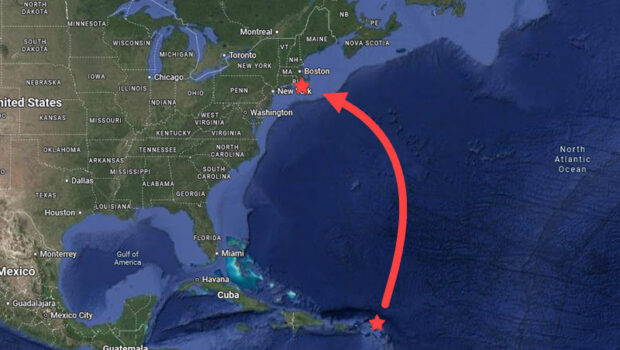 New Offshore Passage from St. Barths to Newport">

On May 9, 2026 a 1,500‑nautical‑mile offshore course will depart Gustavia, Saint Barthélemy, and terminate at Fort Adams in Newport, Rhode Island, running northward as Caribbean regattas conclude and the Atlantic season begins.
Race logistics and entry framework
The event, named the États-Unis Open – Offshore, is organized by États-Unis Sailing with support from the Saint Barth Yacht Club and the New York Yacht Club. The inaugural edition is scheduled for early May to permit a clear transit window for vessels relocating from winter Caribbean cruises and regattas to New England harbors.
| Item | Détails |
|---|---|
| Start | Gustavia, St. Barths (Saint Barthélemy) |
| Finish | Fort Adams, Newport, Rhode Island |
| Approximate distance | ~1,500 nautical miles |
| Start date | May 9, 2026 |
| Organisateurs | US Sailing; supported by Saint Barth Yacht Club & New York Yacht Club |
| Eligible yachts | Offshore‑capable monohulls, ≥ 40 ft, meeting Notice of Race criteria |
| Maximum entries | 10 boats (initial edition) |
Eligibility and selection
Entries will be limited to a maximum of ten offshore-capable racing monohulls, each at least 40 feet in length and meeting qualifying standards set out in the Notice of Race. Organizers expect an international field but will apply strict safety and seaworthiness checks typical of long‑passage events, including life‑raft certification, communication equipment, and crew experience verification.
Operational support and hosting rights
The Saint Barth Yacht Club and the New York Yacht Club are providing local coordination and shore support for the respective start and finish venues. For future editions, hosting rights and venue responsibilities will be put out to bid, allowing other yacht clubs and race promoters to propose logistical plans, shore infrastructure, and event services.
Tactical challenges and expected routing
A passage from the eastern Caribbean to New England presents a mix of meteorological and navigational complexities. Competitors will need to contend with:
- Variable trade winds in the Caribbean and the potential for calms near the intertropical convergence zone.
- Mid‑latitude systems as boats approach the U.S. East Coast, where nor’easters and frontal passages can produce abrupt wind shifts and heavy seas.
- Currents and routing choices around the Bahamas and along the Gulf Stream, where tactical routing can gain or lose days on the fleet.
Those elements make the course both a test of endurance and strategic navigation, rewarding crews that combine offshore tactics with precise weather routing.
Safety and race management
Race management will apply offshore safety standards consistent with contemporary practices: mandatory safety gear, pre‑race inspections, continuous tracking (AIS/position reporting), and a race committee with contingency plans for search and rescue coordination. Given the northbound track, organizers will also coordinate with coastal authorities and marinas for secure berthing at Newport.
How this affects chartering and seasonal fleet movements
The timing and publicity of the US Open – Offshore will influence seasonal logistics for charter operators and private owners. Key implications include:
- Repositioning demand: Increased demand for crewed delivery services and ferrying of race boats from Caribbean bases to New England marinas in early May.
- Marina bookings: Newport and nearby marinas can expect heightened demand for deep‑water berths and shore services around the finish, affecting transient availability for charter yachts and superyacht calls.
- Support vessel needs: Tenders, chase boats, and spectator support may be chartered or hired to support teams, boosting short‑term local activity in both start and finish ports.
Contexte historique succinct
Seasonal migration of yachts between the Caribbean and New England has long been a fixture of the sailing calendar. Winter cruising and regattas in the Caribbean attract a substantial fraction of the global big‑boat fleet from November through April. Historically, organized northbound events have been rarer than southbound deliveries and spring race series, but traditions such as the Newport Bermuda Race (established 1906) and transatlantic rallies demonstrate the appetite for long offshore challenges.
In recent decades, improved weather forecasting, advances in yacht design, and professional weather routing have made long offshore passages faster and safer, encouraging event promoters to consider marquee crossings that connect major yachting hubs. The US Open – Offshore intentionally links two iconic centers—St. Barths, a winter cruising hotspot with luxury marinas, and Newport, a historic American yachting capital—creating a contemporary expression of this migration.
Comparative events and precedents
Comparable events and routings have included rally-style transits that combine cruising and competitive elements, as well as professional offshore races that move between established regatta centers. This new passage blends competitive ambition with fleet logistics, offering a marquee waypoint for teams relocating for the summer season.
Forecast and significance for international tourism
Looking ahead, the event is likely to have several measurable tourism impacts. Short‑term effects include increased arrivals for crew, shore teams, and spectators at both St. Barths and Newport, which typically translate into higher occupancy for hotels, increased marina revenue, and more demand for local services such as provisioning, repairs, and charter activity. Over multiple editions, the race could enhance brand recognition for host venues, attract sponsors, and encourage ancillary events—seminars, cruising rallies, and festivities—boosting the yachting calendar.
From an international tourism perspective, the linkage of Caribbean and New England yachting seasons celebrates the mobility of the modern yacht and creates opportunities for cross‑market promotion: Caribbean charters feeding northern regattas, captains coordinating repositioning charters, and charter markets responding to shifted berth availability. For sailing operators and marina managers, the event underscores the need for coordinated scheduling and transparent berth/resupply logistics during the migration window.
What competitors and charterers should prepare
Teams and charter operators planning participation or support should prioritize the following checklist:
- Verify adherence to the Notice of Race and safety equipment list.
- Confirm insurance and delivery/charter contracts for repositioning legs.
- Arrange weather‑routing services and pre‑race briefings.
- Secure marina reservations at Fort Adams/Newport well in advance.
- Plan crew rotations and rest schedules for a long offshore passage.
In summary: the US Open – Offshore establishes a northbound, trans‑Caribbean to New England passage of approximately 1,500 nm, limited to offshore monohulls of at least 40 feet and capped at ten entries for the first edition. It links two major sailing hubs and is positioned to become an annual highlight, with hosting rights rotating via competitive bids.
GetBoat est une plateforme internationale de location de voile boats and yachts, likely the best service for boat charter et rent options to suit every taste and budget. For sailors moving between plage and harbor, owners repositioning to the lake or sea season, captains arranging crewed deliveries, or travelers seeking superyacht or bareboat experiences, the St. Barths–Newport passage highlights logistical, competitive, and tourism dynamics that affect yacht chartering, marinas, and boating activities. For more on yacht charters, boat rentals, and updates on this race and other yachting events, visit GetBoat.com.