Jeanneau Sun Legende 41 — Performance and Buying Guide
Alexandra
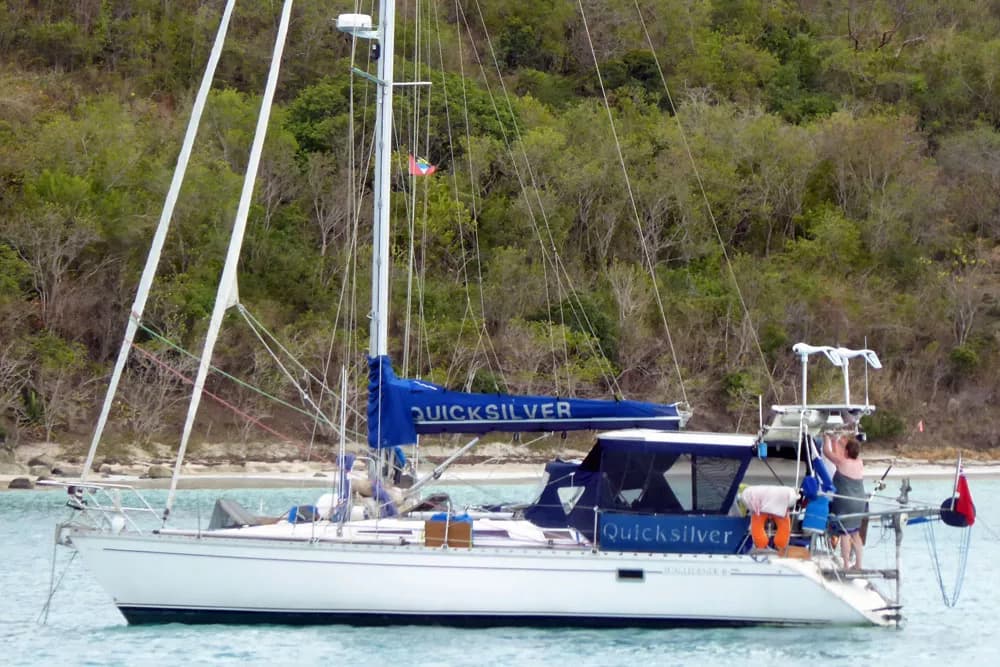
Transporting a Jeanneau Sun Legende 41 over land requires a specialized low-loader and permits in many jurisdictions due to its LOA of 40'2" and beam of 12'11", while marina berthing logistics benefit from planning around a draft of up to 6'8" for the deep keel version.
Overview & Key Takeaways
The Jeanneau Sun Legende 41, produced from 1985 to 1994 and penned by Doug Peterson, is a mid-1980s design that blends offshore racing pedigree with comfortable cruising accommodations. Its GRP hull with Kevlar (Aramat) reinforcement forward and along the backbone gives enhanced impact resistance and stiffness without excessive weight. The hull form favors a moderate beam and a powerful stern, delivering good tracking and high average speeds on most points of sail.
Design Highlights
Originally aimed to bridge production cruising and competitive performance, the Sun Legende 41 typically carries a masthead sloop rig (often double-spreader) and a roomy sailplan that performs well in light airs. Variants include a deep fin keel (2.03 m), a shallow-draft keel (1.60 m), and a rare centreboard version for very shallow waters. Many examples have been adapted to specific roles, including custom cutter rigs for improved sail balance in heavy-weather cruising.
📚 Vous aimerez peut-être aussi
Published Specification: The Jeanneau Sun Legende 41 Blueprint
Specification Component | Measurement & Detail |
LOA (Length Overall) | 40'2" (12.25 m) |
LWL (Length Waterline) | 33'4" (10.16 m) |
Beam | 12'11" (3.94 m) |
Draft (Deep Keel) | 6'8" (2.03 m) |
Draft (Shallow Keel) | 5'3" (1.60 m) |
Displacement | 16,100 lbs (7,303 kg) |
Ballast | 6,745 lbs (3,059 kg) |
Rig Type | Masthead Sloop |
Hull Material | GRP & Kevlar (Aramat) |
Production Dates | 1985 – 1994 |
Rig Dimensions & Sail Plan
The typical rig numbers give the Sun Legende 41 a generous canvas for its size, supporting strong light-air performance while remaining manageable offshore.
- I (Foretriangle Height): 51'6" (15.70 m)
- J (Foretriangle Base): 15'0" (4.57 m)
- P (Mainsail Luff): 45'0" (13.72 m)
- E (Mainsail Foot): 13'6" (4.11 m)
- Total Sail Area (100% foretriangle): 690 ft² (64.1 m²)
- Mainsail Area: 304 ft² (28.2 m²)
- Genoa Area (150%): 579 ft² (53.8 m²)
Performance Ratios
Design Ratio | Calculated Value | Interpretation |
Sail Area/Displacement (SA/D) | 17.3 | Balanced: ample power for light airs without excess twitchiness. |
Displacement/Length (D/L) | 193 | Light-medium: hull capable of surfing and maintaining high speeds. |
Ballast/Displacement (B/D) | 41.9% | High stability: stiff platform that carries canvas well. |
Capsize Screening Formula (CSF) | 1.83 | Below 2.0 — acceptable for ocean passages. |
Brewer Motion Comfort Ratio | 25.4 | Moderate motion: livelier than heavy-displacement cruisers but predictable. |
Construction, Structural Integrity & Systems
Jeanneau’s use of a hand-laid fibreglass hull with localized Kevlar (Aramat) reinforcement provides a combination of stiffness and impact resistance. The internal fibreglass grid bonded to the hull was standard practice for the era but requires attention: the grid-to-hull bond, keel-bolt areas and mast step are high-load zones that must be checked on older examples. Common engines fitted include the Perkins 4.108 and Yanmar 3HM35; both are reliable but need routine inspection of oil seals and heat exchangers.
Common Areas to Inspect
- Inner Grid: Check for separation at keel bolt pads and mast base.
- Osmosis: Expect possible blistering on older hulls built without vinylester skin coats.
- Chainplates: Look for staining or corrosion around tie-rods and bulkheads.
- Deck Core: Walk the decks to detect soft spots indicating delamination.
- Engine & Systems: Inspect heat exchanger, oil leak history and fuel tank condition.
Accommodation, Layout Variants & Practical Use
Interiors are typically rich in teak veneers and reflect a late 20th-century joinery standard. Three main configurations were offered: Owner, Three-Cabin and Team. The Owner layout prioritises a large forward and a sizeable starboard aft double with extensive sail locker space to port; the Three-Cabin converts that port locker into an additional cabin for families; the Team layout maximises berths for racing or high-occupancy charters.
Feature | Standard / Owner Version | 'Team' Version |
Aft Cabins | One large double & large storage OR two doubles. | Two identical doubles with narrower berths. |
Saloon Berths | U-shaped settee converts to single/double. | Pilot berths above main settees for increased capacity. |
Heads | One large head with separate shower. | Two smaller heads to serve more crew. |
Cruising Characteristics
With a deep cockpit, large wheel and conservative bridge-deck height, the Sun Legende 41 is built for serious cruising. Tankage around 100 gallons of water and 40 gallons of fuel supports extended voyages, and the high ballast ratio provides confidence offshore. Motion is livelier than heavyweight cruisers, rewarding sailors who prioritise performance.
Historical Context & Market Position
Launched in the mid-1980s, the Sun Legende 41 reflects the era’s push to marry IOR-influenced performance with cruising comfort. Doug Peterson’s background in offshore racing informed the hull lines and appendage balance, while Jeanneau’s production capabilities aimed to deliver this pedigree at a competitive price. In the brokerage market today, well-maintained Owner and Three-Cabin boats command premiums for their versatility and storage; Team boats can present value to buyers prioritising berths and affordability.
Looking ahead, the Sun Legende 41’s blend of speed and seaworthiness keeps it relevant for coastal and blue-water sailors. For owners and charter operators, the design’s performance characteristics can translate into desirable charter listings and attractive resale prospects in destinations where sailing and yachting activities draw interest.
In summary, the Sun Legende 41 remains a compelling option for sailors seeking a performance-biased cruising yacht with offshore capability. Attention to structural grid condition, potential osmosis and chainplate integrity is essential when evaluating an older example. If a hull has been well maintained, this model offers a rewarding balance of speed, safety and practical accommodation for both private cruising and charter use.
For readers interested in yacht charters, boat rent opportunities or comparing destinations, GetBoat.com is an international marketplace for renting sailing boats and yachts, likely the best service to find options to suit every taste and budget. Whether planning a family cruise to sun-drenched beaches, a fishing trip in clearwater marinas, or a captain-led charter across open ocean and gulf waters, the Sun Legende 41’s combination of sailing performance and accommodation can translate well into attractive charter listings and sale prospects in popular yachting destinations. Consider how hull condition, layout (owner vs three-cabin vs team), and gear storage will affect charter activities, captain requirements and guest comfort when evaluating a purchase or preparing a boat for rent on marinas and charter platforms.


