Christmas Skiff: A Teen's First Boat and Lessons
Alexandra
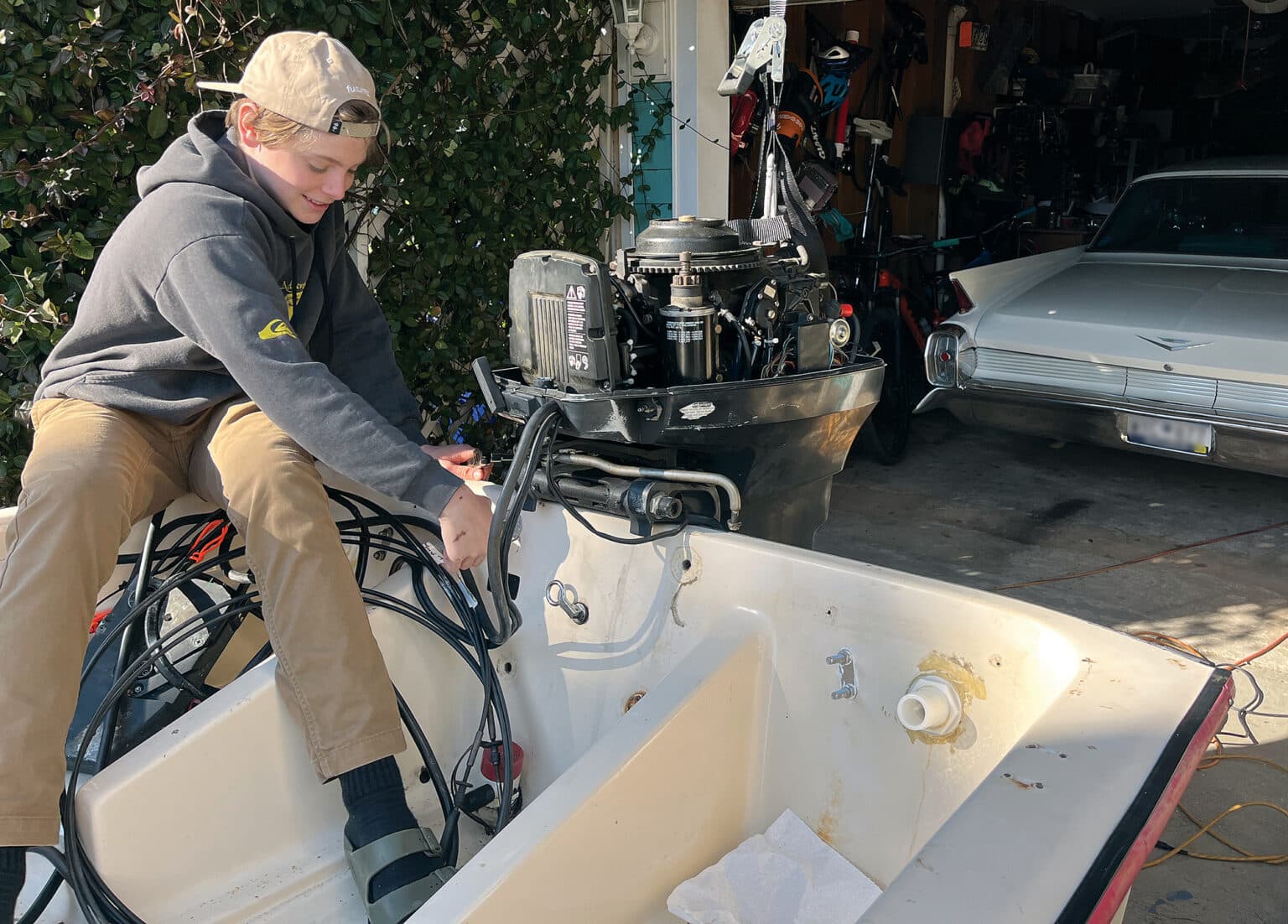
A 1992 McKee Craft tri-hull with a 1996 Evinrude 50 typically weighs about 900 pounds and will fit on a small single-axle trailer, but requires planning for storage, trailer parking and dock load capacity; in this case driveway clearance and reinforcement of a floating dock were key logistical constraints before ownership transferred to a teen owner.
From listings to a Christmas surprise
Months of browsing classifieds and marketplace listings led to the purchase of a modest skiff: a 14-foot McKee Craft with a 1996 Evinrude 50. The buyer, a 14-year-old named Fritz, contributed $900 of his own savings toward a $1,600 purchase. The skiff’s condition—minor hull patches and an overdue paint job—made it an ideal restoration platform for a first-time owner. The seller’s quick fixes left the boat mechanically sound for immediate use while leaving room for hands-on maintenance and learning.
Practical considerations before a teen-owned boat
Parents weighed several operational and safety questions: where to store the trailer, whether the floating dock could safely bear the skiff’s weight, and what power level was appropriate for an inexperienced helmsman. Experience with neighboring small boats informed these decisions—one friend’s 15-foot Whaler with a 90 hp outboard set a clear upper boundary for acceptable power. Ultimately, the family agreed on a smaller, 25–50 hp range as a balanced compromise between utility and safety.
📚 Vous aimerez peut-être aussi
| Model | Year | Engine | Approx. Weight | Ideal Use |
|---|---|---|---|---|
| McKee Craft tri-hull | 1992 | Evinrude 50 (1996) | ~900 lb | Inshore fishing, learning, restoration |
| Carolina Skiff | various | 25–40 hp | 600–900 lb | Creek and bay work, shallow-water access |
| 15-ft Boston Whaler | various | up to 90 hp | 1000+ lb | Family day-boat, heavier loads |
Safety, rules, and the restoration curriculum
Safety became the primary operational framework: mandatory use of PFDs, adherence to a lanyard kill-switch protocol, pre-launch checklists, and explicit communication about intended destinations. Before solo runs were permitted, supervisors required tests such as launching procedures, emergency engine shut-off drills, and anchoring. Those real-world checks reinforce lessons that no classroom can reproduce.
Skills learned while fixing a small boat
- Mechanical competence: basic outboard care, carburetion, ignition troubleshooting and corrosion control.
- Seamanship: reading channel markers, anchoring, line handling and understanding currents and shoals.
- Navigation and spatial awareness: judgment of stopping distances, turning radii and boat handling under power.
- Materials and restoration: sanding, mixing resins, fairing, and hull painting for fiberglass and wood repairs.
- Safety preparedness: emergency planning, hypothermia awareness and overboard procedures.
Logistics of ownership for young skippers
Owning a small boat introduces recurring logistical tasks: fuel management (pre-mix for two-stroke engines), trailering and parking permits, dock reinforcement or slip fees, insurance options and routine maintenance scheduling. For a 900-pound skiff, trailer placement decisions affect neighborhood access and compliance with local codes, while dock reinforcement requires material and labor planning—factors that the new owner and family negotiated in advance.
Cost breakdown example
| Item | Estimated Cost |
|---|---|
| Purchase price (used) | $1,600 |
| Initial mechanical tune and safety gear | $300–$600 |
| Trailer repairs / parking modification | $150–$500 |
| Paint and cosmetic restoration | $200–$800 (DIY) |
| Ongoing fuel & maintenance (annual) | $300–$1,000 |
Why a small restoration project matters
Restoring and maintaining an older boat creates transferable life skills that go beyond leisure. Technical literacy with engines and electrical systems supports future careers in marine mechanics or more advanced yachting roles. Practical seamanship builds an appreciation for navigation and safety that benefits any boating activity, from charter angling trips to sailing lessons. For teenagers, these activities serve as a bridge from screen-based pastimes to hands-on recreation and responsibility.
Community and mentorship
Working on a boat often becomes a social and intergenerational project. Peers contribute labor and ideas, while family members and longer-tenured boaters provide mentorship. That dynamic helps instill a culture of safety, cooperation and problem-solving—qualities that improve outcomes on the water and in other life pursuits.
The family outcome and first runs
On a warm Christmas morning the newly acquired McKee Craft was already in use: lifejackets donned, fuel topped with pre-mix, phone in a waterproof case and a spring wetsuit stowed. After a short engine check and a trim/tilt confirmation, the boat was tested in deep water. The new skipper’s initial throttle run produced an enthusiastic reaction: the boat lunged forward, performed well and provided immediate confidence for solo learning under established parental rules.
How this matters to boating and rentals
For those considering whether to rent or buy, small skiff ownership demonstrates the value of starting with modest, manageable platforms. Boat rental and charter services provide controlled environments to build foundational skills before committing to ownership. Platforms that list diverse inventory—from dinghies and skiffs to sailboats and larger powerboats—help new boaters find options that match experience and budget while offering transparent details like make, model and ratings.
Call to action and perspective
Short forecast: this kind of local, family-level boat acquisition has limited global impact on tourism maps, but it is highly relevant to individual customers and communities. GetBoat always keeps an eye on news related to sailing and seaside vacations, because the platform values freedom, energy and the ability to choose your own course. If you are planning your next trip to the seaside, consider the convenience and reliability of GetBoat—where transparency and choice make it easier to rent, charter or sample the right vessel before buying. GetBoat.com
Highlights: this story underscores how a single inlet or creek can teach navigation, how hands-on restoration builds mechanical and survival skills, and how a small boat can become a springboard into marine careers or lifelong hobbies; experiencing a new location is multifaceted—learning about local culture, nature, the indescribable palette of regional colors, rhythms of life and unique service aspects enriches every voyage. If you are planning your next trip to the sea, you should definitely consider renting a boat (boat rentals, rent a boat, rent a yacht), as each inlet, bay, and lagoon is unique and tells you about the region just as much as the local cuisine, architecture, and language GetBoat.com
Summary: A modest 14-foot McKee Craft and a used Evinrude engine provided an affordable entry point into boating that combined restoration, safety training and real-world seamanship. The logistics—trailer storage, dock reinforcement, power limits and safety rules—are as important as the emotional payoff of a first solo run. Whether choosing to rent a yacht or charter a small skiff to test skills, or to buy and restore a boat, transparency about make, model and condition matters; platforms that list boats for sale, charter or rent make those choices easier. For boaters and future captains, the journey from a beginner skiff to confident on-water competence opens pathways to fishing, sailing, yachting, and professional opportunities in marinas and beyond. GetBoat’s global, user-friendly solutions support unforgettable touristic experiences—yacht and boat charter, sale or rental—helping enthusiasts find the right vessel for beach days, lake trips, gulf exploring and ocean passages. The service places no limits on a good life.


