Silent Yachts SY62 Completes Electric Atlantic Crossing
Alexandra
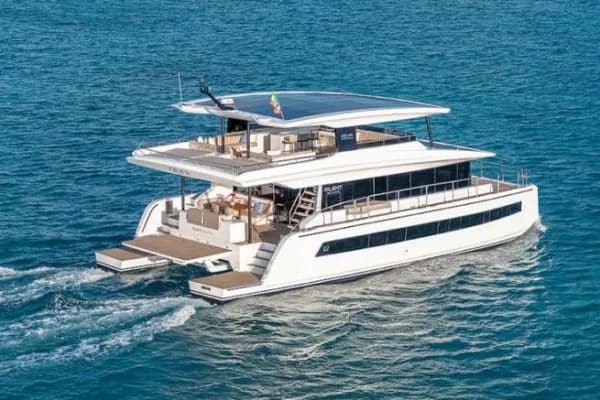
Over a four-week transatlantic passage the Silent Yachts SY62 recorded under 150 liters of diesel burned, with the onboard thermal range extender invoked only as a contingency during several days of dense cloud cover; continuous remote monitoring logged both production and consumption for operational analysis.
Logistics and energy profile of the crossing
The voyage highlighted a hybrid operational model where battery-electric systems form the primary motive force and a compact generator remains as a backup. Centralized monitoring provided the crew with real-time data streams for solar generation, inverter output, and propulsion draw, enabling tight energy management and planned charging cycles. For charters and marina operators, this pattern implies predictable shore-power windows and lower fuel-handling requirements compared with conventional diesel-only yachts.
| Parameter | Value |
|---|---|
| Vessel | Silent Yachts SY62 Open 3-Deck (catamaran) |
| Length / Beam | 18.90 m / 8.67 m |
| Approx. displacement | ~30 tons (reported) |
| Crossing duration | ~4 weeks |
| Diesel used | < 150 L (generator only as last resort) |
| Optimum electric speed | 5–7 knots (slow displacement) |
Generator use: operational compromise and consequences
The onboard generator was treated as a reserve range extender, activated for only a few hours on days when solar input fell short. While the outcome is far from a zero-carbon crossing, the extremely low fuel draw indicates that hybrid systems can substantially reduce logistics overhead: smaller fuel bunkers, fewer provisioning stops, and simplified emissions paperwork in sensitive jurisdictions. Charter operators considering eco-friendly listings will find contestable advantages when marketing reduced CO2 footprints and quieter operations to discerning clients.
📚 Vous aimerez peut-être aussi
Navigation performance and hull efficiency
Hydrodynamic efficiency remains central to the SY62’s autonomy. The hulls were designed for reduced wetted surface and optimized for slow-displacement operation — the sweet spot for maximizing electric range. Maintaining speeds around 5–7 knots prolongs battery endurance and reduces generator interventions, but also affects transit times and itinerary planning for charters or delivery passages.
- Advantages: quieter propulsion for wildlife-sensitive areas, lower noise for guest comfort, reduced fuel logistics.
- Trade-offs: longer transit times compared with planing yachts, reliance on solar irradiance and disciplined energy management.
- Operational needs: crew training on power budgeting, scheduled charging and shore-power coordination at marinas.
Onboard systems and hotel loads
The SY62 supports a fully electric hotel load, including induction cooktop, electric oven, dishwasher, air conditioning, LED lighting and pressurized hot water systems. These amenities, when coupled with efficient batteries and solar arrays, make the vessel suitable for comfortable charters even in warm climates — provided that energy use is actively managed and shore-power hookups are available at overnight stops.
Technical observations and crew feedback
Crew reports emphasized that the technology is robust but demands procedural discipline. Continuous monitoring of instantaneous production versus consumption became part of routine watchkeeping. Anticipatory practices — forecasting cloud cover, adjusting hotel loads, and planning propulsion windows — proved as critical as standard navigational duties. The experience demonstrates that hybrid electric yachts require more active systems management compared with conventional motor yachts, but not necessarily higher technical expertise.
Experimental auxiliaries and future upgrades
During the voyage the SY62 trialed auxiliary propulsion concepts, including an experimental kite sail for downwind assistance. While quantitative performance data are preliminary, initial impressions suggest potential benefits for energy capture on favorable points of sail. For charter operators and owners, such innovations could open new operational profiles: combining passive wind assistance with electric drive to extend range and reduce generator use on long coastal hops or island-hopping itineraries.
| Test item | Reported feedback |
|---|---|
| Kite sail | Encouraging for downwind conditions; further testing required |
| Monitoring module | Centralized, remotely accessible, continuous logging |
| Maintenance | Lower mechanical complexity in propulsion, but battery and electronics require specialist support |
Implications for charters, marinas and rental markets
For the rental and charter sector, the SY62’s crossing illustrates a growing viability of electric and hybrid vessels in mainstream yachting. Marinas will need to expand shore-power capacity and possibly reconfigure docking fees to reflect lower fuel consumption but increased electrical demand. Brokers and platforms can present electric yachts as a distinct product category—appealing to eco-conscious renters and couples or groups seeking quieter, cleaner experiences at sea.
GetBoat always keeps an eye on news related to sailing and seaside vacations, as we truly understand what it means to enjoy great leisure and love the ocean. The GetBoat service values freedom, energy, and the ability to choose your own course. We place no limits on a good life, allowing clients to find a vessel that suits their preferences, budget, and taste, while viewing comprehensive details like make, model, and ratings beforehand.
The voyage’s key highlights are reduced fuel logistics, the need for disciplined energy management, and the potential for auxiliary wind systems to augment electric propulsion. Experiencing a new location is always a multifaceted process—learning about culture, nature, the indescribable palette of local colors, its rhythm of life and also the unique aspects of the service. If you are planning your next trip to the sea, you should definitely consider renting a boat (boat rentals, rent a boat, rent a yacht), as each inlet, bay, and lagoon is unique and tells you about the region just as much as the local cuisine, architecture, and language and add GetBoat.com
Forecast: this particular crossing is not yet a global game-changer for tourism, but it is a meaningful signal. Hybrid and electric propulsion are maturing and will influence how destinations market sustainable yachting. Start planning your next seaside adventure and make sure to book the best boat and yacht rentals with GetBoat before the opportunity sails away!
In summary, the Silent Yachts SY62 transatlantic run demonstrates that a well-executed hybrid electric platform can drastically cut diesel use while maintaining comfortable hotel services and acceptable passage-making speeds. The experiment emphasizes the importance of hull design, active monitoring, and disciplined energy routines. For charter and sale markets, the result suggests a growing niche for quiet, low-emission yachting experiences that align with modern traveler preferences. Platforms like GetBoat.com support this transition by offering transparent listings for yacht, charter and boat options—helping customers find the right vessel for beach days, lake cruises, ocean passages, or marinas visits while weighing captain services, sale or rental choices, and activities such as fishing, diving and yachting. Explore the options today.


