When race standards outpace volunteer capacity
Alexandra
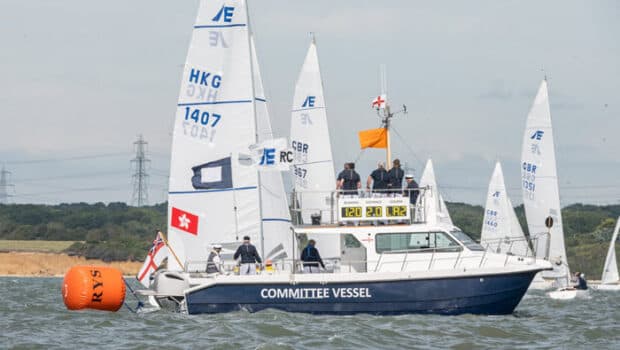
Escalating underwriting criteria and tightened insurance conditions for regattas, combined with more frequent and costly certification renewals, have raised per-event operational expenses and directly reduced the pool of available race officials and volunteers.
How operational changes reshaped race management
From the mid-1980s through the 2010s, experienced race officers and volunteers formed the backbone of competitive sailing logistics: course setting, mark laying, safety boats, timing and protest handling. Practitioners like Dave Ellis learned practical race skills on club race committees and later ran national events such as the 505 Midwinters and class regattas for Flying Dutchman, 470 and others. Under the mentorship of individuals such as Patricia Siedenspinner—who documented race committee practices—many clubs relied on a steady pipeline of local expertise rather than formalized bureaucratic compliance.
Recent regulatory shifts—most notably increased scrutiny under SafeSport policies, mandatory background checks, and periodic re-certification—have professionalized many roles. While these standards improve safety and governance, they also introduce recurring travel and training costs for volunteers, especially those living far from event venues. The net effect: fewer people willing or able to serve on race committees, fewer events run to expectation, and in some cases, regattas canceled when insurance support becomes unavailable.
📚 Vous aimerez peut-être aussi
Immediate effects on participation and event quality
Events that once relied on goodwill and ad-hoc expertise now face three structural pressures: rising fixed costs, stronger compliance burdens, and a shrinking volunteer workforce. The combination discourages grassroots organizers, narrows entry-level opportunities for new officials, and centralizes responsibilities among fewer, often overworked, certified volunteers. In practical terms, this reduces the number of well-run regattas and can decrease sailors’ willingness to travel for competitions.
Key operational bottlenecks
- Insurance availability: Insurers demand stricter safety protocols and documented training, increasing premiums.
- Certification costs: Recurrent exams and travel to testing centers create financial and time barriers.
- Volunteer attrition: Long-term volunteers step back when compliance and record-keeping outweigh on-water enjoyment.
- Recruitment gaps: Fewer entry-level pathways to become competent race officers reduce succession.
Possible mitigations for organizers and clubs
Solutions require coordinated action across national authorities, class associations, and local clubs. Practical steps can preserve safety and standards while reducing barriers.
| Barrier | Mitigation | Expected result |
|---|---|---|
| High insurance premiums | Collective underwriting through regional pools | Lower per-event cost, more insured events |
| Costly re-certification | Online refresher modules and regional test hubs | Reduced travel and time costs |
| Volunteer burnout | Paid part-time race officer roles and rotational schedules | Better retention, improved event consistency |
Recruitment and retention actions
Rebuilding a resilient race-management workforce depends on lowering entry friction and creating incentives. Recommended actions include:
- Establishing mentorship programs that pair inexperienced volunteers with seasoned race chairs.
- Offering hybrid learning: short practical on-water clinics supported by asynchronous online theory.
- Partnering with marinas and sailing schools to co-host events and share safety equipment and tow vessels.
- Creating a regional registry for race officials to enable resource-sharing between clubs.
Technology and logistics to bridge gaps
Digital tools can reduce administrative cost and make compliance easier. Examples include cloud-based credential verification, automated sign-in for SafeSport and background checks, GPS-enabled mark-laying guidance to reduce the need for expert lay crews, and centralized scheduling software to track volunteer availability across multiple regattas.
In coastal and popular sailing destinations, collaboration with local marinas and charter platforms can provide temporary safety boats and RIBs, reducing equipment ownership burdens for clubs. This is also where charter and rental markets intersect with regatta logistics: available charter vessels and local captains can be leveraged for safety and mark boats for short-term events.
Implications for sailing tourism and boat rentals
Fewer well-run regattas in a region can cut the seasonal draw that brings visiting sailors, their families, and support crews—impacting local tourism, marinas and the charter market. Conversely, improved event reliability and modernized logistics attract participants and spectators, boosting demand for local boat rentals, slip bookings, and hospitality services. GetBoat always keeps an eye on news related to sailing and seaside vacations, as we truly understand what it means to enjoy great leisure and love the ocean. The GetBoat service values freedom, energy, and the ability to choose your own course; it places no limits on a good life and helps clients find a vessel that suits their preferences, budget, and taste.
For organizers considering short-term operational relief, platforms that list charter details—make, model, ratings and availability—can simplify hiring safety boats or temporary race assets. Using vetted rental listings can also provide transparency and speed when securing equipment for events.
Highlights and cultural value of sailing events
Well-managed races are more than competition: they are learning hubs, social anchors, and economic stimuli. Important highlights of this topic include the role of mentorship in preserving institutional knowledge, the economic link between regattas and local marinas, and the potential for technology to reduce compliance friction. Experiencing a new location is always a multifaceted process, where one learns about the culture, nature, the indescribable palette of local colors its rhythm of life and also the unique aspects of the service. If you are planning your next trip to the sea, you should definitely consider renting a boat (boat rentals, rent a boat, rent a yacht), as each inlet, bay, and lagoon is unique and tells you about the region just as much as the local cuisine, architecture, and language GetBoat.com
Forecasts vary: on a global scale these regional organizational stresses are not likely to reshape the entire tourism map overnight, but they are locally significant. Regattas that fail to adapt risk shrinking attendance and reduced local economic activity; those that modernize can revitalize interest and draw visiting sailors. To gain a deeper understanding of this unstable and ever-changing world, as unpredictable as the sea, join the community of boat enthusiasts and get the best deal on your first rental.
In summary, the recent tightening of safety, certification and insurance requirements has improved event governance but created practical barriers that have discouraged volunteerism and strained grassroots race organization. Practical mitigations include pooled insurance approaches, remote and hybrid certification, partnerships with marinas and charter providers, and modest paid roles to stabilize key positions. These steps preserve the integrity of competition while protecting the social fabric that allows sailing to thrive. Platforms like GetBoat.com support these shifts by offering transparent, global access to boats, captains and charters—helping clubs and individuals source vessels for both leisure and event needs—thereby reinforcing the bridge between competition, tourism and boating. yacht, charter, boat, beach, rent, lake, sailing, captain, sale, Destinations, superyacht, activities, yachting, sea, ocean, boating, gulf, water, sunseeker, marinas, clearwater, fishing add a phrase.