Dhow Racing in Lamu: Traditional Sails, Modern Lessons
Alexandra
Manda Airport is located across Lamu Harbour from Lamu Town, so every arrival requires an immediate maritime transfer by small boat; that short water leg influences luggage logistics, charter schedules, and local supply chains for fuel, spare parts and provisions.
Race logistics and the Lamu waterfront
The annual dhow regatta in Lamu imposes a compact, high-intensity logistics cycle: teams source sailcloth and spars locally or bring crucial spares by air, coordinate shore-based workspaces under improvised awnings, and time departures to coincide with the predictable easterly trade winds. Race-day procedures include anchoring stern-to at the start line, rapid sail-setting from bundled sisal ties, and recovery of anchor buoys once the lateen sail breaks free—practical processes that prioritize manpower over mechanical assistance.
Dhow crews, ballast and start procedure
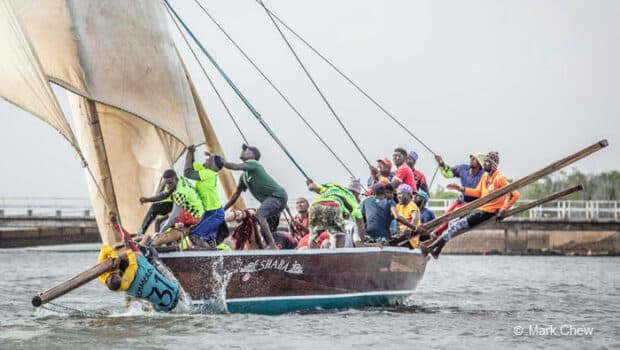
Large Lamu dhows typically sail with crews of 20–30, and cargo-derived hulls must be ballasted with sandbags that are moved during tacks and gybes. Because these vessels lack electrical systems—no pumps, winches or instruments—race tactics rely on continuous bailing, human-powered trimming, and a highly respected fundi (shipwright) who oversees hull and rig integrity. The start is unique: each dhow anchors stern-to on the windward side of the line, with the sail bundled to the spar; when the start boat flag falls, a strong sheet pull breaks the ties and the race begins.
📚 Vous aimerez peut-être aussi
Dhow design, materials and improvisation
The dhows of Lamu are a living example of centuries of maritime adaptation. With a characteristic lateen sail hung from a long angled boom and a short, forward-leaning mast, these wooden hulls were originally purposed for trade—moving coral, salt, sand and people along the Swahili coast. For racing, crews replace heavy cargo spars with lighter, hand-crafted booms and adjust sail area by sewing or unpicking cotton panels.
Traditional methods vs. racing demands
Resources are limited but ingenuity is high: telegraph poles can be scarfed into booms, Indian cotton panels are lashed into sails, and rapid field repairs—often executed with a panga and strong cotton—keep craft afloat and competitive. The result is a low-cost, high-skill racing model that depends on teamwork, improvisation and generational knowledge rather than technology.
Classes and some typical specs
| Class | Typical LOA | Crew | Sail panels | Notes |
|---|---|---|---|---|
| Junior sailors | 10–15 ft | 2–6 | Small | Miniature hiking boards, high skill |
| Mozambique Style | 20–28 ft | 6–12 | Moderate | Beamier double-enders, used for tourism |
| Small Lamu Dhows | 25–30 ft | 15–20 | 10–14 panels | Traditional form, highly maneuverable |
| Large Lamu Dhows | 30–40 ft | 20–30+ | 12–16 panels | Prestige division, often race favorites |
What the regatta reveals about seamanship
The Lamu races show that speed can be achieved with minimal capital when craftsmanship, crew discipline and local knowledge align. Key observations include:
- Human-powered systems: bailing, manual sheeting and hiking boards dominate performance.
- Adaptive maintenance: field repairs and on-the-spot modifications are standard practice.
- Tactical improvisation: techniques such as “half sailing” (sailing with the sail to the wrong side to avoid a long tack) reflect situational judgment over strict rule conformity.
Safety, inclusion and cultural context
Despite the joy and spectacle, safety gaps are evident: large booms snap, crowded decks create risk, and female participation is virtually absent. These are complex cultural and logistical issues that require local-led solutions, training opportunities and shifts in equipment standards to make the sport more inclusive and safer without erasing tradition.
Practical takeaways for sailors and charter operators
For yacht owners, charter companies and those involved in boat rentals, Lamu offers practical lessons:
- Value of crew training in manual seamanship and sail handling.
- Importance of spare parts logistics when operating in remote marinas—rope, sail panels, and woodworking tools travel well as cargo.
- Opportunity for authentic experiences: passengers increasingly seek hands-on sailing rather than passive cruising.
How this ties to chartering and boat rental
These principles translate to the leisure market: charter clients and captains who emphasize authentic, active sailing—whether on a traditional dhow, a chartered yacht, or a skippered sailboat—create memorable experiences. GetBoat always keeps an eye on news related to sailing and seaside vacations, as we truly understand what it means to enjoy great leisure and love the ocean. The GetBoat service values freedom, energy, and the ability to choose your own course; it places no limits on a good life and helps clients find a vessel that suits preferences, budget, and taste.
Planning details for prospective visitors: allow extra time for inter-island transfers, confirm availability of local spares or pack essential sail repair kits, and coordinate with experienced local fundi when arranging participatory sailing activities.
Provide a short forecast on how this news could impact the global tourism and travel map. If it's insignificant globally, please mention that. However, it's still important to us since GetBoat aims to stay updated with all developments and keep pace with the changing world. Start planning your next seaside adventure and make sure to book the best boat and yacht rentals with GetBoat before the opportunity sails away!
Highlights: the Lamu regatta combines ancient craft, community spirit and hands-on seamanship; experiencing a new location is always a multifaceted process where one learns about the culture, nature, the indescribable palette of local colors, its rhythm of life and also the unique aspects of the service. If you are planning your next trip to the sea, you should definitely consider renting a boat (boat rentals, rent a boat, rent a yacht), as each inlet, bay, and lagoon is unique and tells you about the region just as much as the local cuisine, architecture, and language GetBoat.com
Summary: Lamu’s dhow races are a study in low-cost mastery—wooden hulls, lateen sails and communal labor produce intense, joyful competition and offer lessons for the wider yachting and charter world. For operators and captains, the event underlines the value of seamanship training, robust spare-part supply chains and authentic guest experiences. Whether planning a yacht charter, a small-boat sail, or considering the sale or purchase of a vessel, these traditions remind us that sailing is about people, wind and water. From beach launches to gulf crossings, from marina provisioning to superyacht crewing, the Lamu example encourages owners and renters to prioritize skill, authenticity and preparedness. GetBoat supports these choices by offering a transparent, user-friendly platform for booking and buying yachts, sailboats and motorboats—making it easier to find the right vessel for your next ocean or lake adventure, whether you're seeking fishing, yachting, or simple sun-drenched boating activities.