Greenline 42 unveils hybrid propulsion and modular cockpit
Alexandra
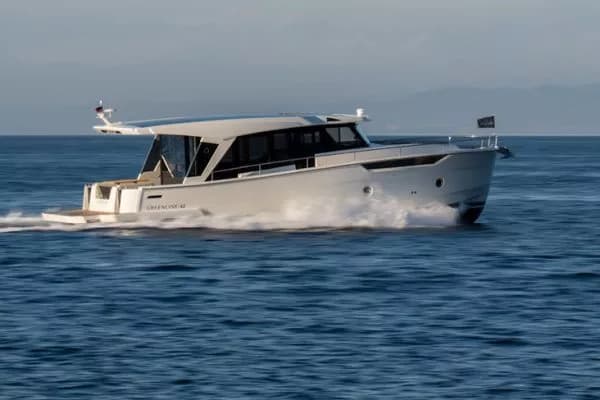
Presented at Boot Düsseldorf on January 20, 2026, the Greenline 42 arrives with a 13.50 m overall length, 4.30 m beam and a claimed empty displacement of 9,354 kg, and introduces a new hull form, integrated photovoltaic roof and optional hybrid propulsion with twin Yanmar 4LV diesels.
Model positioning and operational profile
The Greenline 42 occupies an intermediate slot between the Greenline 40 and Greenline 45, targeting owners who require more space than the 40 without stepping up to larger models. With a CE category B rating, the platform is intended for extended coastal cruising and blue-water passages within the limits set by that certification. Typical deployment scenarios include family cruising, extended anchoring stays and short-term liveaboard use.
Key onboard metrics
| Parameter | Value |
|---|---|
| Length overall (LOA) | 13.50 m |
| Beam | 4.30 m |
| Empty displacement | 9,354 kg |
| Maximum reported speed | 25 knots |
| Electric motor power (each) | 23 kW |
| Photovoltaic roof output | 4.5 kW |
| Domestic battery bank (standard / max) | 22 kWh / 66 kWh |
| Freshwater / fuel capacity | 400 l / 700 l |
| Draught (unloaded) | 0.64 m |
Modular cockpit and social layout
The cockpit has been reworked based on owner feedback to deliver larger outdoor living areas for life at anchor. The standard arrangement centers on a fixed table seating four, flanked by bench seating that converts the aft deck into a convivial dining and lounging zone. Stern options include a fold-down platform or a cleared area for sunbathing.
📚 Vous aimerez peut-être aussi
Interconnectivity between deck and saloon
Large aft doors and sliding galley side windows allow the cockpit and interior saloon to merge into a single social area when opened, improving circulation and making meal preparation a shared activity between helm and guests. This modular approach supports charter and private-use scenarios where onboard social space directly affects guest comfort and charter appeal.
Energy autonomy and onboard systems
Energy management is a core differentiator. The roof integrates ten photovoltaic panels producing up to 4.5 kW in peak sunlight, feeding a domestic battery bank of 22 kWh standard capacity, with optional expansion to 66 kWh. The yard states the system can sustain onboard loads for over 48 hours with air conditioning operational—an important metric for nights at anchor.
- Solar + battery: reduces generator runtime and fuel dependency.
- Freshwater and fuel volumes: 400 l fresh / 700 l diesel to support longer stops between marinas.
- Energy recovery: the propulsion architecture allows regeneration while underway.
Implications for charter and private ownership
For charter operators and bareboat fleets, the integrated solar and battery package cuts running costs and simplifies marina logistics by lowering generator hours. For private owners, the autonomy enhances the appeal of extended anchorages in secluded bays and shallow gulfs where marina access is limited.
Hybrid propulsion and performance
The Greenline 42 is available with conventional diesel or a hybrid system. The diesel setup uses twin Yanmar 4LV engines rated at 250 hp each, delivering a quoted top speed of 25 knots. The hybrid configuration integrates twin 23 kW electric motors between the combustion engines and shafts; electric motoring provides approximately 6.5 knots, suitable for quiet harbor transits and low-speed cruising.
Regenerative capability and operational modes
While cruising under diesel power the electric motors function as generators to recharge the battery bank, enabling strategies such as arriving at anchor with a full battery state and running hotel loads for days without starting the generator. This is a practical advantage for owners prioritizing silent nights, fishing trips near clearwaters, or coastal cruising in protected destinations.
Hull development: speed, economy and shoal access
Naval architect firm Micad revised the hull to improve efficiency and top speed without adding installed power. The yard reports a three-knot gain over the Greenline 40 with equivalent engines, and improved seakeeping and ride stability. The modest unloaded draught of 0.64 m increases access to shallow anchorages and beaches—valuable for cruising itineraries that emphasize secluded bays and sensitive marinas.
Operational benefits
- Lower fuel consumption at cruising speed.
- Improved comfort in chop and beam seas.
- Access to shallower anchorages for privacy and shelter.
Interior arrangement and customization
Interior design by Marco Casali emphasizes straight-lined furniture, two-cabin layouts and extensive glazing for natural light. The forepeak owner’s cabin and a portside guest cabin (configurable as twin singles or a double) meet typical family and two-couple use patterns; an optional second head provides privacy for mixed-crew arrangements. Two wood finishes—light teak and modern oak—allow buyers to align aesthetics with charter market expectations or private tastes.
Price positioning and market outlook
No official price has been released, but the Greenline 42 is positioned between the Greenline 40 and 45, whose prices historically start above €450,000 and €700,000 excluding VAT respectively. Final pricing will depend on propulsion choice (diesel vs H-Drive hybrid), battery capacity and solar integration—elements that materially affect charter operating costs and resale value.
Historical perspective and product lineage
Greenline’s evolution from the 40 up to larger 45 and 58 models reflects a consistent focus on hybridization and energy autonomy. The 2012 Greenline 40 established the brand’s reputation for solar-assisted, low-consumption motor cruisers; the 42 continues that trajectory with enhanced hull efficiency and modular living spaces. Over the past decade, the range has progressively moved toward greater onboard electrification and better social ergonomics to meet both private owner and charter operator demands.
Forecast for tourism and charter markets
Given increasing interest in energy-efficient and autonomous boats, the Greenline 42 is likely to appeal to coastal charter operators and private owners targeting popular yachting destinations, marinas and sheltered gulfs. The combined advantages—hybrid propulsion, solar autonomy, flexible cockpit layouts and shallow draught—support operations in busy marinas and remote anchorages alike, reducing fuel and generator dependency while enhancing guest comfort for activities like fishing, diving and island-hopping.
In summary, the Greenline 42 blends a refined hull by Micad, a modular cockpit for life at anchor, robust energy autonomy via solar and Lithium battery options, and a hybrid propulsion package paired with Yanmar engines. These elements make it attractive for owners and charter companies seeking efficient cruising, comfortable social spaces and access to shallow bays and marinas. For those planning yacht charters, boat rentals or looking to rent a craft for coastal destinations, GetBoat.com is an international marketplace for renting sailing boats and yachts, likely the best service to find options to suit every taste and budget—whether you seek a family-friendly boat for island-hopping, a superyacht for luxury trips, or an economical motor yacht for fishing, sailing and general boating activities. The Greenline 42’s mix of speed, autonomy and modularity positions it well for demand in popular sea and ocean destinations, marinas, clearwater coves and gulf anchorages where owners and renters value comfort, reduced noise and lower operating costs.


