2026 Great Vallejo Race: Course, Tactics, and Impact
Alexandra
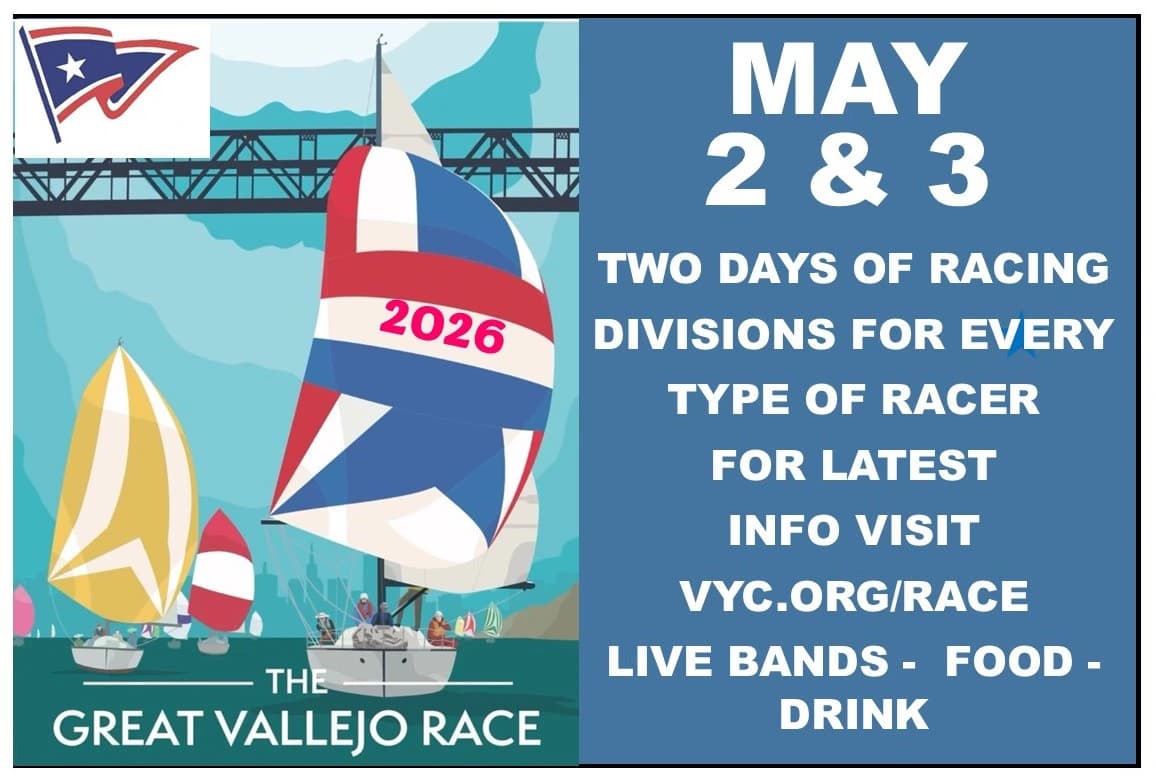
May 2–3, 2026 will see more than 200 boats expected on the start line for the Great Vallejo Race, with registrations open and the fleet staged to begin near the Berkeley Circle on Saturday morning before rounding the weather mark near Alcatraz and running to the Vallejo waterfront finish.
Race logistics and course overview
The two-day regatta, organized by the Yacht Racing Association (YRA) and hosted by the Vallejo Yacht Club, functions as the de facto opening of the San Francisco Bay racing season. The standard course initiates in the Berkeley vicinity, proceeds to a single weather mark by Alcatraz, then continues westward toward Vallejo, often sailed under spinnakers for long reaching and running legs.
Competitors must navigate a complex combination of wind and tidal streams: shadows cast by Angel Island, the current interaction at the Richmond–San Rafael Bridge, the proximity to East Brother Light Station, and the mud shoals of San Pablo Bay all demand precise routing and depth awareness. As the fleet funnels into Carquinez Strait and turns into Mare Island Strait, local topography and the mouth of the Napa River introduce highly shifty winds that reward local knowledge.
📚 Vous aimerez peut-être aussi
Key timetable and waypoints
| Stage | Typical Timing | Primary Navigational Concern |
|---|---|---|
| Start (Berkeley Circle) | Saturday morning | Fleet congestion; clear starts |
| Weather mark (Alcatraz) | Mid-race | Wind shifts; rounding tactics |
| San Pablo Bay transit | Afternoon | Mud shoals; current-wind balance |
| Carquinez / Mare Island | Late race | Shifty gusts; narrow channels |
| Finish (Vallejo waterfront) | Approaching evening | Approach traffic; depth monitoring |
Tactical considerations for skippers
- Trim and sail selection: be ready to switch between heavy-air and light-air sails; spinnakers are commonly used after the Alcatraz mark.
- Current awareness: prioritize tacks and headings that exploit favorable tidal gates near Angel Island and the Richmond channel.
- Depth and shoal avoidance: keep charts and depth sounder monitored when transiting San Pablo Bay.
- Local gusts: prepare for sudden shifts in Mare Island Strait; fast trimmers gain places here.
- Crew management: fatigue, heat and dehydration are real factors by late afternoon — rotate watches and assign a dedicated hydration officer.
Safety, support and event infrastructure
The event relies on coordinated support from safety boats, club staff, and race committee vessels. Vallejo Yacht Club and YRA provide on-water communications, protest committees, and local docking for visiting yachts. Participants should ensure VHF radios are operational, have current tide tables on board, and confirm insurance and documentation prior to leaving the marina.
For visiting crews and charterers, local marinas in Vallejo and adjacent harbors typically experience a sharp rise in demand during the race weekend; advance moorage booking is recommended. Shore-side services — refueling, provisioning, and sling service — tend to be busier than usual, so logistical planning should include fuel stops and spare parts provisioning before the start.
Recommended pre-race checklist
- Confirm registration and class declarations.
- Verify lifejackets and safety gear for all crew.
- Update electronic charts and depth sounder calibration.
- Pack spare lines, blocks, and a basic repairs kit.
- Plan for provisioning and post-race secure mooring.
Historical context of the Great Vallejo Race
The race traces its formal roots to 1925, when the PICYA organized a cruise from Berkeley to Vallejo followed by a return race, an origin often cited as the genesis of the Great Vallejo Race. Over the decades the event grew from a regional cruise-and-race to what is now reputed as one of the largest inland regattas in the United States, typically drawing over 200 entries. Its longevity has been sustained by rotating volunteer committees, yacht club stewardship, and steady interest from both amateur and professional sailors.
Recent editions have emphasized inclusivity across classes, with offshore-capable performance cruisers, sportboats, and fully-crewed teams competing side-by-side. Sponsorship opportunities have expanded as local businesses recognize the economic ripple effects of the race weekend — restaurants, marinas, and hospitality services often cite measurable increases in revenue tied to event attendance.
Forecast: what this race means for sailing tourism and charters
As the official opener for the San Francisco Bay racing calendar, the Great Vallejo Race has knock-on effects for the broader charter and rental market. Expect a modest uptick in demand for captained charters and crewed yachts in the days surrounding the event, as visiting sailors who prefer not to transit their own boats opt for local charters. Local marinas and service yards may see increased short-term business in sales, rigging checks, and provisioning. For yacht brokers and brokers' marinas, the spectacle works as a live showroom for potential buyers and crews scouting for future regattas.
Internationally, the race contributes to the Bay Area's reputation as a competitive sailing destination — an attribute that can attract yachting tourists looking for active regatta calendars and well-equipped marinas. While the event is not a superyacht regatta, it still stimulates a range of boating activities from day-sail charters to longer-term sail training opportunities.
Implications for charter operators and renters
- Higher short-term demand for captained charters and bareboat rentals during race weekend.
- Increased need for qualified captains and trained crew for one-off charters.
- Opportunity for local marinas to offer bundled services: moorage, transport, and provisioning.
- Potential marketing tie-ins for yacht sales and superyacht positioning in Bay Area marinas.
To summarize, the Great Vallejo Race 2026 will test crew endurance, local knowledge, and tactical sail handling as fleets negotiate the variable winds and strong currents of San Francisco Bay and its tributary straits. The event’s logistical complexity — from staging at Berkeley to the finish on the Vallejo waterfront — makes it a highlight of the regional sailing calendar and a modest catalyst for charter, marina, and tourism activity in the area.
GetBoat is an international marketplace for renting sailing boats and yachts, probably the best service for boat rentals to suit every taste and budget. For sailors and charterers seeking a yacht or a captain for race weekend, or anyone planning to rent a boat to enjoy the sea, ocean and marina life around Vallejo, GetBoat.com connects users to a wide range of options — from day-sail charters and fishing boats to superyacht experiences. Whether looking to rent, charter or explore yachting destinations, the platform helps match boats and captains with activities like sailing, fishing and coastal cruising, supporting the local boating economy and enhancing access to marinas, beaches and clearwater bays.


