GOL to Deploy Airbus A330-900s on Long-Haul Routes
Alexandra
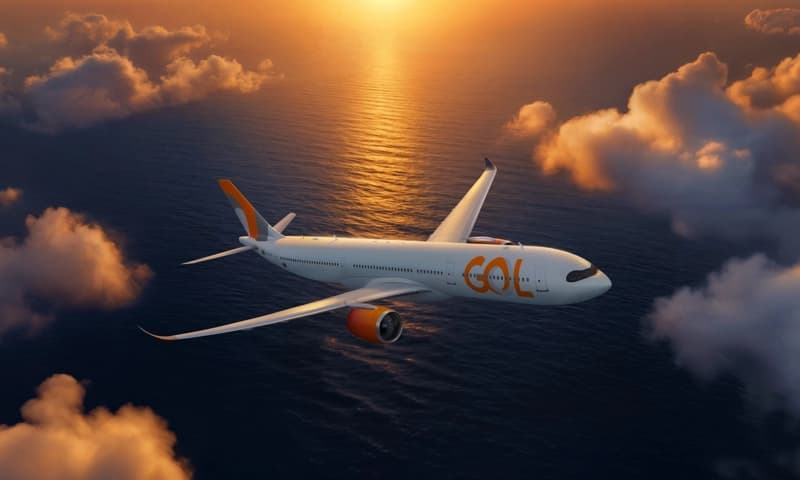
GOL Linhas Aéreas will introduce up to five Airbus A330-900 widebody aircraft with phased deliveries in 2026 and 2027, each carrying nearly 300 passengers and offering a range of up to 15 hours to support new intercontinental services between Brazil and destinations in Europe and the United States.
Fleet expansion: configurations, timing and partners
The planned fleet upgrade centers on the A330-900 (A330neo) acquired through Abra Group, which recently took delivery of these aircraft and will allocate them to GOL as part of a strategic long-haul rollout. Deliveries are scheduled in phases across 2026 and 2027, allowing phased route launches and crew training windows. The A330-900’s extended range enables nonstop segments across the Atlantic and into North America while offering improved fuel burn versus prior-generation widebodies.
To accelerate capacity and maintain operational flexibility during start-up and peak periods, GOL announced an ACMI agreement with Wamos Air, another carrier within the Abra Group umbrella. This agreement will provide wet-leased aircraft, complete crew, maintenance and insurance support on select sectors to smooth launch operations and respond to demand spikes without immediate capital outlay for additional aircraft.
📚 Vous aimerez peut-être aussi
Operational implications for network and schedules
Introducing widebodies changes GOL’s network dynamics: crew base planning, long-range maintenance schedules, and slot coordination at congested international airports will all require adjustments. The airline’s current footprint spans 12 countries and more than 80 bases, carrying roughly 30 million passengers annually; widebody capacity will shift some international flows from regional or connecting itineraries to direct intercontinental services. Ticket sales, route announcements and product enhancements are expected to follow in the coming weeks as specific city pairs and frequencies are confirmed.
Key facts at a glance
| Item | Detail |
|---|---|
| Aircraft type | Airbus A330-900 (A330neo) |
| Number planned | Up to 5 aircraft |
| Delivery window | Phased through 2026–2027 |
| Estimated capacity | Nearly 300 passengers per aircraft |
| Range | Up to ~15 hours (transoceanic capability) |
| Commercial partner | Abra Group; ACMI support from Wamos Air |
| Strategic goal | Launch intercontinental services to Europe and the US |
Commercial strategy and efficiency drivers
The A330neo’s economics are central to GOL’s decision: the type delivers meaningful per-seat fuel savings and improved CO₂ emissions efficiency versus previous-generation widebodies. For an airline historically focused on short- and medium-haul operations with narrowbodies, moving into long-haul markets requires a careful balance between unit cost improvements and revenue potential on transatlantic and transcontinental city pairs.
- Cost control: Fuel and maintenance savings help keep unit costs competitive on long sectors.
- Market access: Direct nonstop services can capture higher-yield leisure and business traffic between Brazil and major European and U.S. airports.
- Flexibility: ACMI arrangements allow immediate capacity without full long-term capital commitment.
ACMI role and short-term capacity management
The ACMI pact with Wamos Air will be used to quickly add capacity at launch, cover ramp-up irregularities, and meet peak seasonal demand. ACMI agreements are a common tool for airlines entering new markets: they provide a rapid, scalable solution while the operator adjusts its own crew bases, maintenance capabilities, and sales channels for the new route structure.
Brief historical context: Brazil’s long-haul evolution
Brazil’s commercial aviation has evolved from regional feeder networks and domestic dominance to increasingly international ambitions. Historically, long-haul connectivity from Brazil has been concentrated with full-service carriers operating widebodies on transatlantic routes; low-cost and hybrid carriers like GOL have traditionally focused on high-frequency short-haul and domestic markets. Recent industry trends—aircraft with improved long-range economics, pressure to diversify revenue streams, and rising leisure demand—have accelerated hybrid carriers’ interest in longer sectors.
Airlines worldwide have leaned on efficient widebodies such as the A330neo family to reopen thin long-haul markets and to offer new nonstop services that previously required less-efficient aircraft or inconvenient connections. This shift has reshaped route planning and opened new leisure and business corridors linking coastal hubs, resort destinations and major financial centers.
Market precedents and competitive backdrop
Competitors on transatlantic and transcontinental corridors will include legacy carriers and low-cost operators that already serve similar city pairs. Slot constraints at key European and North American gateways, bilateral traffic rights, and landing slot allocation will influence the timing and frequency of launch services. Partnerships, codeshares, and interline agreements will be pivotal to feed traffic into GOL’s long-haul flights and to offer connecting itineraries across its wider base.
Forecast: what this means for international tourism and related sectors
GOL’s move to deploy A330-900 aircraft is likely to expand tourism flows and stimulate demand for ocean‑side destinations, marinas, and coastal activities in Brazil by improving direct access for European and U.S. travelers. New nonstop services typically lower total travel time and broaden the catchment area for leisure travel, which can lift hotel bookings, local excursions, and regional travel packages. Airlines with growing long-haul networks tend to generate increased intermodal demand—rail, taxi, ferry and local boat transfers—to connect arriving passengers with final destinations, including beaches, lakes and marinas.
Short-term operational risks
- Regulatory approvals and international traffic rights could delay route launches.
- Airport slot availability at major gateways may constrain initial frequencies.
- Reliance on ACMI capacity introduces temporary cost variability until own-operated aircraft are in place.
Over the medium term, if GOL executes its plan successfully, the airline can carve a stable niche in Brazil’s international connectivity, attracting both leisure and business travelers with competitive pricing and improved nonstop options.
GetBoat.com is always keeping an eye on the latest tourism news and how changes in air connectivity affect coastal and island destinations. The introduction of Airbus A330-900s by GOL Linhas Aéreas could increase direct access to yacht-friendly marinas, boost charter and boat rental demand, and encourage more international visitors to explore beach and sailing activities. For travelers planning to rent a boat or hire a captain near popular Brazilian ports, expanded air links mean easier transfers to marinas, clearer options for multi-destination trips across the sea and ocean, and broader choices for superyacht or small-vessel charter experiences. In short, GOL’s long-haul push could support growth in yachting, boating, fishing, and waterfront tourism — creating more opportunities to book a yacht, rent a sailboat, or plan sun-soaked activities along the gulf, coastline and clearwater beaches. Learn more and explore related charter and boat rental options at GetBoat.com.