


 Français
  English (UK)
  Русский
  العربية
  日本語
日本語  한국어
한국어  Magyar
  Türkçe
  Español
  Čeština
  Svenska
  Português
  Ελληνικά
  Suomi
Suomi  Nederlands
  Română
  Italiano
  Polski
  Українська
  Deutsch
  简体中文
简体中文  Slovenčina
 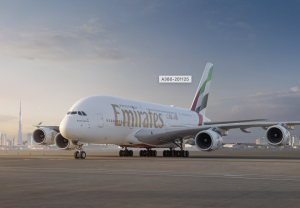 Emirates s'associe à Rolls-Royce pour la maintenance des moteurs A380 à partir de 2027">

Emirates to Take Over Maintenance of its A380 Fleet Engines
Starting in 2027, Emirates will begin performing maintenance, repair, and overhaul (MRO) on the Trent 900 engines that power its own Airbus A380 fleet. This development comes from a new Memorandum of Understanding (MOU) signed with Rolls-Royce, the engine manufacturer, announced at the 2025 Dubai Airshow. Alongside this move, Emirates also extended its TotalCare service agreement for these engines well into the 2040s, securing long-term support.
New Facility and Expanded Capabilities
To facilitate the maintenance work, Emirates plans to construct a specialized new facility, projecting the first engine induction by 2027. At this site, fan case repairs of the Trent 900 engines will be carried out, while Rolls-Royce will continue handling module repairs as part of its global network. This collaboration is expected to enhance the expertise and infrastructure of Emirates’ Engineering Maintenance Centre (EEMC), strengthening Dubai’s position in aerospace services.
Partnership Between Two Aviation Giants
Ahmed Safa, Emirates’ Head of Engineering and MRO, emphasized that continuing to operate the Airbus A380 fleet well into the 2040s motivated the airline to develop in-house engine maintenance capabilities. This strategic partnership with Rolls-Royce will incorporate the latest MRO technologies into Emirates’ facilities, highlighting a significant step forward in the airline’s engineering capabilities.
From Rolls-Royce’s perspective, the collaboration adds capacity and enhances its global MRO network, supporting the company’s goal to significantly expand maintenance capabilities by 2030. The partnership demonstrates their commitment to delivering superior products and services worldwide.
The Significance of the Airbus A380 and Its Engines
The Airbus A380 remains the world’s largest commercial aircraft and Emirates is its largest operator, with a fleet of 116 of these double-deck giants. The A380 is celebrated for offering unparalleled comfort and luxury features, making the flying experience highly desirable among travelers worldwide.
| Feature | Détails |
|---|---|
| Modèle d'avion | Airbus A380 |
| Engine Type | Rolls-Royce Trent 900 |
| Operator | Emirates (116 aircraft) |
| MRO Start Year for Emirates Facility | 2027 |
| Service Agreement Extension | Into the 2040s |
Historical Context of Engine Maintenance in Aviation
With the evolution of commercial aviation, the ability to maintain powerful engines like those of the Airbus A380 has become a strategic asset. Historically, aircraft engines have been serviced primarily by their manufacturers’ facilities or through third-party service centers. However, airlines with large fleets increasingly seek to develop internal MRO capabilities to reduce downtime and operational costs.
Rolls-Royce, known for its engineering excellence, has long been at the forefront of aircraft engine innovation since its early 20th-century beginnings. Its Trent engine series, including the Trent 900, is a result of decades of jet-engine evolution, reflecting advances in turbofan technology that improved fuel efficiency, reliability, and environmental performance.
Evolution of Aircraft Engine MRO Practices
- Early aviation saw engines maintained mostly by manufacturers or specialized workshops.
- Growth in the size of fleets, especially of jumbo jets like the A380, led to rising demand for decentralized MRO facilities to ensure faster turnaround times.
- Partnerships between airlines and engine manufacturers evolved to improve support and reduce costs, with service agreements such as Rolls-Royce’s TotalCare.
- Recent trends show leading carriers investing in their own MRO infrastructure, combining in-house expertise with global manufacturer support.
Implications for International Tourism and Aviation Sectors
The ability of Emirates to conduct its own engine MRO from 2027 opens interesting possibilities for international travel and related industries. Reliable and efficient maintenance translates directly to dependable aircraft availability, which underpins scheduling confidence for the airline and passengers alike. This ensures that more travelers can enjoy seamless journeys on Emirates’ signature A380 experience, celebrated for its spacious cabins and luxury.
As Emirates builds its MRO facility in Dubai, the region strengthens its position as a major aviation hub, complementing Dubai’s growing role in international tourism. This synergy boosts employment, technology transfer, and innovation within the aerospace sector.
Potential Future Trends
- More airlines may follow suit, establishing their own MRO services for large aircraft engines.
- Increased local expertise in aerospace engineering in destination hubs fuels economic growth.
- Travelers could benefit from more robust aircraft availability, ensuring smoother connections and improved customer satisfaction.
Wrapping Up: What This Means for the World of Yachting and Boating
This partnership between Emirates and Rolls-Royce reaffirms the critical role of maintenance and technical expertise in keeping large and complex machines running smoothly—whether in the air or on water. For those passionate about location de bateaux et voile, the principle is similar: investing in top-notch maintenance guarantees optimal performance and safety on the seas and lakes.
The evolution of aviation MRO services echoes the demand for high-quality boat maintenance and infrastructure in maritime travel. Both sectors revolve around trust in machinery and service providers to deliver exceptional experiences, whether soaring above the ocean or cruising through coastal marinas.
If you’re dreaming about a luxurious holiday on the water or seeking the perfect voile adventure, knowing the importance of expert maintenance ensures peace of mind on your journey. Services like GetBoat.com, an international marketplace for renting sailing boats and yachts, offer access to vessels that meet high standards of upkeep, helping you sail smoothly under the sun and enjoy water activities without a hitch.