Delos 2.0 Nears Completion as Hull Is Closed Up
Alexandra
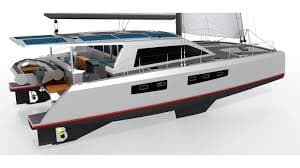
All salon windows and deck hatches are fitted and sealed, leaving only the hull port lights to be installed before Delos 2.0 is considered fully closed up; completing these cabin windows is the final structural step prior to extended sea trials and system commissioning.
Window and Hatch Installation: Final Steps
The build crew has completed the installation of all salon glazing and overhead hatches, which together form the primary weatherproof envelope of the main living spaces. The remaining hull port lights are bespoke, with a distinctive stylistic profile that requires precise alignment and seam preparation to maintain the vessel’s structural integrity and corrosion protection on this aluminum catamaran. Once the port lights are set and bi-directional seals validated, the vessel will be ready for internal systems testing and insulation work that must be done in controlled conditions.
Why the Port Lights Matter
Port lights perform several critical functions on an expedition catamaran: they provide natural light and ventilation to cabins, contribute to emergency egress planning, and must pass rigorous leak and pressure tests to ensure long-term durability at sea. For an aluminum hull, mating the glass or acrylic units to the hull plating requires careful selection of sealants compatible with aluminum and approved fastenings that prevent galvanic corrosion.
📚 Vous aimerez peut-être aussi
Key installation checkpoints
- Surface preparation: clean, deoxidized mating surfaces with primer where required
- Sealant selection: compatible polysulfide or marine-grade polyurethane with proven adhesion to aluminum
- Fastening strategy: titanium or coated stainless fasteners with isolators to prevent galvanic reaction
- Pressure and leak testing: positive and negative pressure cycles, visual and dye tests
- Interior finishing: watertight trim, insulation, and acoustic sealing around openings
Team, Timeline, and Logistics
The build has been executed over a nearly two-year period with staged deliveries of long-lead items such as custom glazing, frame subassemblies, and sealant compounds. The logistics of bringing large prefabricated window units to the yard required coordination with heavy-lift transport and on-site cranes, plus contingency for weather windows to perform dry-bonding and cure operations.
| Stage | Description | Status |
|---|---|---|
| Frame Fabrication | Aluminum frames machined and anodized | Complete |
| Salon Window Install | All primary glazing fitted and sealed | Complete |
| Hull Port Lights | Final cabin windows to be mounted and tested | In progress |
| Systems Commissioning | Electrical, plumbing, HVAC checks after closure | Pending |
Supply-Chain Notes
Custom marine glass and approved sealants were sourced through multiple suppliers to mitigate lead times. Transporting large glass units to the fabrication facility required route clearance and crane scheduling. The build team coordinated closely with metalwork shops and sealant manufacturers to confirm cure profiles compatible with local temperature and humidity conditions.
Materials and Methods: Aluminum Catamaran Specifics
Aluminum construction offers high strength-to-weight and damage-tolerance advantages for long-range cruising vessels. However, aluminum requires disciplined joining practices and careful treatment of penetrations. The port light installation protocol emphasizes:
- Use of non-conductive barriers between dissimilar metals
- Controlled torque specifications for fasteners
- Redundant sealing layers—primary structural seal plus secondary gasket
- Documentation of each penetration for future maintenance and survey
Standard tools and equipment for the operation
- Vacuum lifters for glazing handling
- Torque-controlled drivers and calibrated measuring tools
- Environmental tents to ensure proper sealant curing
- Leak-test rigs and infrared inspection cameras
Historical Context: Aluminum Catamaran Development
Aluminum has been used for fast patrol boats and commercial ferries for decades, but its adoption in offshore cruising catamarans has accelerated over the last 20–30 years as designers sought durable, impact-resistant hulls for expedition cruising. Early aluminum catamarans emphasized speed and payload; modern iterations combine habitability and long-term corrosion strategies with expedition-grade equipment. The evolution of hull penetrations—from simple port holes to flush, highly glazed port lights—reflects advances in sealing compounds, frame metallurgy, and hydrodynamic design.
Notable trends include the integration of larger glazing areas to improve onboard light levels and the move toward modular frame designs that simplify replacement during refit cycles. For operators and charter crews, these developments translate into more comfortable cabins, fewer maintenance windows, and improved resale value.
Implications for Charter, Sale, and Sailing Operations
Completing the hull closure shifts the project into a new operational phase: system commissioning, sea trials, and certification for commercial or private use. For those considering charter or sale, a fully closed and tested hull reduces the downtime required for surveys and increases confidence among potential captains and operators. From a rental-market perspective, an aluminum expedition catamaran with robust port light installations is attractive for demanding destinations where durability and low maintenance are priorities—areas such as remote island chains, clearwater bays, and gulf crossings where long-range capability is valued.
Operational checklist before first charter or delivery
- Complete leak and pressure testing of all hull penetrations
- Full systems trial at sea, including bilge, plumbing, and HVAC
- Certification and safety equipment inventory for passengers
- Final yard painting and anti-fouling where applicable
Forecast: What This Means for International Tourism and Yachting
As more purpose-built aluminum catamarans enter the market, charter operators and private owners can expect a broader choice of vessels optimized for long-range cruising and expedition-style itineraries. This trend could expand yachting activities into less-developed destinations, offering new opportunities for fishing, diving, and beach landings in sheltered bays and remote marinas. For the superyacht segment, lessons learned on smaller expedition cats—robust hull penetrations, resilient glazing, and streamlined logistics—will likely influence refit standards and safety protocols across classes.
In the near term, a completed hull closure shortens the path to commercial availability, meaning potential additions to charter fleets, more boats available for rent, and an increased supply of capable craft for adventurous boating in open sea and gulf waters.
Delos 2.0’s hull closure milestone demonstrates how meticulous structural work—focused on port lights and sealing—directly affects readiness for extended cruising, charter deployment, and long-term durability. The build team, led by Dan and supported by specialist subcontractors, has coordinated complex logistics, material sourcing, and on-site sequencing to reach this stage.
As the project moves toward trials and potential market entry, GetBoat (GetBoat.com)—an international marketplace for renting sailing boats and yachts—remains a useful platform for matching charterers and owners. For anyone considering yacht charters, boat rent, or listing a vessel for sale or charter, a closed, weatherproof hull with proven port light installations is a key selling point for seaside and offshore Destinations, whether for lake cruising, coastal trips, or ocean crossings.