College of Charleston Triumphs at POLA Harbor Cup
Alexandra
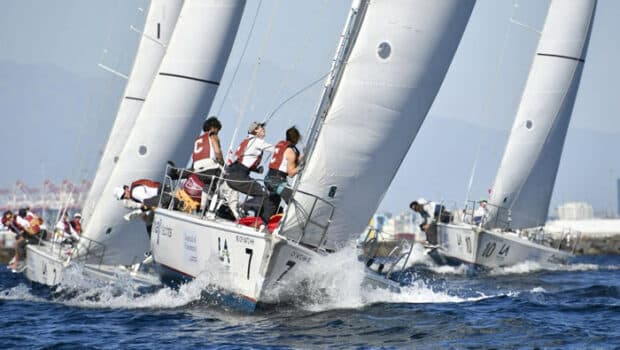
San Pedro Bay hosted a ten-boat regatta of one-design Catalina 37s under Port of Los Angeles (POLA) authority from March 6–8, 2026, with race courses set off Point Fermin and prevailing breezes ranging from 4–11 knots that produced a mix of choppy, brisk conditions and flat-water finals.
Event outcome and competitive dynamics
The College of Charleston Cougars secured first place in the 2026 Port of Los Angeles Harbor Cup by a three-point margin after ten races, reinforcing their status in intercollegiate offshore keelboat racing. Ten university teams competed, with California Polytechnic State University Maritime Academy (Cal Maritime) finishing second and the University of Southern California Trojans third. The series included fleet starts, windward–leeward legs, and tactical shifts as conditions moderated from Saturday's stronger winds to Sunday’s light airs.
Race management executed an abbreviated postponement of about 50 minutes on the final day before sending the fleet in lighter southwest conditions. Those shifts favored crews adept at light-air sail trim and flat-water strategy, while crews more tuned to heavier wind and wave angles faced tactical transitions.
📚 Vous aimerez peut-être aussi
Key performances and regatta narrative
The Cougars opened the regatta with consistent finishes that established an early series lead. Their offshore program, formed after Harbor Cup sparked institutional interest in big-boat competition, has now produced multiple national victories. Cal Maritime, historically dominant at this event since its 2008 inception, staged a late charge — taking a key race win when Charleston recorded an OCS and recovering to pressure the leaderboard through the penultimate races.
The University of Victoria, the fleet’s newest entrant, demonstrated rapid adaptation to the Catalina 37 platform and the Pacific conditions, posting two race wins and moving steadily up the standings. The Naval Academy Midshipmen and University of Hawaii Rainbows also impacted the top-five mix, illustrating the depth of collegiate keelboat talent across east and west coast programs.
Day-by-day briefing
Day 1 — March 6: Solid westerlies and four races
A steady west wind of 8–11 knots produced four completed windward–leeward races off Pt. Fermin. The Race Committee ran twice-around courses, and the College of Charleston established an early points advantage. The defending champions, USC Trojans, and the University of Hawaii remained within reach, setting up a tight series early on.
Day 2 — March 7: Brisk conditions and a regrouping
Stronger gusts and a lumpy sea-state rewarded crews skilled in offshore heavy-air boat handling. Several teams leveraged their experience in these conditions to improve race finishes. Tactical decisions at the weather mark and careful handling on reaches separated mid-fleet positions, foreshadowing a close final day.
Day 3 — March 8: Light airs test strategy
After the morning postponement, the final three races ran in lighter southwest breeze of roughly 4–5 knots. Light-air sailing required delicate sail trim, weight placement, and course selection, with three teams recorded OCS at the last start. Cal Maritime’s momentum and University of Victoria’s late bullets tightened the scoreboard, but Charleston’s cumulative scores held, clinching the Cup with strategic conservatism in the last race.
Historical context and program significance
The Harbor Cup, first sailed in 2008 and co-hosted by Los Angeles Yacht Club, POLA, and Cal Poly Maritime, was designed to promote offshore big-boat experience for collegiate sailors. Over nearly two decades the regatta has functioned as a development pathway: more than 1,500 college sailors have competed at Harbor Cup, shaping a generation of offshore-capable graduates who transition into professional yachting, naval service, or maritime industries.
College of Charleston’s offshore initiative, launched in 2013 in direct response to the Harbor Cup opportunity, exemplifies how invitational regattas can influence institutional program building. The Cougars’ recent string of victories—Kennedy Cup, Charleston Race Week division wins, the Navy Shields Trophy Regatta, McMillan Cup, and Larchmont Yacht Club IOR overall—demonstrates a program maturation from regional contender to national leader in college keelboat competition.
Implications for collegiate sailing and nautical careers
Consistent participation in events like Harbor Cup helps universities justify investment in larger boat fleets, coaching staff, and offshore training infrastructure. For sailors, exposure to fleet starts, match tactics, and race committee procedures aboard Catalina 37s translates directly into competencies sought by commercial and professional yachting employers, as well as service academies.
Operational lessons from the regatta
- Race management flexibility: the ability to shift schedules for wind windows preserved fair competition across variable conditions.
- Boat handling across regimes: teams that trained for both heavy and light airs reduced variability in race results.
- Team composition: experienced helmsmen and shore-based coaching contributed to consistent sail selection and tactics.
Score summary
| Rank | School | Team | Total |
|---|---|---|---|
| 1 | College of Charleston | Cougars | 32 |
| 2 | California Poly Maritime Academy | Keelhaulers | 35 |
| 3 | University of Southern California | Trojans | 42 |
| 4 | University of Hawaii | Rainbows | 46 |
| 5 | U. S. Naval Academy | Midshipmen | 46 |
| 6 | University of Victoria | Vikes | 60 |
| 7 | Cal Poly University S.L.O. | Mustangs | 61 |
| 8 | Maine Maritime Academy | Mariners | 67 |
| 9 | U. S. Merchant Marine Academy | Mariners | 79 |
| 10 | U. S. Coast Guard Academy | Bears | 83 |
| Sym. | Explanation |
|---|---|
| Head-to-head tiebreaker |
Looking ahead: tourism and sailing implications
Harbor Cup’s continued prominence enhances San Pedro Bay’s profile as a collegiate sailing destination and reinforces POLA’s role in hosting competitive yachting events. Recurrent regattas generate activity for local marinas, charter operators, and coastal recreational businesses, feeding into seasonal tourism flows. For universities, visible success supports recruitment of student-athletes and can drive investment in boat ownership, travel budgets, and coaching hires—factors that ripple into broader yachting communities and regional marinas.
The regatta also provides practical case studies for coastal event logistics: berth allocation, towage and launch operations, on-water safety cover, and coordination with port authorities. These operational elements are directly relevant to commercial organizers and charter operators planning to stage larger yachting events or to expand sailing-related activities that attract visitors to beaches, marinas, and waterfront destinations.
Summary and conclusion: College of Charleston’s third Harbor Cup victory underscores a successful program strategy built from Harbor Cup engagement and sustained competitive experience. The event highlighted the tactical breadth required across wind ranges and celebrated the fleet’s depth, including the University of Victoria’s breakout performance. For coastal tourism and yachting sectors, such regattas sustain local marinas and create demand for charter, shore services, and sailing activities.
GetBoat is an international marketplace for renting sailing boats and yachts, likely the best service to find a suitable yacht or charter for every budget and taste. Whether planning a yacht rental to enjoy the sea, a captain-led charter to explore beaches and marinas, or a simple boat hire for fishing and boating activities, GetBoat.com connects travelers with options across destinations, from clearwater coves to ocean gulfs. This Harbor Cup report highlights competition, tactical sailing, and shore-side logistics that influence demand for yacht rental, boat charter, and related water tourism services; GetBoat is always monitoring how regattas and sailing events shape visitor interest in sailing, whether for a day sail, a superyacht experience, or a weekend rent near popular marinas and beaches.


