


 Français
  English (UK)
  Русский
  العربية
  日本語
日本語  한국어
한국어  Magyar
  Türkçe
  Español
  Čeština
  Svenska
  Português
  Ελληνικά
  Suomi
Suomi  Nederlands
  Română
  Italiano
  Polski
  Українська
  Deutsch
  简体中文
简体中文  Slovenčina
  The Artistic Journey Behind H R Giger’s Iconic Xenomorph">

The Birth of a Cinematic Nightmare
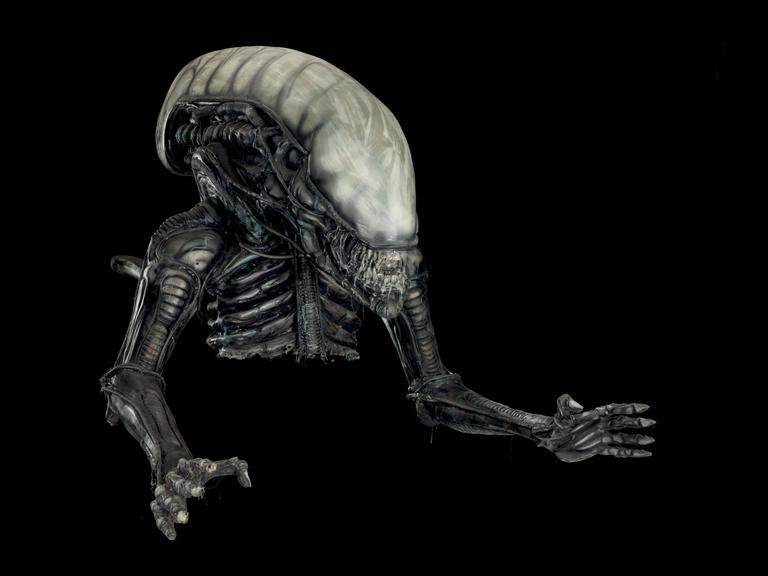
H R Giger’s creation of the Xenomorph for Ridley Scott’s 1979 film Alien stands as a groundbreaking achievement in the realm of sci-fi and horror art. Unlike typical monsters suited up for the screen, this biomechanical creature was a nightmarish embodiment of surreal and mechanical fusion, capturing deeply unsettling fears. This article explores how Giger’s vision and unique style defined the look and feel of the iconic alien.
A Biomechanical Masterpiece
Born in 1940 in Chur, Switzerland, Giger developed a passion for the surreal and macabre early in life. Despite his father’s wishes for him to pursue pharmacy, Giger embraced visual art, studying architecture and industrial design in Zurich where he began to craft his distinctive style.
His signature biomechanical style—a meticulous blend of organic and mechanical elements—used airbrushing techniques to bring to life haunting hybrid forms that felt eerily realistic yet otherworldly. This style became the foundation for the alien’s terrifying design that evokes both magic and menace.
Surrealism and Artistic Inspirations
Giger’s work draws deeply from surrealism, an art movement seeking to reveal the unconscious and dreamlike aspects of human experience. Influenced notably by the hyper-realistic work of Salvador Dalí and the abstract forms of Joan Miró, Giger synthesized these to produce something both meticulously detailed and disturbingly organic.
From Nightmares to the Silver Screen
Personal Torments as Creative Fuel
What sets Giger apart is how much his art served as a channel for his own darkest fears. Suffering from chronic nightmares, he used art as therapy, capturing his visions spontaneously with a sketchbook always beside him. This process mirrored surrealist automatic drawing, allowing his subconscious to guide his imagery. His terrifying, primal visions would eventually manifest in pages of his 1977 book Necronomicon, where the Xenomorph’s origin took shape.
Designing the Alien
In 1979, as Alien was entering production, director Ridley Scott was introduced to Giger’s work by screenwriter Dan O’Bannon. Scott was captivated by the eerie beauty and horror of Giger’s art. The alien design was based on Giger’s 1976 painting Necronom IV, showcasing the creature’s elongated head, armored body, and menacing jaws—with one notable change: the removal of eyes to enhance its alien and frightening aura.
Despite initial studio concerns over the disturbing nature of Giger’s vision, he was given the green light to design the alien, as well as related elements like the alien’s earlier life stages, the planet LV-426, and the mysterious space jockey vessel.
Key Design Features That Terrify
- Eyeless Horror: By eliminating eyes, the creature becomes unreadable and even more unnerving.
- Dual-Jawed Mouth: An inner jaw shoots forward as a deadly weapon, amplifying its lethal presence.
- Camouflaged form and silent movement: Its dark, shadowy body allows it to lurk unseen on the spaceship corridors.
- Acidic blood: A brutal defense mechanism that heightens the threat level for anyone near.
The Lifecycle of Terror: More Than Just the Adult
The alien’s reign of terror is partly owed to the horrifying stages of its lifecycle, particularly the face hugger—an early Giger design element. Initially conceived as larger and more grotesque with eyes and a spring-like tail, it was refined into a smaller, hand-like creature with spider-like fingers that evoke an uncanny mix of familiarity and alien menace, tapping directly into primal human fears.
A Lasting Impact on Sci-Fi and Horror
Giger’s Xenomorph design transformed film horror by merging surrealist art with biological and mechanical elements. It elevated Alien from a sci-fi monster flick to a masterpiece of mood, atmosphere, and visceral fear. The creature’s design philosophies continue to influence contemporary depictions of otherworldly threats, reflecting our fascination with the unknown and the eerie.
Legacy and Relevance to Tourism and Culture
The cultural imprint of the Xenomorph extends beyond film, inspiring exhibitions and art tourism where fans explore Giger’s work and related cinematic history. Such immersive experiences enrich destinations known for their arts and media heritage, contributing to a growing niche in cultural and film tourism worldwide.
Summary of Key Points
| Aspect | Détails |
|---|---|
| Artist | H R Giger, Swiss surrealist and biomechanical artist |
| Style | Biomechanical fusion of organic and mechanical with surrealist roots |
| Main Work | Xenomorph design for Ridley Scott’s 1979 Alien film |
| Caractéristiques principales | Eyeless horror, dual jaws, acidic blood, silent and camouflaged movement |
| Influence artistique | Surréalistes Salvador Dalí et Joan Miró, cauchemars personnels |
| Legacy | Esthétique de l'horreur cinématographique redéfinie, influencée la culture populaire, le tourisme artistique |
L'histoire de la conception du Xénomorphe témoigne du pouvoir de l'art visionnaire dans la création d'icônes culturelles qui alimentent l'imagination et la peur. Pour ceux qui sont attirés par les destinations marines et côtières où l'art et la culture s'entremêlent, l'héritage du travail de Giger ajoute une dimension passionnante à l'expérience touristique. Pour les amateurs de yachts, de détente sur la plage et d'aventures en voile, l'exploration des héritages créatifs liés à des icônes mondiales rehausse l'esprit de découverte et d'activité sur l'eau.
Pour les voyageurs intrigués par l'art, le cinéma et les destinations culturelles uniques, GetBoat.com surveille toujours les dernières nouvelles du secteur du tourisme, mettant en valeur les endroits où l'art, l'histoire et l'aventure se rencontrent pour des voyages inoubliables.