Beneteau First 36 SE — Walkthrough and Insights
Alexandra
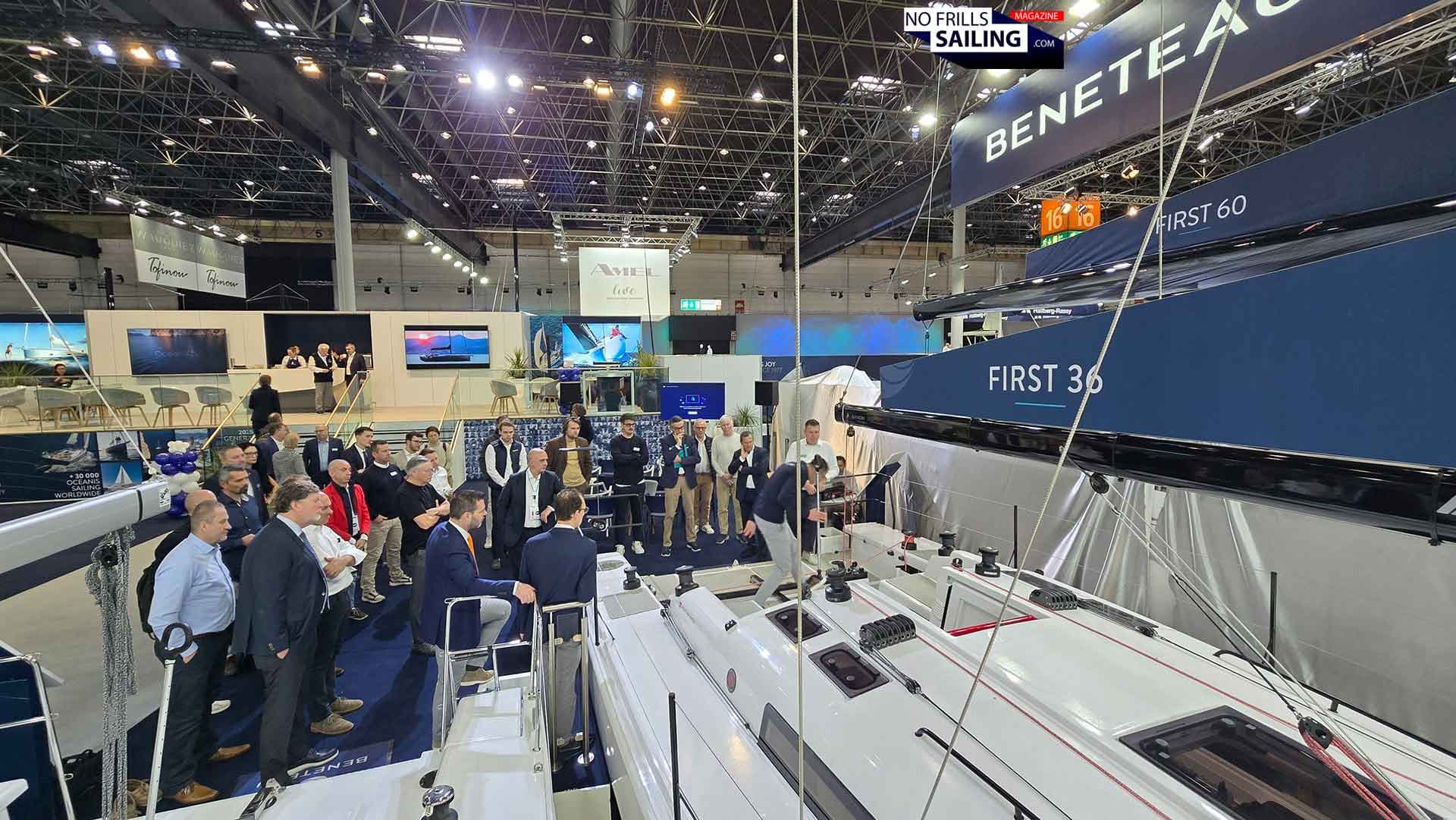
At Boot Düsseldorf Beneteau coordinated complex dockside logistics: the First 36 SE hulls arrived on custom trailers to accommodate a 3.80 m transom, required crane lifts for display, and were subject to dealer-only technical briefings before public access — a clear sign the shipyard treated this as a judged, high-performance delivery rather than a routine launch.
What defines the SE badge
The “SE” designation signals more than trim options; it represents a systematic weight-reduction and performance upgrade package applied to the First 36 platform. Dealers received a rapid-fire briefing from Tit Plevnik explaining the changes made to Sam Manuard’s hull to maximize planing and agility. In short: when she’s an SE, she’s the real deal.
Key differences vs. standard First 36
| Item | Standard First 36 | First 36 SE |
|---|---|---|
| Approx. weight | Base | ~450 kg lighter |
| Steering | Double wheel (Jefa posts) | Single carbon tiller |
| Sail area | Mainsail 42 m² / Jib 38 m² | Mainsail 42 m² / Jib 38 m² |
| Interior finish | Wood veneers, fixtures | Carbon fiddles, composite floors, no doors |
| ORC/APH change | APH ~540–560 | ~20–40 points lower |
How weight savings are achieved
The SE’s mass reduction isn’t magic — it’s cumulative engineering. The shipyard removed laminated wooden furniture and veneers, substituted lightweight composite floorboards topped with SeaDek EVA foam, replaced heavy steering posts with a carbon tiller and eliminated cabin doors. Even the galley is stripped down: a gimbaled two-burner hob replaces a 2-burner-plus-oven unit to shave kilos where it matters. Little bits add up — a few kilos here, a hundred there — and suddenly you get planing earlier. No pain, no gain.
📚 Vous aimerez peut-être aussi
Weight-saving highlights
- Single carbon tiller instead of twin Jefa steering posts (over 100 kg saved in steering system)
- Composite floor panels with SeaDek (easy to lift with two fingers)
- Carbon fiber fiddles and trim in place of laminated wood
- No interior doors; magnetic folding doors in the head
- Reduced galley appliances (stove-only solution)
Cockpit and handling — race-first ergonomics
The cockpit layout is optimized for single- and double-handed performance. With the tiller accessible and the mainsheet traveler set on raised GRP bases so the tiller runs beneath, a helmsman can trim the mainsheet, reach the jib sheet and operate the traveler with minimal movement. Winches for halyards and reefing are mounted on the coachroof, and A-sails like a Gennaker or Code 0 are run to aft winches. The whole setup screams functional: quick responses, direct helming feedback and clear rudder awareness — the kind of things crews want when they’re pushing hard on the race course or a spirited coastal delivery.
Onboard feel and ergonomics
Although stripped of decorative veneers, the SE retains usable comfort: convertible salon benches, a fold-up table and flexible cabin layouts. The visual language is sportier — black lacquered surfaces, bold upholstery colors and red anodized fittings — but practical touches (First carrier bags in lieu of built-in lockers) make life simple ashore and at sea. Owners familiar with the First 27 SE will recognize that familiar, no-nonsense vibe.
Layout flexibility
- Three-cabin capacity with removable bunks in aft cabins
- Convertible salon berths for extra crew
- Front chainplate extended through forepeak for inner forestay attachment
Trade-offs and race potential
Space comes at a cost: the head remains compact and doors were eliminated to save weight — magnetic folding panels offer privacy without the kilos. This is a conscious choice: Seascape/First pitches the SE as a boat for racers who still want reasonable comfort ashore, not a full cruising superyacht. The upshot is performance gains: sea trials showed hull #001 reaching 19 knots SOG in mid-20s knot breeze — a vivid example of how weight saving multiplies hull design advantages. The ORC handicap improvements (minus 20–40 points) also make the SE more competitive on paper.
Costs, market fit and charter implications
Expect a premium: the SE conversion can add roughly €50,000–€80,000 to the base price, reflecting carbon work, vacuum-infused construction and high-spec fittings. For charter operators and yacht brokers on GetBoat.com, these changes matter: SE variants might be niche for performance charters, owner-drivers and racing programs but could attract seasoned sailors seeking rental or sale listings that promise exhilarating sailing and an active racing calendar.
Wrap-up: The First 36 SE pares down mass, swaps heavy wood for carbon and composites, and reconfigures ergonomics for a direct, responsive sailing experience. It keeps the same sail plan and beam but gains planing agility and an improved ORC handicap, making it a strong candidate for owners wanting fast club racing, performance charter rotations or spirited coastal cruising. Whether you’re a captain plotting destinations, a charter operator listing a yacht for rent, or a buyer eyeing a sale, the First 36 SE blends race-bred design with sufficient onboard comforts — a boat built to win, yet still able to welcome friends for drinks at the beach, post-sail fishing off a clearwater gulf or a sun-drenched day on the ocean, lake or marinas near your favorite Destinations.


