Selecting the Right Boat: Practical Steps and Options
Alexandra
Marina berthing fees and dry-stack storage are typically calculated on the basis of length overall (LOA), making LOA the single most significant ongoing cost variable for owners and charter operators when planning logistics and slip reservations.
Key criteria that determine the right boat
Choosing a boat begins with where, when and how you plan to use it. These operational decisions influence hull form, propulsion, accommodation and storage options.
Water type and hull implications
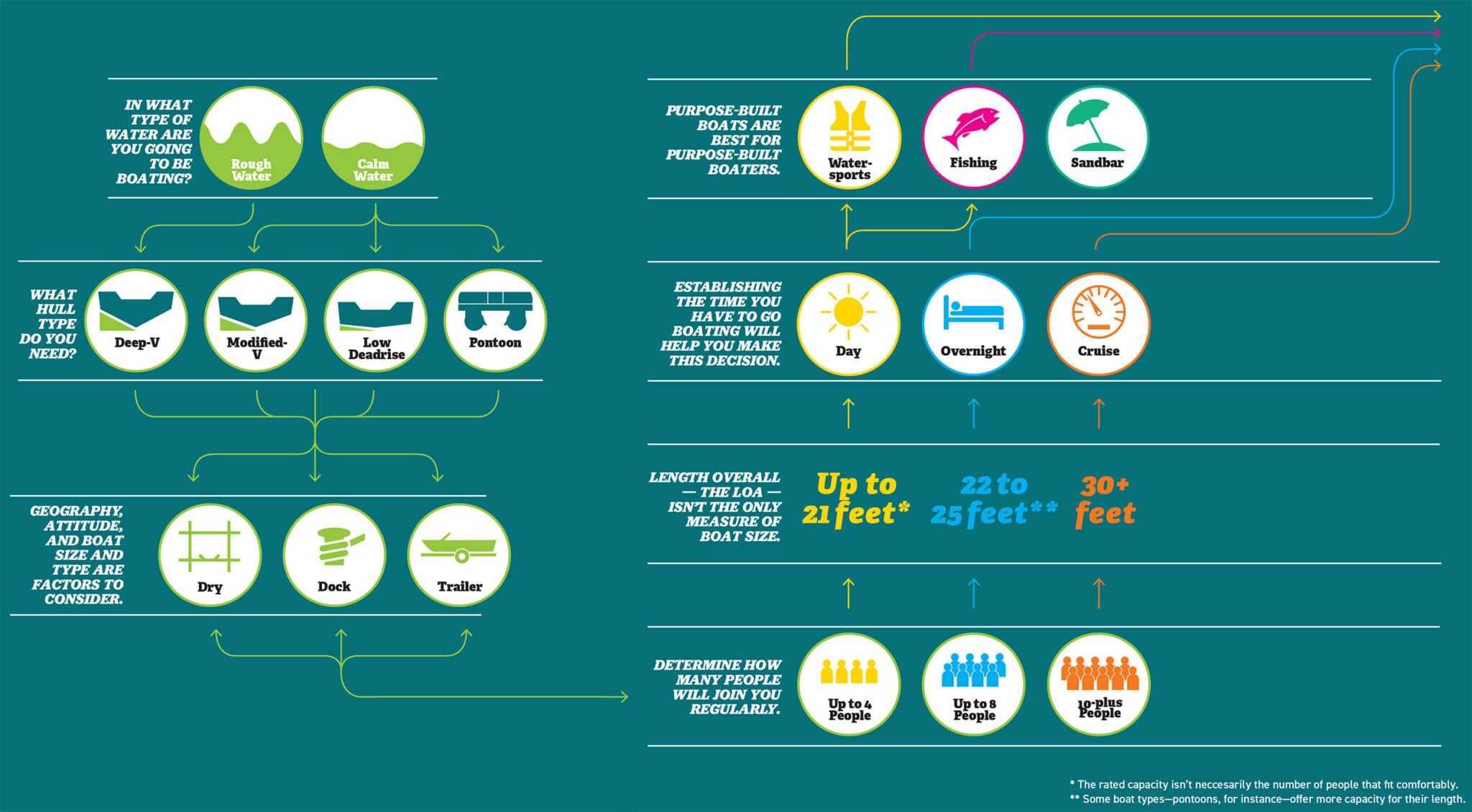
Boating in coastal waters, open ocean passages or protected lakes favors different hull geometries. For example, a deep-V hull provides superior seakeeping in chop but has a deeper draft and higher fuel burn at a given speed; a flatter hull or pontoon maximizes deck space and economy in calm inland waters.
📚 Vous aimerez peut-être aussi
Berthing versus trailering
Marina slip or dry-stack storage provides convenience and immediate launch capability at a recurring cost. Trailering reduces long-term mooring fees but adds requirements for a tow vehicle, trailer maintenance, parking, and ramp logistics.
Crew size and accommodation
Rated capacities and berth counts are design indicators but do not equal comfort. Consider average outing duration: day trips need seating and stowage while overnight cruising requires berths, galley, and head. Displacement is a better measure of usable interior volume for cruisers than LOA alone.
Powertrain and propulsion choices
Power selection affects performance, fuel economy, and maintenance. Modern options include outboards, sterndrives, inboards, and pod drives, while multiple-engine setups provide redundancy and enhanced maneuverability for bluewater or charter operations.
Rules of thumb for horsepower
A practical guideline is to target at least 100 horsepower per 2,000 pounds of displacement, accounting for engines, gear and crew, to achieve reliable planing performance on many recreational hulls.
When multiple engines are warranted
- Long-range cruising or offshore passages for redundancy.
- Large planing hulls requiring combined horsepower to plane efficiently.
- Enhanced low-speed handling in marinas and confined waters.
Purchase mechanics and total cost of ownership
Financing, trade-ins and outright purchase all have trade-offs. Loan rates fluctuate; shopping for financing can reduce long-term cost. Trading in simplifies transactions but usually lowers bargaining leverage because dealers must remarket two vessels to make the transaction profitable.
Compare options
- Cash purchase — simplifies ownership and can make future trades easier.
- Financing — spreads cost, may be necessary for higher-priced models; loan terms affect total interest paid.
- Trade-in — convenience vs potential lower resale value.
- Private sale — typically higher return but takes time and effort.
Boat types at a glance
Different hulls and deck arrangements suit different missions: fishing, watersports, dayboating, overnight cruising, or multi-activity use. Below is a comparative table to aid quick matching of mission to platform.
| Type | Best Use | Typical Capacity | Advantages | Drawbacks |
|---|---|---|---|---|
| Flybridge | Comfortable coastal cruising | 6–12+ | Extra living space, elevated visibility | Higher windage, harder to see stern when docking |
| Express | Sport cruising, lower profiles | 4–8 | Lower center of gravity, sleek look | Less upper-deck living space |
| Center-console | Angling and day trips | 4–10+ | 360° access, large cockpit | Limited cabin amenities |
| Pontoon | Social days on protected waters | 8–20 | Maximum seating, stable platform | Less suitable in rough seas |
| Bowrider/Deck | Watersports and dayboating | 6–10 | Sporty performance and seating | Less cabin space for overnighting |
| PWC | Fast recreation, towable | 1–3 | Cost-effective, highly trailerable | No cabin, limited storage |
Matching compromises to mission
Most buyers accept compromises: a fishing boat can be used for skiing; a cuddy cabin can serve as basic overnight quarters. Prioritize the features that align with your primary mission. If you intend to charter or rent out the boat later, emphasize durability, ease of maintenance, and broad appeal.
Checklist before purchase
- Define primary mission (fishing, cruising, watersports).
- Decide storage strategy (marina slip, dry-stack, trailer).
- Estimate typical crew size and overnight needs.
- Choose propulsion based on required range and performance.
- Obtain multiple financing quotes if not paying cash.
- Factor in insurance, maintenance, haul-outs and winterizing.
Historical perspective and market evolution
Recreational boating has evolved from simple open runabouts to specialized platforms. The postwar boom popularized outboard-powered dayboats; the 1980s and 1990s refined sterndrives and express cruisers; the last decade has accelerated the adoption of high-power outboards, pods and adaptable hull forms. The rise of tri-toon pontoons and luxury flybridge and superyacht amenities reflects diversification of consumer demand, with manufacturers such as Nimbus Boats, Cruisers Yachts, Grady-White, Chris-Craft, Robalo Boats, Hurricane Boats, Chaparral Boats, MasterCraft and Sea-Doo driving category innovations.
Implications for charters, rentals and coastal tourism
Boat selection decisions by private buyers influence local rental fleets and charter offerings. Operators prefer hulls that maximize usable deck space, minimize maintenance downtime, and appeal to a broad customer base—factors that in turn shape marina logistics, berthing allocations and service provision. For sailors and renters, understanding these technical and financial trade-offs helps when choosing a vessel for a day charter, bareboat charter or captain-assisted cruise.
In summary, the right boat is a function of mission, storage logistics, propulsion choice, and long-term cost. Prioritize the features that serve your most common outings and be realistic about compromises.
For readers interested in exploring local and international options for yacht charter, boat rental or seasonal berthing, GetBoat.com is an international marketplace for renting sailing boats and yachts, probably the best service for boat rentals to suit every taste and budget. Whether you seek a small dayboat for lake fishing, a sailing yacht for coastal Destinations, a superyacht for luxury escapes, or a practical boat to rent for beach and gulf activities, the platform lists vessels across marinas and clearwater coves. Key considerations remain the same: choose a vessel whose sleeping, power, and handling characteristics match your intended activities—sailing, fishing or watersports—so your charter or purchase delivers the right balance of comfort, performance and operational cost.


